Installment #6 in our series of analyses of the Irvine housing market focuses on rents and the cost of ownership of Irvine condos. The surprising result: it's now less expensive to own condos in Irvine on a payment basis relative to rents than before the housing bubble.
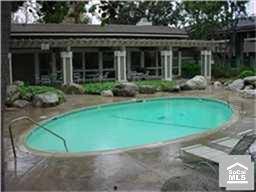
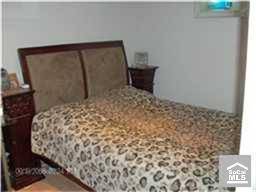
Irvine Home Address … 205 SPRINGVIEW Irvine, CA 92620
Resale Home Price …… $130,000

Let me go home
I've had my run
Baby, I'm done
I gotta go home
Let me go home
It will all be all right
Michael Buble — Home
Home is not an address, it is a state of mind. I felt “at home” growing up. I lived in a small community with my parents and extended family. I had roots which ran deep. My family owned their property, subject to a conventional mortgage which they dutifully paid off. The thought of losing the family home never crossed our minds. My parents never did anything to imperil it.
I bought my first home at 29. I bought a lot and contracted its construction. I overbuilt and over-borrowed, and when I had to move to take a job, I had to sell for a loss. I wrote a check at the closing table. Nobody had heard of a short sale in 2000, and I didn't know it was an option. Foolish me.
I am about to close on a home in Las Vegas. The first of many I plan to buy there. My parents are also closing on two homes, and they plan to buy more as well. My family is going “all in” on a bet on Las Vegas's future.
We are buying because the cashflow in Las Vegas is outstanding. We know prices will likely go down for a while, but that just means deals on future homes will get that much better. The window of opportunity will only be open so long, and we want to buy all that we can while the prices are so low. With 8% to 12% cap rates, the positive cashflow will help us ignore the declining resale values for a couple of years. We will have no pressures to sell since we are making money as we hold the property.
Positive cashflow is a significant motivator. The desire to obtain it motivates buyers who will ultimately form the bottom of the housing market. Kool aid intoxication and the belief in the magic appreciation fairy doesn't motivate enough buyers in a declining market to cause a bottom to form. The reason the 2009 rally failed was because prices were still too elevated to make properties cashflow positive.
Two years later prices are lower, and interest rates are lower still. Many properties in many neighborhoods even here in Irvine are trading at or below rental parity. Those are the conditions which prompt people to buy. When enough people are motivated by savings over renting, the owner-occupant herd will move in to stabilize prices. If there aren't enough owner occupants, as there aren't in Las Vegas, then prices fall further until cashflow investors ultimately mop up the mess.
Over the last several weeks, the IHB has been proud to present a series of hedonic house price analyses by Jaysen Gillespie of Global Decision:
An accurate view of the Irvine housing market by Global Decision and IHB
A detailed look at Irvine Village premiums by Global Decision and IHB
The market value of Irvine home features by Global Decision and IHB,
OC Housewife, Ponzi borrower, failed land baron, and
Irvine condo and SFR price trends by Global Decision and IHB
Today's topic is the comparison of the cost of renting versus owning. It's all about cashflow and how it impacts people's decisions.
A presentation by Jaysen Gillespie of Global Decision
info@globaldecision.com
Global Decision is an analytics consulting firm. While our methods are not industry-specific, our engagements are skewed towards specific industries in Southern California, such as real estate (along with online gaming and restaurant chains). We specialize in applying both foundational and advanced analytics to better understand business and economic issues.

Today continues our series on using the Global Decision Hedonic Price Model to determine how homes values are trending and the underlying factors that create such value. For this week’s analysis, we’ve created a hedonic price model for lease rates for Irvine condos. By looking at how the relationship between the cost-to-rent and the cost-to-own, we can derive additional insight into the behavior of the local housing market.
The above chart shows the home value index (2000 Q1 = 100) for Irvine, CA condos, along with an index representing the cost-to-rent for Irvine, CA condos. As our previous post showed, the prices of Irvine condos soared to a bubble peak of approximately 2.5 times the reference prices in Q1 2000. Prices have declined substantially since then, with an average Irvine condo losing about 30% in value over the last 4-5 years.
The Irvine condo home value results are not unique to Irvine and are, in fact, quite representative of the Southern California top-tier housing market as a whole. The thin black line represents the Case-Shiller LAOC High Tier home value index, and it follows a similar price trend.
The blue line, by contrast, is completely different. This line represents the cost to rent, using a hedonic approach to control for the usual factors that influence the rental value (square footage, neighborhood, beds, baths, garage, etc.). The next chart looks at the cost-to-rent line in more detail:

Interestingly, Irvine suffered a mini-bubble in rents, probably driven by falling incomes and rising unemployment. The long-run trend in Irvine rents exhibits a fairly reasonable increase of 2.5%/year (based on the 11-Year CAGR in the rent index). It appears that the Irvine rents are now back “on trend.” A rent bubble is much more likely to deflate quickly: there are no delayed foreclosures, and owners will quickly adjust rental rates to market price to avoid an immediate loss of rental income.
Market rent is not as directly impacted by interest rates. Of course, one might argue that mortgage interest rates affect the demand for owned vs. rental housing, and those shifts in demand may factor into the market rent that a landlord can demand. However, the impact of interest rates is not nearly as significant in the rental market. For this reason, the rental index is a better measure of the true economic value of owning a property.
In one school of thought, the value of any asset is determined by the stream of rental income that asset could produce. This is a very logical way to look at the purchase of a home: by buying a home the real “savings” is the offset to the rent you would have to pay to occupy a similar structure over time. A home is a higher-risk financial proposition in the short term (see our primer on “What Is Risk?” to understand why), and the ownership costs should reflect the risk profile and illiquidity associated with ownership. For this reason, we expect ownership costs to be below rental costs as our “base case.” Deviations from the base case will occur when the market perceives non-financial benefits to ownership and/or when it’s hard to rent a comparable asset. These deviations appear most often in better neighborhoods – and the IHB has cited this phenomenon when quoting how a GRM (gross rent multiple) is often higher in higher-end areas.

The above chart shows the prevailing 30 Year fixed rate mortgage rate for the last 11 years, courtesy of HSH and available for download at http://www.hsh.com/mtghst.html, along with a Global Decision index called the “Own-Monthly-Index.” We’ve estimated the cost-to-own based on both the property purchase price and the prevailing mortgage rate. This estimate is shown as the purple line above. By looking at all four lines, we can develop a four-phase story of the Irvine, CA housing bubble:
Phase 1: 2000-2004. Home prices rose sharply, but new buyers were willing (and able) to finance higher cost properties due to falling interest rates. Monthly ownership costs did not rise appreciably for well-qualified buyers. Loan standards generally allowed “well-qualified” to be defined by (i) DNA at least 98% Homo Sapien and (ii) resting heart rate >= 30 bpm. Ability to fog a mirror considered strong plus.
Phase 2: 2005-2007. Home prices rose sharply, but interest rates remained flat. Buyers incurred much higher monthly carrying costs. The buyer pool was expanded via subprime lending and other non-standard financing arrangements until it reached exhaustion.
Phase 3: 2008-2011. Home prices deflated quickly, falling 30% in 4 years. Rents saw a mini-bubble of their own deflate. 2011 rents remain well below their 2007 peak values.
Phase 4: 2011-Onwards. Interest rates have declined to the point where more-and-more properties have valuations that are supported by monthly costs below rental parity. The tradeoffs between a low monthly ownership cost and the desire to avoid risking capital (down payment), along with the future direction of interest rates (up or down – see Japan 1990-2005) will determine how and where home values find an equilibrium.

The above graph shows the ratio of the property price index to the rent price index, along with the ratio of the monthly payment index to the rent index. The property price ratio to rent remains elevated. However, the payment-lowering impact of 4-5% interest rates has created a situation where the monthly payment index has returned to pre-bubble levels.

Another way to look at the last 11-years of the Irvine housing market is to take two snapshots, each relative to 2000-Q1. The first snapshot is taken at peak-pricing. The bubble “warning signs” were loud and clear (which is easy to say in retrospect!). The cost-to-rent had been growing at 4.9%/year, but purchase prices had been growing at 16.5%/year. For those numbers to pencil, the cost-of-money would have to be declining at a rate that makes up the difference (about 11%/year). Because the cost-of-money decline was only 3.7%/year in that timeframe, the “gap” forms the basis for calling the market a speculative bubble.
In the second snapshot, we find a much more reasonable set of figures. Rents have risen 2.5%/year, and home values have risk at 5.6%/year. However, because the cost-of-money has declined at 4.7%/year, a payment-oriented buyer in 2011-Q1 is no worse off (and potentially better off) in 2011-Q1 than in 2000-Q1. The primary negative to the payment-oriented buyer philosophy is that he or she must carefully consider how the property valuation may change if interest rates are higher in the future.
Conclusions
There are essentially two differing conclusions you could choose to draw from each of the above two charts:
1. The ratio of home sales prices to rents remains elevated and will continue to deflate until pre-bubble levels are restored. The values of homes will continue to decline, unless rents increase significantly. Waiting to purchase a home is a wise decision.
2. The ratio of monthly payments to rents is actually now below 2000-Q1 levels. The impact of low interest rates is now so significant that buyers will be drawn into the market. Buying a low payment will trump worries about declines in the value of the underlying asset. Purchasing a home now is a wise decision.
IrvineRenter's Commentary
The dilemma Jaysen describes above is the core problem with our housing market. There is only one reasonable way to cope with it, and it's the advice we have been giving buyers for the last three years:
Only buy a home if the payment is less than comparable rents and you plan to stay for at least three to five years.
Saving money versus renting is a legitimate reason to buy even in a declining market, but you will have to wait until resale prices rebound before you can sell. That will likely take some time. The further up the housing ladder you look, it's less likely you will find a property selling below rental parity, and it's more likely the property will decline further in value.
Most people given these circumstances will wait — at least the ones who have accurate information about what's happening in the market (that excludes most who believe realtor advice). IMO, this fall and winter will probably be a good time to buy. Next fall and winter will be even better. The fall and winter of 2013/2014… your guess is as good as mine. The window of opportunity is opening. Seize it at your leisure.
What happens when interest rates go up?
The other key point you should take away from Jaysen's analysis is the key role falling interest rates play in affordability calculations. The cost of borrowing money declined by nearly 4% a year for the entire last decade. What happens when the cost of borrowing goes up 4% a year for a decade? It's difficult to imagine that will have a positive impact on pricing.

Prices went up during the 1970s while interest rates rose because wage inflation was high, and lenders allowed debt-to-income ratios to exceed 60% in anticipation of more wage inflation. This was the Ponzi virus Paul Volcker stamped out by raising interest rates to 20%. Do you think it likely that we will see high wage inflation with our current persistent unemployment problem? I don't.

The implication is that prices may be held in check by rising interest rates for a very long time. This may immobilize anyone who buyer today for longer than three to five years. Eventually, amortization on the loan will create enough equity to pay a sales commission to leave, but giving hard-earned money to a realtor is less fun than the magic appreciation fairies bestowing you will hundreds of thousands of dollars. Beware.
A 100% financing holdout
Back in 2007 and 2008, I profiled many properties where the owners put nothing down and walked when prices didn't go up. It's been much more rare to see an owner like the one who owns the loans on today's featured property. He kept making his onerous payments on a property worth about half of what he paid for it. He's a dutiful borrower that undoubtedly pleased the lender. Unfortunately for the lender, he wants out, and he isn't willing to wait the 15 years or more it will take for condo prices to come back.
This property is undeniably cheap to own. Even an FHA buyer will only spend $1,000 a month to live here. At this price, it may even be a decent cashflow investment.
——————————————————————————————————————————————-
This property is available for sale via the MLS.
Please contact Shevy Akason, #01836707
949.769.1599
sales@idealhomebrokers.com
Irvine House Address … 205 SPRINGVIEW Irvine, CA 92620
Resale House Price …… $130,000
Beds: 1
Baths: 1
Sq. Ft.: 475
$274/SF
Property Type: Residential, Condominium
Style: One Level, Other
View: Creek/Stream
Year Built: 1977
Community: Northwood
County: Orange
MLS#: S651639
Source: SoCalMLS
On Redfin: 150 days
——————————————————————————
Short Sale Approved at 130,000 * * * * * Resort Living * * * * * completely remodeled. Great lower level unit in a great neighborhood ! Several tennis courts, two pools, and a balcony with a view of the streams. Large enclosed patio area, easy parking with easy access to front door. In a beautiful complex with lots of trees. Unit is conveniently close to laundry room and main pool. Must see !
——————————————————————————————————————————————-
Proprietary IHB commentary and analysis 
Resale Home Price …… $130,000
House Purchase Price … $255,000
House Purchase Date …. 1/9/2006
Net Gain (Loss) ………. ($132,800)
Percent Change ………. -52.1%
Annual Appreciation … -11.5%
Cost of Home Ownership
————————————————-
$130,000 ………. Asking Price
$4,550 ………. 3.5% Down FHA Financing
4.19% …………… Mortgage Interest Rate
$125,450 ………. 30-Year Mortgage
$44,004 ………. Income Requirement
$613 ………. Monthly Mortgage Payment
$113 ………. Property Tax (@1.04%)
$0 ………. Special Taxes and Levies (Mello Roos)
$27 ………. Homeowners Insurance (@ 0.25%)
$144 ………. Private Mortgage Insurance
$240 ………. Homeowners Association Fees
============================================
$1,137 ………. Monthly Cash Outlays
$0 ………. Tax Savings (% of Interest and Property Tax)
-$175 ………. Equity Hidden in Payment (Amortization)
$7 ………. Lost Income to Down Payment (net of taxes)
$36 ………. Maintenance and Replacement Reserves
============================================
$1,005 ………. Monthly Cost of Ownership
Cash Acquisition Demands
——————————————————————————
$1,300 ………. Furnishing and Move In @1%
$1,300 ………. Closing Costs @1%
$1,254 ………… Interest Points @1% of Loan
$4,550 ………. Down Payment
============================================
$8,404 ………. Total Cash Costs
$15,400 ………… Emergency Cash Reserves
============================================
$23,804 ………. Total Savings Needed
——————————————————————————————————————————————————-
Could it be that because most, if not nearly all, apartments in Irvine are controlled by TIC, are able to hold rental prices higher than in any other market? And, if this is true, and one subscribes to IHB’s rental parity theory, isn’t that the same as keeping prices artifically inflated in the same manner that banks are doing by not fully processing non-performing loans and outright foreclosures?
Interesting idea. The substitution effect should cause serious vacancy problems if TIC is attempting to get rents higher than the market will bear. Since they are planning on building even more apartments, they must not see this as a problem yet.
Of course, they may be building more apartments simply because they have the money and there isn’t anything better to plow it into. Like many of the half-empty commercial buildings around town, they may figure vacancy isn’t a problem and they will just wait for the market to come back.
TIC has a near-monopoly (but not 100% now due to places like Avalon and Calypso at the corner of Alton/Jamboree) on the big apartment complex market in Irvine. However, I think they can only push the envelope so far on rents due to a very deep and active private condo rental market. Many condo associations in Irvine are 30-40% rentals, especially the older/smaller units that most closely resemble TIC-equivalent housing.
“Could it be that because most, if not nearly all, apartments in Irvine are controlled by TIC, are able to hold rental prices higher than in any other market?”
No; not at all. TIC does not have anything close to monopoly pricing power. Monopolies are characterised by a lack of economic competition for a good or service and a lack of viable substitute goods. There are many viable substitutes to renting a TIC apartment, including non-TIC apartments in Irvine, apartments in nearby cities, lower-end condos in Irvine (both rentals and owner-occupied), etc.
Do you even live here salsa? I’ve been working in Irvine since 1986, and while TIC doesn’t own 100% of the apartments, I would peg them owning 85% or so. If I owned 85% of the toilet paper in the world…you would call that a monopoly on sh1t paper, but somehow, someway, the word monopoly can’t be used for TIC?
Renting outside Irvine is *not* a viable alternative to those whom want to live *in* Irvine. TIC = monopoly on aptartments and price fixing. Sure, if the market won’t bear the prices they won’t, but that doesn’t mean they won’t push it right to the edge, which is proven by their outrageous monthly rents.
I’ve worked in Irvine since 1986, but never was interested in owning here. Too many rules, too much control, and I like personal freedoms, not cookie cutter Monopoly buildings, but hey, to each their own, more power to ya!
I do live here, not that that matters. With all due respect, the terms “monopoly” and “substitute” have well understood and fairly unambiguous meanings in economics. And the way these terms are commonly understood, what I said is absolutely true.
I would make the following analogy. Toyota controls 100% of the sales for new Camrys. But, there is no market for new Camrys. There’s a market for cars, but not specifically for new Camrys. If someone decides that they absolutely must have a new Camry and nothing else will do, that’s fine, but it doesn’t give Toyota any special pricing power over them, because Toyota prices their vehicles knowing that they have to compete in the whole market for cars. Every day, lots of people make a decision to purchase a Honda or a Mazda instead. TIC operates under the same circumstances. Every day, lots of people make a decision to rent from a private landlord in Irvine, or an apartment complex outside of Irvine, instead of a TIC apartment. There is no market for Irvine homes. There is a market for SoCal homes, and Irvine homes are one type of product (a premium type) in this market. TIC knows this and prices accordingly.
Hello, I’ve been lurking around the IHB for a long time now and have gained a lot of insight from IrvineRenter and the IHB community. Thanks to all! I found this post to be particularly applicable to my situation as I have been considering a condo purchase for a few years now. Since the majority of IHB posts focus on SFRs, I thought this might be an appropriate time to address some concerns that the average first-time condo buyer is bound to have.
First of all, regarding the article, are HOA fees included in the cost-to-own index? Being someone from the Midwest, I was shocked to discover how high some of these fees can be in certain communities. For me, the HOA dues are as equally important as the purchase price of the unit, I would imagine this is a deciding factor for many.
Also, the health of the HOA itself is an ongoing concern: delinquencies, delayed maintenance, lawsuits, etc. While the price may seem right, why buy yourself a headache? I wonder how long it will be before these issues right themselves (if ever)?
Regarding rent increases–I am in a Camden property and have just been notified of a 15% rent increase for the next year. Despite all of my misgivings about purchasing a condo, these types of increases are a HUGE motivating factor to purchase. I was downright angry for a week and considered jumping in to buy a place, before coming to my senses. If this is a standard occurrence it is going to pull a bunch of people like me off the fence.
Thank you for your post and your insight. I always like when lurkers provide their astute observations.
That is a shocking rent increase. The landlord must be pretty certain a new tenant can be found because that much of an increase would motivate anyone to leave.
The HOA fees are included in all my cost of ownership calculations, and they do often make the difference between a good deal and a bad one. Most wouldbe buyers don’t notice this fee until they apply for a loan and get their good-faith estimate back from the lender. Many are shocked at their real cost of ownership.
HOAs are a major hidden liability in California. HOA liens do not survive a foreclosure sale, so when a significant portion of owners go delinquent, there is no way for the HOA to recover its costs other than to assess the existing owners who are paying. Most of these problems will remain hidden as most HOAs will drain their reserves and underfund for necessary future improvements. As some point, when full dues-paying ownership is restored, I expect many of these HOAs to make large assessments.
IR you’re correct that back HOA don’t survive a FC sale as direct debt to the old and new owner/borrower. However, like a zombie, the overdue HOA fees have new life as special assessments to the current and new paying HOA members. Something to consider with condo with large number of non-paying HOA members/squatters. If the HOA supplies the water or other utilities, the HOA can be in a world of hurt by vindictive squatters facing FC and looking to get blood from anybody by excessive water usage. A running toilet can cause hundreds dollars per week.
Again the ants are being punished while the grasshoppers are being rewarded. Well that the new economy and world order.
CMNewbie-
You are correct that association costs can be quite significant for Orange County condos — and those costs are not included in the “own” index. Property taxes are also not included in the “own” index. The idea was to get a quick cut at the relationship between the mortgage payment and interest rates relative to rent. A more detailed model should indeed include both property taxes and association costs. The distortion is not as big as it seems because the “own” index is normalized to year 2000, and that baseline also lacked association fees.
I’m surprised to hear that your landlord proposed a 15% increase in rent, though it could be justified if you are well under-market in your present lease. I’m hearing mostly ~2-4% as the norm, which is near the historical averages and reflects the low-growth economy.
A 15% increase during the worst recession in decades is beyond insane, either you are getting way below market rent or they are greedy bastards (probably the second). They must be certain that they will fill the vacancy asap if you decide to leave.
Large monopolies like TIC can engage in this sort of collusion, that’s why I don’t like renting from organizations such as this. The rents will just keep rising unless a vast majority of tenants pack up and leave.
Thanks to all for your feedback, glad to know I am not crazy to think the 15% is completely nuts. I suspect we scored a great deal a year ago when we upgraded to a larger apartment, because we found similar rent ranges for other complexes in our area.
Regarding the HOA fees and foreclosure–is it common for the HOA to foreclose on an owner that is delinquent? It doesn’t appear they gain by waiting for the bank to foreclose instead, particularly if the liens do not survive foreclosure as you say. Wouldn’t the HOA want to minimize their loses and get a “paying customer” into the unit? The more I learn about these condo communities the more they look like landmines. :shut:
If you look in the rear of every community paper, you will see the Public Notices that list all the foreclosures. I’ve been noticing a few where the foreclosure was spurred by the HOA, in some cases, as little as $7,000-10,000, I’m assuming this is the HOA’s foreclosing?
I wonder if they can get the sheriff involved and boot the squatters? My guess is no, but at least they get a judgment. When I default, I’ll continue to pay my HOA, just not the banksters.
“is it common for the HOA to foreclose on an owner that is delinquent?”
HOAs won’t foreclose because they are subordinate to the first mortgage. It does them no good to take over ownership of an underwater property. This is what is causing so many problems. The HOAs are completely powerless to force the first mortgage holder to foreclose, which is what’s necessary to get a new dues-paying owner into the property.
Hi Costa Mesa,
I’ve owned in two condo complexes, and I can tell you first-hand that your worries are well-founded. Both have had egotistical, immoral presidents who have dragged the associations through long lawsuits and unnecessary costs. One wound up in jail for various charges. Both demanded help, but when help was offered, sabotaged those efforts to keep people from seeing how bad things were in reality. One went from $170/mo to $450/mo in fees over a 15-year period. I would be very hard-pressed to ever consider moving into a high HOA situation again. I haven’t seen any problems like that with the larger associations (e.g. Woodbridge’s $78/mo fee for all owners within its association).
@IR:
In regards to your “all-in” on Vegas… that’s only for cash-flow investments correct? In a still declining market, there is no positive cash flow benefit for owner occupied buyers who will see the values of their home decrease. While their cost is lower than rent, would that offset their disappearing down payment?
@Jaysen:
Hilarious. I don’t even think standards were that strict, 50% human was adequate and considering how many stopped paying, even “deadbeats” could qualify.
To answer a question by bigmoneysalsa yesterday, did any of that rental data indicate that Irvine was “more sought after” than other cities in the OC?
The problem with buying condos now is that not all are FHA approved. I believe many had their approvals expire late last year so buying with a low-down may not be possible for renters. From what I can tell, today’s profiled property in The Springs had their FHA approved status expire 12/31/10.
“In regards to your “all-in” on Vegas… that’s only for cash-flow investments correct? In a still declining market, there is no positive cash flow benefit for owner occupied buyers who will see the values of their home decrease. While their cost is lower than rent, would that offset their disappearing down payment?”
Yes, I am only buying cashflow investments there. Even with the declining prices there, the algorithm is still the same: people who buy for savings over renting are still saving money. The issue becomes how long they may be trapped in the home waiting for prices to come back. The savings are huge right now, and the market is much closer to the bottom than to the top. That being said, I wouldn’t touch a high-end property there. Those prices are still cratering.
@IHO: Nice tie in with “deadbeats”!
In terms of Irvine being more desirable than neighboring cities, I think a straight-on comparison to rent the same structure would indicate that there is a premium in Irvine relative to say Lake Forest, Tustin, and Costa Mesa. However, I won’t feel 100% confident in that statement until there is a hedonic or other model to compare Irvine rents to Lake Forest rents (for example).
However, the data seem to indicate that this type of premium has existed over the last 11 years. Irvine costs more now, and Irvine cost more “back then”. So I theorize that the relative value of Irvine is not increasing over time.
Right now, my best data point to support this theory is that Irvine rents have only increased 2.5%/year over the last 11-years. That’s far from exceptional, and might even be under-performing relative to Orange County.
Las Vegas
The median asking price in August 2011 – $119,000, August 2010 – $130,020. 8.5% decline. It’ll be worse in the winter.
Why is Las Vegas better than Detroit where you can find houses for $500?
A $500 house in Detroit is most probably not just a teardown, but a forced teardown by the city inspectors. And there won’t even be salvage value of the pipes and wiring. And if restored or rebuilt to habitable condition, are there any renters who can or will pay enough to get positive cashflow, without trashing and stripping the place before they leave?
Would you be able to even get in to (and out of) the neighborhood to see your property?
Bad idea to buy now. You’re projecting out interest rates at these levels forever, essentially. The Mother of All Bubbles remains to burst (bond market) and values will fall another 50% from these levels when interest rates go to 18-20%.
Quite the opposite may happen.
People in the world will lose trust in the dollar and will start dumping it. Hyperinflation will follow, and the average salary will be $1 million.
Man, this place is 5x as big as a prison cell….Pax Americana!
Gee, I thought it had 3 livingrooms, and 2 bedrooms from the photo spread. 😉
Jayson,
How do you think changes in marginal tax rates impact your analysis of the ratio of rent to ownership?
It seems that just as important as the interest rate is the “net” (read after tax) cost of that interest rate.
So if tomorrow, interest deductions were eliminated or if tomorrow, interest payments were offered as “tax credits”, the historical relationship of rent to own could potentially be dramatically impacted right?
so_scared,
The true cost-to-own would be greatly impacted by any tax consequences. As marginal tax rates go up, all else equal, the net tax benefit of a mortgage increases. However, by the same token, the ability of the population to pay a given level of rent or mortgage also would decline (less after-tax income).
For lower-priced properties, the calculation is muddied by the fact that not all owners necessarily get the benefit of the full mortgage tax deduction. Lower-end owners only obtain a tax benefit related to the incremental tax deduction generated by the itemized total vs. the standard deduction.
If the mortgage deduction were eliminated overnight, high-end prices would deflate as payment-oriented buyers rely on the tax deduction as an offset to overpaying on a nominal payment basis with respect to rental parity. In fact, a key risk facing today’s high-end buyer is (i) the future of tax policy with respect to mortgage interest and (ii) the future of interest rates, which could dampen (or increase) buyer demand.
It’s unlikely that any changes to the mortgage policy regime would be overnight or drastic, due to the massive political “interest” in the topic. That said, we believe the risk in the $600,000 plus side of the property market. Targeting home loans that are over 6x the median family income ($102 for Irvine, CA) may be a palatable compromise position for policymakers.
By the 30yr cost to own chart, it was a great time to buy in 2006, and a better time to buy now. We can see how the 2006 buyers have faired. For the realtor, it’s always the best time to buy.
According to the 30 yr cost chart, what year was a better year to buy 2000 or 2005? What was the better year to buy? You can refinance but you can’t reset the purchase price.