Occupying houses without paying for them is an American pastime. Why are we jailing some people for it?
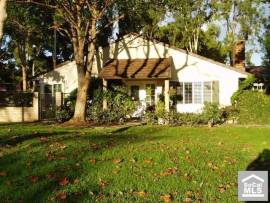
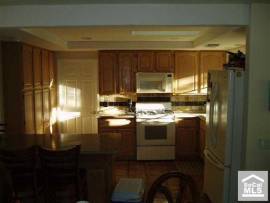
Irvine Home Address … 5322 PLUM TREE Irvine, CA 92612
Resale Home Price …… $490,000

No stop signs
Speed limit
Nobody's gonna slow me down
Like a wheel
Gonna spin it
Nobody's gonna mess me 'round
Hey Satan
Paid my dues
Playin' in a rockin' band
Hey momma
Look at me
I'm on my way to the Promised Land, wooh
I'm on the highway to hell
Highway to hell
I'm on the highway to hell
Highway to hell
AC/DC — Highway to Hell
Couple accused of squatting in vacant Newport homes
.png)
NEWPORT BEACH – A husband and wife were arrested Thursday morning and face charges of illegally living in homes as squatters.
Chris Wayne Duncan, 42, and Robin Ann Duncan, 36, both of Newport Beach, were each charged with one felony count of conspiracy to commit second-degree burglary, second-degree burglary and unauthorized entry of a dwelling, according to the Orange County District Attorney's Office.
If some enterprising attorney wants to take on this case, I will give plenty of free press coverage here. How can we convict these people of anything given how much legal squatting goes on today? Delinquent loan owners are also occupying real estate they are not paying for. The only difference is that loan owners got a lender to give them purchase money on the false promise that the borrower would pay them back. The only difference between these people who might go to jail and delinquent borrowers is that the borrowers signed some papers and made promises of repayment that they did not keep. At least the squatters were open about their theft.
Chris Duncan is accused of finding properties that were in foreclosure and vacant. In September 2010, prosecutors allege, the Duncans drafted a fraudulent lease of 10 Hidden Pass – a foreclosed and vacant property in Newport Coast – and then broke in and illegally moved in.
It takes nerve and style to squat in a Newport Coast house. They probably could have gotten away with it in Riverside County. BTW, 10 Hidden Pass is a perfect example of shadow inventory.
According to the District Attorney's Office, the couple claimed to be renters of the property and had utilities turned on in their names to give the appearance of legitimate tenancy.
In October, when an appraiser went to the property as part of the process of short sale, the Duncans changed the locks and kept the appraiser from entering the home, prosecutors said. The couple is accused of telling the appraiser that they were legal renters and that the owner should contact the Duncans directly.
According to the District Attorney's Office, the owner then contacted the Newport Beach Police Department, which investigated the claim and arrested the Duncans.
The Duncans are each being held in lieu of $25,000 bail. An arraignment date is pending.
If convicted, the couple faces up to three years in state prison.
Is it harsh to call out the people living in homes they aren't paying for? Are these poor, downtrodden homeowners who are struggling to meet their obligations deserving of my compassion? Were these squatters duped into taking hundreds of thousands of dollars in mortgage equity withdrawal?
I say no. These people made a promise to either pay back the loan or give back the house. I have no problem with them not paying back the loan. They are exercising a contractual right if they strategically default. There are legitimate family hardships that justify defaulting on the mortgage. However, after people default, they need to get out of the house. They need to stop squatting and make room for a family that can afford the house. The squatting is far more irritating than the mortgage default.


Family home of 22 years lost to pre-foreclosure borrowing
IRVINE, Calif. — The Spendthrift family of Irvine Village University Park lost their family home. A house they owned since 1989 when they bought the property for $232,100.
The Spendthrifts enjoyed twenty-two years of the ups and downs of the housing market. They bought in the middle of the second irrational price rally to hit California real estate. The floated on the froth of equity vapor the held the Irvine market up from 1990-1997. They had learned by the late 1990s how to serial refinance to raid their home equity whenever they needed it.
Apparently they needed it quite regularly.
- On 4/14/1989 they paid $228,500. Their mortgage information is not known, but it was likely an 80% loan with 20% down, $182,800 and $45,700 respectively.
- On 5/14/1998 they refinanced with a $169,500 first mortgage.
- On 7/15/1998 they obtained a stand-alone second for $45,200, and the Ponzi scheme began.
- On 11/30/1999 they obtained two stand-alone second mortgages for $36,570 and $25,500.
- On 10/30/2000 they obtained another subordinate mortgage for $46,000.
- On 8/15/2001 they refinanced the first mortgage for $256,000.
- On 9/7/2001 they opened a HELOC for 64,000.
- These refinancings go on and on and on….
- On 6/10/2003 they refinanced with a $322,700 first mortgage.
- On 12/22/2003 they obtained a $100,000 HELOC.
- On 9/18/2004 they opened a $150,000 HELOC.
- On 6/28/2005 they got a $200,000 HELOC.
- On 3/8/2006 they refinanced one last time with a $508,000 first mortgage and a $85,000 stand-alone second.
- Total property debt is $593,000.
- Total mortgage equity withdrawal is $410,200.
- They stopped paying in mid-2009, so they have been squatting for about 18 months so far.
Somewhere along the way, do you think those borrowers realized they were Ponzis? Did their blind faith in contiinued house price appreciation make their borrowing appropriate? Do you think they will feel any guilt about taking all that money? Or does the pain of losing their house wipe their conscience clean?
During the Great Housing Bubble, when prices more than doubled in about 5 years, the Spendthrifts went back to the housing ATM over and over to satisfy their growing level of entitlement.
Then prices went down, their payments came due, and nobody would extend them another loan to make those payments. Their personal Ponzi scheme collapsed. It's over. They lose the house.
Twenty-two years after buying the property, these loan owners are going to leave penniless, their credit in tatters, and their faith in California real estate appreciation being put to the test. They will not own again for a while, nor will they get the free money ownership entails. It must suck for them to live within their means after not having to for so long. Are you tearing up for them?
Irvine Home Address … 5322 PLUM TREE Irvine, CA 92612 
Resale Home Price … $490,000
Home Purchase Price … $228,500
Home Purchase Date …. 4/14/1989
Net Gain (Loss) ………. $232,100
Percent Change ………. 101.6%
Annual Appreciation … 3.5%
Cost of Ownership
————————————————-
$490,000 ………. Asking Price
$17,150 ………. 3.5% Down FHA Financing
5.07% …………… Mortgage Interest Rate
$472,850 ………. 30-Year Mortgage
$102,269 ………. Income Requirement
$2,559 ………. Monthly Mortgage Payment
$425 ………. Property Tax
$0 ………. Special Taxes and Levies (Mello Roos)
$82 ………. Homeowners Insurance
$209 ………. Homeowners Association Fees
============================================.jpg)
$3,274 ………. Monthly Cash Outlays
-$424 ………. Tax Savings (% of Interest and Property Tax)
-$561 ………. Equity Hidden in Payment
$34 ………. Lost Income to Down Payment (net of taxes)
$61 ………. Maintenance and Replacement Reserves
============================================
$2,384 ………. Monthly Cost of Ownership
Cash Acquisition Demands
——————————————————————————
$4,900 ………. Furnishing and Move In @1%
$4,900 ………. Closing Costs @1%
$4,729 ………… Interest Points @1% of Loan
$17,150 ………. Down Payment
============================================
$31,679 ………. Total Cash Costs
$36,500 ………… Emergency Cash Reserves
============================================
$68,179 ………. Total Savings Needed

Property Details for 5322 PLUM TREE Irvine, CA 92612
——————————————————————————
Beds: : 3
Baths: : 2
Sq. Ft.: : 1372
Lot Size: : 1,500 Sq. Ft.
Property Type:: Residential, Single Family
Style:: One Level, Ranch
Year Built: : 1974
Community: : University Park
MLS#: : S599118
Source: : CARETS
Status: : Pending
——————————————————————————
Upgraded University Park Home With Remodeled Kitchen, Recessed Lights, French Doors, Skylights And Much More. Bright And Open Floor Plan Featuring Large Living Room With Fireplace, Sunny Kitchen With A Bay Window, Two Large Private Patios. Tract Is Like No Other With Huge Parks, Lots Of Trees, Private Driveways, Assoc Maintained Front Lawns And Landscaping, Pools/spas/clubhouse.
I hope you have enjoyed this week, and thank you for reading the Irvine Housing Blog: astutely observing the Irvine home market and combating California Kool-Aid since 2006.
Have a great weekend,
Irvine Renter
Banks were never counting on your word to back up a mortgage…that’s what the collateral value of the home is for. That’ also why credit cards rightfully carry higher rates than mortgages – there’s nothing to take back. When there’s 20% down on a home, in a market that is not declining, the lender might profit off a foreclosure. But they’d usually work out the loan or the owner would sell. Now we’ve got no-downs in a decline so the collateral doesn’t cover the loan.
CalculatedRisk’s Tanta talked about the three C’s of mortgage underwriting. People loved to talk about ‘subprime’ and the riskiness of those with low credit scores (one-C). They didn’t want to talk about the middle/upper class that borrowed way past their income paying Capacity. Or the corrupt appraisal system that would give the collateral any value to get the deal done,
The bubble was built on an idea that prices would continue to increase. Not even that they wouldn’t go down or might stay flat, but the constant increase was a necessary condition for all the fancy mathematical analysis underlying the mortgage securities. Garbage-in-garbage-out is what they taught in my 8th grade programming class. You put in pure assumptions as fact into your program and you can get it to tell you whatever you want. I got a 50% raise from 2002-2003. If I assumed that would continue, I could have bought a much bigger home in 2003.
There are actually four C’s of loan underwriting:
Character
Collateral
Capacity
Credit
What went missing during the GHB was the character check…it got rolled into the credit score when it used to be a seperate evaluation…
Credit is the form of Character modern finance uses.
I think Character was down away with long before the GHB.
If the 3 Cs are used properly, lending should work out pretty well. The issue with the GHB is not the loss of Character, but not using the 3 Cs prudently.
I completely disagree. Lots of high-character people took out bad mortgages (either from their POV or the banks) during the bubble. Most sales in 2006 in the bubble states had problems. Without the bubble, if a borrower got into trouble they could sell. Underwater, the option becomes foreclosure.
That’s not to say that there weren’t a lot of shady characters getting loans. But a lot of those were RE ‘investors’ who were viewed as above average character borrowers. He’s got four homes (that he extracted this DP from) and is generous with his donations (sure the money is heloc), he’s of great character and no risk.
I’ll bet there was a 2 year pre-payment penalty on their last refinance. They put it on the market in late February 2008 at a price ($639,000) that would have had them just barely getting out after the six percenters took their hard earned payola.
Somehow, with the prepayment penalties and the ARM resets baked into the loans, I think that the banks had calculated things perfectly so that as soon as a borrower went “ponzi”, there was no escape.
Bogus, corrupt lending IMHO. This bubble was perfectly planned.
“six percenters” … now that gets to the essence.
Do we have to capitalize it and add a ®? 🙂
LAW: REALTOR® trademark
http://www.realtor.org/archives/lawoct04
3 years for a non-violent crime where no one was injured and no property damaged? You could get less on a DUI with massive property damage and injury.
You could get more time than that by selling a certain type of plant.
Another poor use of public-safety time, funds and effort.
Criminal trespassing would be a much more appropriate punishment for these people.
It’s a misdemeanor that allows allows up to six months in a county jail and a maximum $1,000 fine.
You break into a vacant house and use it for a weekend party, that is 1 criminal trespass charge… You set up shop in the house and live there for months, that is a more severe crime.
How about we treat each week that they were there as a separate trespass offense? Or every time that they came and went?
The difference between the Duncans and the typical foreclosed squatter is the diff between civil law and criminal law.
Strange and illogical be the workings of our legal system. I believe that 3 years is a little severe for the Duncans’ crime, but they DID break and enter, strictly speaking, and there was a time when breaking and entry got you ten years at least, and more serious and violent crimes, such as armed robbery, guaranteed the perp 20 years in the house of many doors. However, nowadays we let murderers walk the streets after five years, and we as much as invite people to borrow money they have absolutely no chance of being able to repay.
What I find much more unjust than the difference between the treatment of the people like the Duncans, and foreclosure “victims” who squat for two years, is the difference in treatment accorded different classes of debtors, mainly that of people who owe large amounts of college debt, and people who owe mortgage or credit card debt.
If you have home debt or cc debt, or car loans that you can’t pay, you usually can get completely cleared, or at least must pay back no more than 20% of your debt, and even higher-income people are completely cleared if their debt loads are large enough.
However, there is one class of debtors to whom no quarter is given and who occupy a different class completely, and that’s people who owe college loans. Not only can you not bankrupt out of federally-insured college debt (Sallie Mae and other federal loan programs), but the Bankruptcy Reform Act of 2005 made it impossible to clear private college debt that is not federally insured.
The Truth in Lending laws are not applicable to college debt, and there are no limits on the late fees and “collection” fees a lender can apply to a loan. Inability to pay because of illness, accidents, or unemployment will get you no forbearance. Creditors are allowed to use tactics they haven’t been allowed to employ for other kinds of deadbeat debtors since the early 1960s- creditors can call your neighbors and relatives and lie, telling them you used them as co-signers. They can call your employer should be lucky enough to have one. Worse, default often causes you to lose the license or certification to practice the profession you borrowed hundreds of thousands of dollars to prepare yourself for. Lenders almost always apply a “collection fee” of 25% OF THE OUTSTANDING BALANCE, for every late payment, which is how a balance of $20K becomes $80K in a couple of years. Larger balances often bury the borrower for life.
While I believe that general amnesty for all college borrowers is a bad idea, especially if we continue to enable the creation of still more unrepayable college debt through federal student loan programs, we need to grant college borrowers the same rights and protections that other creditors have. There should be no class of debtors automatically consigned to virtual life-long debtors prison while others walk completely free after scamming the system for hundreds of thousands, or even millions, of dollars. That,of course, means that the bulk of the tower of college debt out there won’t be repaid, because most of the people who incurred it will never get jobs that pay the salaries that justified going into school debt, or will pay the debt back.
Time to sunset all the federal programs that accomplish nothing but to make debt slaves of our population, and shut down Sallie Mae AND Fannie, Freddie, and the FHA.
However, the only way we will ever get our economy moving is to get rid of all the debt hanging over it, and the only way to clear all the debt that can never be repayed is by foreclosure and bankruptcy. So we must let this debt be cleared through bankruptcy just like we let FHA loans and loans insured by Fannie and Freddie be cleared through bankruptcy and foreclosure, especially since the “collateral” in a house loan- the house- is usually worth so little relative to the amount of debt it secured, that the loans are essentially unsecured just as college loans are. Both elementary justice and the need to reset our economy demand that we allow college debtors the same rights as other debtors.
And when we’ve done that, we need to sunset the federal student loan programs and subsidies AND all federally insured house loans and “affordable” housing subsidies and programs, so that we never again blow up the monstrous debt bubbles of the early 21st. People aren’t entitled to the money for college anymore than they’re entitled to subsidies to buy a house. Best of all, perhaps when we eliminate college loan programs and subsidies, tuitions will reset to levels affordable to those paying as they go, and best of all, perhaps employers will provide the on-the-job training they did in former times, instead of demanding college degrees for non-professional jobs that will never pay the incomes that justify spending $50K or more obtaining a degree.
“So we must let this debt be cleared through bankruptcy”
I have to disagree with you on this. Not the part about school loans getting different treatment than others, but about the whole forgiveness thing. My problem with it is that all indication is that vast majority that seek forgiveness are over-spenders, not earnest business failures or extraneous circumstances. Forgiving debts of over-spenders doesn’t accomplish much. They certainly won’t learn to “clean-up and start anew”.
In some countries failure to pay debt is a crime and you have 2 choices: either pay the loan back by a certain time, or be forgiven of debt and go to prison. Law has to be applied uniformly (for the most part) so this may not be the ideal solution, but it does curtail over-spending.
I recognize the moral hazard here, but guess what- it was already here.
Our error lies not in clearing debt that can never, ever be repaid, but in creating a system of taxpayer subsidized incentives that triggered its creation.
I’m not in favor of permitting bankruptcy where the debt can be repaid, and that’s why I don’t support general amnesty for student debt. People assumed this debt on the premise that it enable them to qualify for much better incomes, so if they have the income they should pay it back.
However, it is senseless and destructive to pretend that the immense tower of private debt created in the past 15 years can ever be repaid. It can’t. Not possible. Now, corporations are permitted to bankrupt out of amounts of debt equal to the GDPs of many small countries, and bankruptcy has always been a remedy for individuals who are simply buried so deeply they will never be clear in three lifetimes. It should be relatively difficult to obtain bankruptcy, and it should not be possible for a bankrupt to incur more debt afterward.
But it is the only way we will ever move forward. As it is now, foreclosure ‘victims’ with massive deficiencies, as well as 2nd and 3rd mortgages and HELOCs, are cleared if they don’t have the means to repay, and most of them don’t.
Therefore, a college borrower with an income of $40K and below, and college debt that has swelled to an amount that such an income will never pay back, should get the same relief a home borrower or cc borrower would. Moreover, college lending should be regulated as other lending is, and there should be limits on how much late and “collection” fees can be added to the balance. Truth in Lending provisions should apply.
Right now, lenders are completely protected from their own carelessness and malfeasance in student lending, and as long as they are, young people with no financial savvy but desperate for funds for education, will continue to fall into these traps.
Time to stop enabling this. Shut down the student loan programs, or at least cap total student debt for one person at a reasonable amount, like $25K for one person, for his lifetime. And sunset every other government program whose whole purpose is to create debt.
I don’t think we can assume that current debt is unrepayable, at least not on an individual basis. I think the vast majority of individuals CAN pay their debts back, they just choose not to or don’t know how to because of their spending habits. I was fairly strongly opposed to corporate bailouts, as I don’t think bailouts accomplish anything long-term, just immediate remedy of current dilemma. I think what it does do on the negative side is to set up repeatable and habitual behavior.
I agree with you that special stringency on school loans is horrible, if anything it should be the other way around especially with the rate of increase in tuition costs. At least they’re trying to get an education to try and give the nation a chance to continue to innovate and grow. I also agree that a general amnesty is a bad idea, as it leaves a lot of room for scams.
I think what needs to change is the way we go about, as a nation, encouraging spending with no education on how to spend it right. I get the spending thing, economy 101 says we as a nation must spend to stimulate economic growth. However, I think we teach “spend at all costs”, have programs that allow people to do so, and then preach that strategic debt is GOOD. There is no education on HOW to spend correctly and prudently.
We need to put in place some stringent laws that discourage debt-incurring (as opposed to discouraging spending, which would be counter-effective for economic growth), and some type of an education program that teaches financial responsibility. Yeah, that’s tricky, but the marketplace has come up with plenty of “innovative” ideas to encourage debt, I think we can use the same creativity to discourage it (or at least be smart about it). But IMO, forgiving debt is not one of them.
Would loans be necessary if the price of homes & education were properly priced? What really is the point of carrying a bank or lending institution on your back for decades? Everybody talks about the “free market” system dictating what the price of a product or service should be.It would appear that things our society deems “BIG TICKET” would wish to continue to be immune from that reality.
I believe that the availability of credit is what has driven up the cost of education and housing.
College tuition has increased faster than any other good or service in our economy and has far outpaced inflation. These days, almost any mediocre private college cost $40,000 a year or more, mostly more, to attend. $35K is the rock-bottom tuition for a private school.
I don’t believe tuitions would ever have inflated to these levels without the college loan programs. Worse, the availability of loans for college has triggered the formation of hundreds of new schools, most of which are of very poor quality and whose degrees are worthless in the job market. Additionally, hundreds of thousands of young people have borrowed $80,000 or more to get degrees in fields that never have offered the kind of salaries that would enable them to pay back these massive debts.
All our government-sponsored housing and higher education programs have accomplished is to inflate the prices of housing and education, with no net gain. We are no better housed or educated as a population that we were 50 years ago, and in many respects we are worse off in these areas than we were then. I’ve never seen so many homeless people, nor have I ever encountered so many people with 4-year degrees who couldn’t pass a 10th-grade-level math and reading skills test.
Better to put the educational funds into improving our grade schools and high schools, so that people graduate from high school with the same skill level they did in 1960, instead of having to pay for 4 years of college to attain the level of skills they should have had when graduating high school. Our population would be better-educated and our younger generations spared life-times of debt serfdom.
I’m OK with college loans not being discharged in BK. In theory this should lower the interest rate since the lender is exposed to less risk. Also, if the borrower defaults the bank can not seize the education. It would be like not paying the mortgage and still being allowed to live in the house…
Of course the other stuff associated with student loans (truth in lending exception, onerous fees) are totally ridiculous. If the borrower can’t discharge the debt in BK there isn’t really much need to even allow late fee charges–except to pad the banks’ balance sheets.
College should be *free* to those who prove through hard work that they meet and/or exceed the entry requirements.
Education is key to the strength of a nation, but we pour money into wars, and very very little into educating our public. America is crumbling within due to politicians, lawyers, and corruption. All three go hand in hand. Most democracies do not last, they crumble from within, kind of like what America is doing now.
Rome anyone? Maybe we can have a nation wide bake sale to provide every single Senator or Representative a lyre to play as econimic America burns.
University of California used to be tuition free. All you had to do was get accepted. Now it’s a way to scam lots of ignorant scared kids into lifetime debt servitude, like my brother in law who’s 130k in student debt for a psychology degree.
Nothing is “free.” To argue that college should be ‘free’ is to argue that a group of people who may not have attended college, or attendend college elsewhere, must pay to support a certain other group of people (i.e., students) who would benefit economically from university anyway. That makes little sense. The cost of education needs to be shared, and the benefciaries need to pay part of that share.
We also need to abandon the fallacy that “education” or “college” is always worthwhile. Sorry, but an engineering degree from Stanford is worth immeasurably more (to the recipient and society) than a degree in ______ studies from cal state whatever, or god forbid, the for-profit “university” in your local office park. Interestingly, the cost of those degrees are quite similar. The government’s efforts to make college affordable for everyone have led to an explosion of colleges that aren’t teaching anything useful, students who shouldn’t be in college taking on giant debts to learn something useless, and massive inflation in tuition at all institutions. Government financial aid (grants and loan guarantees) should be available only for students majoring in engineering, natural sciences, elementary/secondary education, medicine/nursing, and maybe business/economics. This is not to imply that studying liberal arts and social sciences is worthless, but advances in these fields are not what drive society and the economy forward and right now this is where the bulk of educational resources are directed.
Well said, but the government is more likely to go give student loans to those who get advanced degrees to flip houses in Vegas.
I actually used to live on this street. I don’t think this was a problem for them because last time I heard they bought/owned a house in another cheaper state before the crap hit the fan with this house. Maybe that’s where some of the heloc money went.
Stop bringing facts to the table. I don’t care that you lived on the street and know they bought a house and are doing fine.
I’d rather accept Irvine Renters wild and depressed assumptions of destitute after they lived rent free legally for 18 months (banker charity) and got free cash for 21 years. People who post facts here are real downers.
Huh?? They defaulted on this house, right? Who cares what they might have done with the heloc? They still took it out and defaulted on this one. Heck, if I took a heloc to get a Harvard MBA and default on the house, the record will show I still defaulted on the house. If they are doing fine then even more shame on them. They basically withdrew from their house to buy another one and then abandoned the one they took the money out of. Screw the lender over but they’re doing fine. That’s just great.
How did they “screw the lender over”? Banksters lend money at interest…this is called USURY. It is not sent from God, in fact, most muslim countries forbid usury.
When USURY masters “lend” you money, they take on risk, and for that risk, they get paid usury. They gambled by lending money and they lost, however, they still have the property so it wasn’t a total loss.
It’s sad when people have compassion for USURY masters and none on the slaves/prisoners of a fraudulant monetary policy. I’m not defending squatters, but I’ll bet you all my bullets that I have much more in common with these broke folks, than I do with the fat cats.
It’s simple class warfare. If these people had money, they wouldn’t spend a day in jail. Our justice system is bought and sold for.
Class warfare is especially prevalent in the “Drug War”. Crack cocaine gets a stiffer penalty than poweder cocaine…why? Black americans are arrested and incarerated at a much higher rate for marijuana…why?
These squatters were charged with crimes that you and I as taxpayers, will have to pay for, including any jail time. The pigs love it, beat cops, prison guards, prosecuting attorneys and all the lackeys get paid 3% at 50, get praised as “heroes”. The term pig probably didn’t originate from the hordes of “heroes” greedily chowing down at the trough of public funds, but the mental picture works quite well.
Animal Farm indeed. Class warfare, it rocks. Anyone ever see “COPS” on TV breaking down the doors of Newport Coast homes for drugs? Oh that’s right, rich affluent people don’t abuse drugs.
Class Warfare.
I have to agree with the premise in regards to the housing situation. These people were identified by their neighbors as undesirables. Cops come and away they go. Detroit, Vegas, Riverside, etc. residents are easy to foreclose upon because they represent the working class. Irvine residents can squat because they are more like the banking community and therefore more trustworthy. It is the main reason I am converting to the belief that Irvine will be the new middle class version of Bel Air. The banks will be allowed to keep Irvine prices inflated and those who can afford the prices will be surrounded by their own kind. Utopia is one inflated mortgage away.
There’s no evidence that the banks are foreclosing on poor people in bad neighborhoods quicker than rich ones, or vice versa for that matter.
“There’s no evidence that the banks are foreclosing on poor people in bad neighborhoods quicker than rich ones, or vice versa for that matter
Says the girl that doubted shadow inventory for years calling it “mythical”.
LOL
Upgraded University Park Home With Remodeled Kitchen, Recessed Lights, French Doors
http://www.crackthecode.us/images/french_doors.jpg
LOL! I’m going to use that graphic.
Now THAT, my friend, is a french looking door.
Why says Irvine is Immune? Take a look
http://www.latimes.com/business/la-fi-ghost-towns.eps-20110106,0,4631232.graphic?source=patrick.net#content
Irvine (-36%) prices dropped more than LA/Long Beach Area (-32%)
Nice try!
What you neglected to post is that the price drop percentage lumps Irvine in along with Santa Ana and Anaheim.
Methinks IR will change his tune when he has to deal with a breakin squatter in one of his investment properties..
remember all that back and forth on foreclosures and banks producing the correct documentation…well it looks like a judge just made a ruling. i think its absolutely wrong and am amazed that this happened.
http://www.bloomberg.com/news/2011-01-07/us-bancorp-wells-fargo-lose-pivotal-massachusetts-foreclosure-case.html
The state Supreme Judicial Court today upheld a judge’s decision saying two foreclosures were invalid because the banks didn’t prove they owned the mortgages, which he said were improperly transferred into two mortgage-backed trusts.
Here is an extract from the Mass ruling. I think words like ‘utter careleness’ ascribed to the bank by a state Supreme Court judge is language that wouldn’t be lightly used. The ruling does make reference to the fact that the title transfers need not have taken place before the foreclosure, but they do need to be done.
I concur fully in the opinion of the court, and write separately only to underscore that what is surprising about these cases is not the statement of principles articulated by the court regarding title law and the law of foreclosure in Massachusetts, but rather the utter carelessness with which the plaintiff banks documented the titles to their assets. There is no dispute that the mortgagors of the properties in question had defaulted on their obligations, and that the mortgaged properties were subject to foreclosure. Before commencing such an action, however, the holder of an assigned mortgage needs to take care to ensure that his legal paperwork is in order. Although there was no apparent actual unfairness here to the mortgagors, that is not the point. Foreclosure is a powerful act with significant consequences, and Massachusetts law has always required that it proceed strictly in accord with the statutes that govern it. As the opinion of the court notes, such strict compliance is necessary because Massachusetts is both a title theory State and allows for extrajudicial foreclosure.
The type of sophisticated transactions leading up to the accumulation of the notes and mortgages in question in these cases and their securitization, and, ultimately the sale of mortgaged-backed securities, are not barred nor even burdened by the requirements of Massachusetts law. The plaintiff banks, who brought these cases to clear the titles that they acquired at their own foreclosure sales, have simply failed to prove that the underlying assignments of the mortgages that they allege (and would have) entitled them to foreclose ever existed in any legally cognizable form before they exercised the power of sale that accompanies those assignments. The court’s opinion clearly states that such assignments do not need to be in recordable form or recorded before the foreclosure, but they do have to have been effectuated.
I’m slightly amazed but, after quickly reading the decision, it isn’t terrible. Here are my quick thoughts:
Long story short, the bank has to go back and do the foreclosure over. They didn’t submit proper evidence to the initial trial court to establish their standing to foreclose.
In the short term, this may create a few headaches in Massachusetts where similar shoddy evidence was submitted of the loan’s ownership (the court atually does a pretty good job of laying out the evidence that would be sufficient and it conforms with the standard industry practice of assigning and securitizing loans as I understand it). Owners who defaulted and lost their homes after shoddy evidence was submitted may be entitled to be foreclosed on again after having a prior foreclosure set aside (what a waste of resources for all involved). This might be a problem if you now owned one of these homes that you bought after a foreclosure. If this decision is bad for anyone, it is bad for title insurers.
Good luck sorting this one out, Massachusetts.
If you find that your mortgage company used MERS, then you should strategically defualt and sqaut in the home rent-free.
Squatting has the benefits of living rent and worry free, all the time saving loads of cash. But do not take the money and spend it like some morons have. Use it to buy your mom, dad or trusted relative a home free and clear.
When bill collectors call, just tell them that you are recording the conversation for quality control. Just watch them slink away.
When you receive the foreclosure notice, do not move out. Fight it every step of the way, from contesting the filings of the banks, to appealing the decisions of the judge.
In time, the bank will move on and stop harrassing you.
However, under no circumstances should you strip the house of copper and fixtures, pour cement in the toilet, leave rotting meat in the ducts, or take a sledgehammer to toilets, walls and countetops. You have to draw the line somewhere…
IR, the only problem that I have with your call for the non-payers to move out is that until the bank takes title, they are legally responsible for the property. So if they move out and squatters move in, or the place burns and it involves a neighbors house, or if the yard goes wild and the city levies a fine, they are on the hook.
The solution is for the bank to *actually* take back the property title in a timely way. Until that happens, I would actually counsel (though IANAL) to stay in the property to safeguard it.
Squatters? Delinquent loan owners?
You guys crack me up. You seem to ignore the fact that this corrupt banking system has no right (let alone authority) to foreclose.
The banks never had the money they ‘invented’ for you out of debt and they sold off the notes and have been paid 4x over. Now they are collecting your tax money through HELOC ‘payments’ and STILL foreclosing. But people are becoming privy to this and fighting back.
SEE: ‘Banks illegally foreclosed, court rules’
http://mortgage.ocregister.com/2011/01/07/banks-illegally-foreclosed-court-rules/41292/
The final question is… who are the judges working for: The people or the banks?
Wake up and realise that you have been duped into believing that this corrupt money system is anything more than paper.
youtube ‘money as debt’ & ‘the secret of oz’
=peace
If today’s loanowners had limited their re-fi’s to just lowering the rates and not taken cash out, they would be sitting pretty.
And they still would have had more cash to spend along the way.
Based on the principle value of the refi in 1998, their principle and interest payments would have been about $1090 on a 5% loan with only 8 years left on the mortgage vs $3180 P&I with 25 years left to pay. (assuming that they reset the loan term to 30 years back in 2006)