Real estate sellers that can't get their asking price often consider renting the property and waiting for better days. Now even the federal government is considering holding some if its property purchased as REO through the GSEs. Is that a good idea?
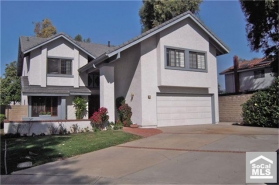
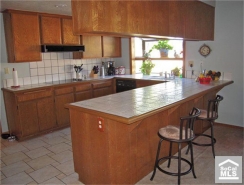
Irvine Home Address … 1 West FORTUNA Irvine, CA 92620
Resale Home Price …… $669,000

I've had choices
Since the day that I was born
There were voices
That told me right from wrong
If I had listened
No I wouldn't be here today
Living and dying
With the choices I made
George Jones — Choices
The government has choice to make with its REO. Based on past choices we have seen coming out of Washington, I suspect they will make the wrong choice, but with so much pressure to do the wrong thing, making the right choice is nearly impossible for most politicians.
Government Weighs Turning Foreclosures Into Rentals
By Nick Timiraos — July 22, 2011, 11:28 AM ET
There’s an 800-pound gorilla in the nation’s hardest-hit housing markets: hundreds of thousands of foreclosed properties are selling, and there’s four times as many potential foreclosures behind them.
The Journal writes today that one idea gaining support in Washington is an effort to pull some of those properties off the market and rent them out, either on homes owned by federal agencies or loan giants Fannie Mae and Freddie Mac.
Ordinarily, I would be appalled by this idea. Keeping houses off the market in order to keep prices too high for families to afford is abominable, particularly for the government which is supposed to help facilitate affordable housing. However, in many markets, prices are not too high for families to afford. In Las Vegas, two minimum wage workers can combine incomes to purchase a single-family detached house. Affordability is not a barrier to anyone in Las Vegas. Prices do not need to be lower there to attract families or investors.
In markets like Las Vegas, withholding inventory from the for-sale market and renting them out makes sense. In fact, in any housing market where the cost of ownership is 30% or more less than the cost of rental, these houses should be rented rather than sold. Whenever the cost of ownership and the cost of rental gets out of balance, the market is sending a signal. When owning is significantly less expensive than renting, the market is telling participants to buy. However, in Las Vegas, most of the potential buyer pool just went through foreclosure and can't buy. Therefore the imbalance between the cost of owning and the cost of renting gets worse. Under those conditions, the market is demanding more rentals.
These firms and U.S. banks currently own more than 500,000 foreclosed homes, and there’s another 2 million loans in some stage of foreclosure. The high share of distressed sales in many struggling markets is contributing to continued declines in home prices.
“Can we find a way to try and reduce that overhang or to try to provide incentives for investors to covert them?” said Federal Reserve Chairman Ben Bernanke in testimony to Congress last week.
Ben Bernanke is suggesting providing incentives for investors? I suggested the same thing last year in the post Should Government Mortgage Subsidies Be Offered to Cashflow Investors?, and I was lambasted. My argument was simple: “In housing markets where a significant number of properties are being converted from owner-occupied to rental status, there is no government program or help for this transition to occur. Without government help, prices fall far below fundamental valuations as the imbalance of supply and demand becomes extreme. The only solution is to reduce supply and increase demand. To accomplish this, I propose that the GSEs promote investor programs that reduce the cost of ownership to small investors and encourage them to keep the supply off the resale market.“
Nine months later, and Washington has finally caught up with my ideas.
Critics worry about the risk of the government as landlord. One solution: sell federally backed foreclosures to investors who would have to agree to rent them out for a to-be-determined period of time. Investors would rehab the properties, fill them with tenants, and hire a national property management firm to oversee the day-to-day landlord needs.
Supporters say while the government isn’t set up to be a landlord, neither is it any better prepared to sell thousands of foreclosed properties — something it’s already doing anyway. “Putting these homes in the hands of people who can take care of them and rent them out” would save taxpayer money, says John Burns, who runs a home-building consulting firm in Irvine, Calif.
John Burns is right. We really don't need the government to be involved in this. Real estate cashflow investors will stabilize the housing market all on their own. As I noted in that post: “The best solution does not require a subsidy. Merely eliminate the limit on the number of mortgages a cashflow investor may have, and count 75% of the rental income toward the payment. Eliminating the limit on the number of mortgages costs no money, and it allows those investors with expertise in obtaining and managing properties the ability to acquire more. By counting a portion of the rental income toward qualification, wherever the prices are low enough for cashflow investors to make a profit will quickly get bid up to the limit of available financing.
None of this costs the government anything, and the demand it creates is not artificial based on a financial subsidy that inflates prices. The GSEs are merely eliminating an artificial barrier they created. This demand would seek out the most downtrodden markets and put a floor beneath prices in those areas. Very little of that money would flow into inflated markets like Orange County because so few properties meet the criteria.”
So far, the Fannie and Freddie have disappointed institutional investors by resisting selling homes in bulk at deep discounts. Instead, foreclosures are either sold through regular retail listings or in public auctions, known as trustee or sheriff sales. Those auctions have attracted primarily mom-and-pop investors but also include hedge fund-backed debt buyers.
I hope the GSEs continue to resist giving away properties to institutional investors. Selling to small investors will increase their recovery significantly, and I don't want the competition.
Two years ago, investors increasingly scooped up cheap properties at auctions in the hopes of rehabbing and quickly reselling them for a profit. But declining home values — and increased competition from investors — has made that much harder.
The margins at auction are in decline. In fact, over the last month or so, there has been far too much money chasing too few properties. Lenders have been pushing fewer properties through the auction sites because they are oversaturating the MLS, but the lure of easy money has drawn dumb money to the auction site where prices are being bid up to near retail levels on some properties. Auction markets have ebbs and flows, but the increasing competition has reached a point where many will overpay and lose money never to return.
Meanwhile, the discounts for foreclosed properties in some markets are so attractive “that it looks like the cash flow investors are getting [on rentals] is awfully good,” says Thomas Lawler, an independent housing economist in Leesburg, Va.
One sign that investor demand has picked up for cheap properties that can be rented: in Phoenix, the number of homes selling below $100,000 was up 41% from one year ago in May, while all other sales were down 11.3%, according to DataQuick, a real-estate data firm.
“It doesn’t take too long as an investor to recognize the opportunity: home prices are less, but rents are more,” says Eric Peterson, a former homebuilder and co-founder of Praxis Capital, which has launched a $10 million fund focused on renting out foreclosures. Once prices stabilize and begin rising in a few years, “we’ll be holding a fair amount of inventory, and we’ll be ready to sell.”
The idea has won backing from a number of influential private sector minds. Rental programs could “solve a couple of policy problems with one solution” by also extending qualified tenants an option to one day purchase the homes, said mortgage-bond pioneer Lewis Ranieri in a recent paper with Kenneth Rosen, a housing economist at the University of California at Berkeley.
So where should smart investors look for these rental home deals?
Best cities to invest in rental homes
In Las Vegas, investors willing to take a gamble could win big
Amy Hoak — July 11, 2011, 5:53 p.m. EDT 
HomeVestors of America and Local Market Monitor released its list of best markets to invest in rental property, and Las Vegas came out on top. HomeVestors is a real-estate investment company; Local Market Monitor is a forecaster of real-estate markets. Read more: Why investing in rentals could be a good move.
In Las Vegas, home prices are down 45% since their peak in 2006, according to the news release from the companies. Even better for investors: Many people who work in the casino industry are renters.
That means investors can buy homes at low prices and have a sizable pool of renters from which to choose.
Unemployment is a problem in Las Vegas, and rental vacancies are also a problem. Personally, I won't buy any properties with less than a $950 monthly rent, and I won't buy condos. Lower priced condos compete with the apartment complexes which offer better amenities. If and investor has a $1,100 a month single-family detached home, she can always lower the rent $50 to $100 and find a suitable renter. If an investor has a $700 per month condo, lowering the rent will not guarantee finding a renter. For that reason, I only consider detached homes with rents over $950 per month.
“What we’re looking for is how do you rank, based on the return that you get on the rentals, counterbalanced with the risk and what the price is,” said David Hicks, the co-president of HomeVestors, the company whose slogan has long been, “We buy ugly houses.”
The return could be short-term (the cash flow attained by renting out the property), long-term (the appreciation of the property over time) or both, he said. The risks include future potential home-price drops in the market.
What makes Las Vegas a unique market is its potential for both immediate cashflow and long-term appreciation. The current cashflow is obvious, but the long-term appreciation potential is based on the idea that prices are far below their long-term trendline, and once the problems with both supply and demand caused by the housing bubble have worked through the system, prices will spring back up to their long-term trendline.
Affordability is like water in a pool, and lender supply is like pushing a basketball below the waterline. Once the pressure abates, the ball pops back up to the surface. In neighborhoods where prices are still inflated above the waterline, prices don't pop back up.

The report looked particularly at single-family home rentals; about 14% of single-family homes in the country are maintained as rental properties, according to the news release. Renting a single-family home can be especially attractive to families who have lost their homes to foreclosure, Hicks said. Once parents have had a backyard for their children to play in, they often don’t want to live in an apartment home, he said.
That is another reason I like single-family detached homes over condos.
Traditionally, HomeVestors franchisees buy only about 12% of houses with the intention of fixing them for rental. A greater percentage of homes are bought to renovate and sell right away, Hicks said.
But that’s changing, and more are looking for income properties, he said.
“We see a lot of investors stung by the stock market over the past few years,” and now they’re turning to real estate, Hicks said. “Even counting the past few years, if you take long-term investing in properties and land, the return on that is some of the best investments people have ever had.”
The calculations in the report assumed markets’ three-year home-price forecasts and gross rents to assign them a risk-return premium. Las Vegas had a 4.7% risk-return premium, relative to the national average; San Francisco, which ranks 100 on the list, had a -2.4% risk-return premium, according to the report. …
Orange County would probably perform similarly to San Francisco as prices remain elevated in both markets. Orange County has poor cashflow and poor long-term potential for appreciation based on its current valuation. One can argue Orange County will experience superior income growth and thereby it will have superior appreciation. That is possible. California kool aid certainly is tasty. I am in no hurry to deploy my money here.


Rental property fund
In the next few months, I will be forming a fund to buy-and-hold cashflow properties in Las Vegas. Now that I know the market and have the team in place to handle the workload, I am prepared to deliver properties. For those willing to take a gamble on Las Vegas, stay tuned.
Put to the bank at the peak
The owners of today's featured property owned it for longer than my records go back. Based on their property taxes, I have inferred they paid about $200,000 about 25 years ago. You would think the house would be paid off by now, but this is Irvine not Indianapolis.
In a perfectly timed refinance, this couple took out a $600,000 loan on 9/16/2006, and followed it with a $227,000 HELOC on 3/27/2007. If they maxed out the HELOC, they obtained full resale value without having to sell or leave their house.
——————————————————————————————————————————————-
This property is available for sale via the MLS.
Please contact Shevy Akason, #01836707
949.769.1599
sales@idealhomebrokers.com
Irvine House Address … 1 West FORTUNA Irvine, CA 92620
Resale House Price …… $669,000.jpg)
Beds: 5
Baths: 4
Sq. Ft.: 2750
$243/SF
Property Type: Residential, Single Family
Style: Two Level, Other
Year Built: 1977
Community: Northwood
County: Orange
MLS#: S664891
Source: SoCalMLS
Status: Active
On Redfin: 21 days
——————————————————————————
End of Cul De Sac, 5 bedrooms, boasting 2 master suites w/ Own Full Bath. This is a Great area for a large Family. Side to a Large Green Belt, has Extra Long Driveway, Custom Built-ins, Custom Oak Balusters & Handrails, Custom Molding, Ceiling Fans, Tile Floors, Spacious Kitchen w/ Newer Appliances & Pantry, Large Family Room w/ Entertainment Unit, Remodeled Fireplace & Custom Windows, Indoor Laundry, Private Backyard, Newer Title Roof, Walk to Award Winning Schools Including Northwood High, Walk to Great Association Amenities-Pools, Spa, Tennis courts, Clubhouse, Tot Lots, BBQ's. Close to Hicks Canyon Trail, Parks & shopping. Low Tax Rate, NO MELLO ROOS, LOW Association.
——————————————————————————————————————————————-
Proprietary IHB commentary and analysis
Since this property is in a neighborhood with no Mello Roos and a low association fee, the current price makes this property at or below rental parity. I challenge anyone to find a comparable rental for less than $2,700.
Resale Home Price …… $669,000
House Purchase Price … $200,000
House Purchase Date …. 1/1/1986
Net Gain (Loss) ………. $428,860
Percent Change ………. 214.4%
Annual Appreciation … 4.8%
Cost of Home Ownership
————————————————-
$669,000 ………. Asking Price
$133,800 ………. 20% Down Conventional
4.48% …………… Mortgage Interest Rate
$535,200 ………. 30-Year Mortgage
$115,947 ………. Income Requirement
$2,705 ………. Monthly Mortgage Payment
$580 ………. Property Tax (@1.04%)
$0 ………. Special Taxes and Levies (Mello Roos)
$139 ………. Homeowners Insurance (@ 0.25%)
$0 ………. Private Mortgage Insurance
$83 ………. Homeowners Association Fees
============================================
$3,508 ………. Monthly Cash Outlays
-$451 ………. Tax Savings (% of Interest and Property Tax)
-$707 ………. Equity Hidden in Payment (Amortization)
$222 ………. Lost Income to Down Payment (net of taxes)
$104 ………. Maintenance and Replacement Reserves
============================================
$2,674 ………. Monthly Cost of Ownership
Cash Acquisition Demands
——————————————————————————
$6,690 ………. Furnishing and Move In @1%
$6,690 ………. Closing Costs @1%
$5,352 ………… Interest Points @1% of Loan
$133,800 ………. Down Payment
============================================
$152,532 ………. Total Cash Costs
$40,900 ………… Emergency Cash Reserves
============================================
$193,432 ………. Total Savings Needed
——————————————————————————————————————————————————-
Whether its a govt owned entity or a private en devour, the lending institution should seek to maximize their profit and minimize their losses. If renting is more profitable for them, then they should pursue that even if it holds prices where they are.
That is an attractive cost of ownership. I paid almost as much to rent a 40 year old 4-bedroom in Tustin.
Too bad I don’t have the 20% 🙁
Rental parity as long as you have almost 150K to put down on it…rental partiy and that massive down need to be included in the same sentence from here on out.
That’s true. It does require the large down payment, but the opportunity cost of taking that down payment out of an interest-bearing account is included in the cost of ownership. Some people talk about rental parity with large down payments as if there is no opportunity cost on that money. From that fault perspective, 2006 prices were at rental parity with 60% down.
Let’s say someone got a 5-yr 6% loan for 10% of the price. That is $1300/mo, or a 50% increase in monthly cost relative to the $2674 monthly cost of ownership. 5-yr treasuries are at 1.5%.
At shorter lengths, the payment is less dependent on interest rate. Going from 6% to 9% is only $100/mo difference on this 5-yr note.
However, the $116k/yr earner who’s at a front-end DTI of 36%, with the extra $1300 on the ‘down-payment-loan’ is now at 50% front-end DTI.
For people with higher incomes and lower savings (young professionals), I would think there would be a great market for this type of loan.
You’re probably right, but with the huge losses lenders are taking on second mortgages, no lender has the courage to make that loan today.
They are, at least where I am. Most are not so short-term as 5-years, but they are getting done.
I have always felt that debt-to-income was a bigger problem than loan-to-value. Of course high numbers for both, layering the risk, is the worst.
What clued me into the housing bubble were people at my family’s income level ~$150k buying nearly million dollar homes. A lot actually had down-payments from selling their bubble homes that might have been 100% down originally. Original $250k home appreciates to $500k, sell, get $250k for dp on $1Mil home.
“…I have always felt that debt-to-income was a bigger problem than loan-to-value…”
I agree. And I also agree that it is the layering of so many risk factors that creates the problem. I think a borderline FHA loan made today is riskier for the lender than refinancing an underwater home at 115% LTV with a highly qualified borrower(s).
However, the borrowers’ DTI can change in a heartbeat dramatically, while the LTV normally remains pretty constant and predictable.
You’re wrong. How has unemployment changed? Maybe 5% more households. Why do we have delinquency rates > 20% in some counties? Their incomes didn’t move by that much. The fact that LTV’s have moved so dramatically (first down as prices went up, then up as prices went down) is what is driving the housing market.
I’d much less object to Larry getting GSE loans than GSE loans being used by hedge funds to buy properties. How many loans could someone get?
Can LLC’s get GSE loans? How do they prove income?
An individual can get 10 GSE loans. I don’t think they make loans to LLC’s or other entities.
Some underwriters will count the potential rental income toward qualification, but others want to see the property occupied as a rental with proof of payment before they will approve the loan.
As would I. Yet I am to the left of Karl Marx, without a pronounced habit of saying “The government never helps when it intervenes in markets” day after day.
If you believe this would work, you’re saying that there are times and places where government intervention in the real estate market is appropriate.
Or are we talking, in this case, about government doing something to mitigate the negative consequences of something else it has done?
I may be just a total bastard, but I think we need to return to < 50% financing in real estate.
I’m a little confused here.
When the government intervenes to help the homeowner, it’s not okay and they should just let things fall where they may.
But if the government can interfere to help the investor, it should be encouraged?
If the cost of owning in somewhere like Las Vegas is 30% lower than renting, why do the investors need more help? The positive cash-flow isn’t enough?
Just let prices continue to fall and more renters will become owners or investors.
Agree, I don’t see the reason for additional tax benefits to encourage additional profits for the investors. Investors will be motivated at the proper level without those incentives, at a natural level that begin to turn in their favor.
Agree. This sounds like a job for our hero, Market Forces, and his magical supply and demand curve price intersector.
Most of the misallocation of resources in real estate resulted from government loose-credit policies and the shady re-packaging of mortgage loans. In either case, the insulation of actors from the full cost of their choices resulted in widespread misinvestment.
The occupant ownership rate went too high. If we follow a policy of easier credit for prospective landlords, then there could be too large an investor presence in rental real estate. I could see taking such action in the service of some real threat to society, but the only consequence of inaction here seems to be lower prices, which are a good thing from any angle.
And, as you say, extremely low prices will have much the same effect as a loose credit program for investors, but with the added benefit of dropping housing prices for buyers as well. Unlike IR’s proposal, this would not tilt the table in favor of investors.
This is the most puzzling piece I have seen on this blog. In the wake of years of pounding home the message that real estate should be left to market forces, we have a statement in favor of loosening credit terms for investor/landlords.
Then again, I have never met a person whose belief system was consistent.
To put it less nicely, this smacks of class prejudice. Why are investors necessarily a better choice for above-market credit terms than owner-occupants?
During the bubble, nearly 50% of all sales were to non-occupants – either vacation or investment properties (most of the vacation props were seen as investments also). The increasing occupant ownership rate was not as problematic as the increasing non-occupant ownership rate.
Three borrowers, one has the $134k DP, but income of $116k for the 36% DTI. Two other borrowers get 10% second loans. The first has a 10yr term, keeping total 36% DTI has an income of $140k, the other with a 5yr term 36% DTI, has an income of $160k. Which borrower represents the least risk?
First one. Risk models always ding second liens.
Risk models also said AAA rated MBS’s wouldn’t lose any money.
Verification ability of income held constant, I would say the highest income is the lowest risk.
I’d side with movin to Oc with this one. Mostly because if the borrower defaults (and the DTIs aren’t that different – if the borrower loses their job it doesn’t matter, same result) and the bank has to sell the place, the big downpaent means their much more likely to get all of the loan payment back with the down payment taking any losses.
I understand this, but you are underwriting a 30 year mortgage. The second borrower has 12k more non-housing-after-tax income. The third has 22k more. Home is a proxy for lifestyle, and I would view those 12k and 22k income cushions as valuable.
Individually the lower DP would have lower recovery in the event of default. That is why you charge a higher rate on the 2nd. It’s sort of lender provided PMI. Insurance can be a profitable business, but not when hurricanes blow through 4 of the biggest housing markets in the US.
Agree 100%
From what I’ve been reading and the prices I’ve seen, Phoenix looks like a good spot to be investing now, too.
Anybody know anything about the Phoenix market?
My experience…there were some fantastic deals on multiplexes in 2009-2010. Nowadays well priced two to four units in desirable areas seem to sell within days, all cash, multiple offers, highest and best. Again, just my two cents. Good luck.
IR,
Will your Las Vegas RPF be leveraged or unleveraged?
Most own to rental formulation assumes someone is allow living or renting the unit. For a landlord, the occupancy rate is usually set at 95% for the long run, but the short-term of a few years that might be way high. The maintance cost is usually set way too low for most places in the US. May apply to some mild weather area but once you get freezing weather, the cost goes way up. High AC maintance is also an issue/cost and with humidity, rot is also an issue/cost.
“In a perfectly timed refinance, this couple took out a $600,000 loan on 9/16/2006, and followed it with a $227,000 HELOC on 3/27/2007.
If they maxed out the HELOC, they obtained full resale value without having to sell or leave their house.”
That’s one hard-working house.
I miss IHR’s use of that phrase in the old days. 🙂
“… the current price makes this property at or below rental parity. I challenge anyone to find a comparable rental for less than $2,700.”
As I’ve mentioned repeatedly on IHB, “comparable rent” is a misleading statistic for personal residence.
Apt. rentals start at $900/month and can substitute for a house just fine for personal residence.
What that means is that house rents are not a floor for house prices until house prices pancake down to apt. rental rates.
Hispanic, Asian homeownership increases
http://www.ocregister.com/news/homeownership-310147-hispanic-county.html
I hate to point out the obvious, but won’t adding more rentals cause rents to drop? This will, in turn, cause renting to be more desirable relative to owning. Won’t house prices then fall further to re-balance the price-to-rent ratio?
This idea of renting out foreclosures is just one more example of the law of unintended consequences from governmental interference in markets. The law of supply and demand can be ignored, but its effects can not. With rising numbers of rentals, there will be pressure to decrease vacancy rates and their pernicious effects on carrying costs.
The only way to get something rented is to find a market value. Once all the high-credit-score, gainfully employed renters are taken, the low-credit-score unemployment-check-renters will be all that’s left. Clearly, expanding the rental pool in search of any warm body may cause rents to fall…
Sometimes the rent is just too damn high — regardless of whether the rent is paid to a landlord or a bank! The housing industry has long taken too large a slice of the economic pie. Retirement savings were neglected during the baby boom generation thanks to illusory promises of private and public pensions. Gen X knows that Social Security and company pensions won’t be there for them when they retire. Consequently, their housing budget is a fraction of what the baby boomers had to waste on large rotting boxes. To the housing industry, I say: Good luck and Good night! Turn out the lights, the party is over!
The only thing you didn’t factor in is the $40,000 it would take to make this home ready to rent. It is in rough shape inside and needs a lot of work.