In August, prices dipped below rental parity for the first time in over a decade. In September, prices fell further below rental parity than any time in the 00s.
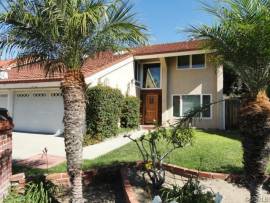
Irvine Home Address … 4051 ESCUDERO Dr Irvine, CA 92620
Resale Home Price …… $649,000

The sun is on my side.
Take me for a ride.
I smile up to the sky.
I know I'll be all right.
Natasha Bedingfield — Pocketful Of Sunshine
There have been few rays of sunshine for the local housing market over the last five years. Prices are down about 30% from the peak, and hopes of a bottom were crushed when a double dip ended the false rally of 2009 and 2010. The bad news can't go on forever. Prices won't fall to zero. Eventually, prices get low enough that people get a reason to buy other than dreams of capturing appreciation. Once prices fall below rental parity, people can buy to save money versus renting.
Payment affordability
When we talk about affordability, everything is relative. Incomes are a good measure, and using a 31% DTI applied to local incomes provides a useful measure of affordability. Another measure is local rents. Since rents and incomes are closely tethered (people don't typically borrow their rent), local rents are a good proxy for local incomes.
Since most house purchases are financed, the affordability of monthly payments is important. Since rents are paid on a monthly basis as well, the comparison of the monthly cost of ownership to rent is a very useful measure of affordability. Basically, if people can afford their rent, they could afford a payment equivalent to rent. Thus rental parity is a good measure of payment affordability.
Financing terms are important
When examining the cost of ownership, the financing terms become very important. The folly of the housing bubble was to abandon amortizing mortgages in favor of interest-only and negative amortization loan products. People used these Ponzi loan programs to lower their monthly payments and ostensibly lower their cost of ownership. While they did lower their payments for a time, the terms of these loans were not stable. At some point, they needed to recast to fully amortizing loans which would be paid off. The “payment shock” of this recast was a timebomb waiting to blow up a family's balance sheet. Most of these loans have already blown up, and the borrowers are waiting in shadow inventory for lenders to clear them out.

People sought ways to defuse the recast bomb by a process known as “serial refinancing.” Right before the bomb was due to go off, people assumed they would be able to refinance into a new loan and reset the clock. Most borrowers believed these financing terms would always be available, so they had little risk of being around for the explosion. As we all know now, these borrowers were all wrong.
When considering the cost of ownership for calculations of payment affordability, the cost of an amortizing mortgage must be considered. Interest-only and negative amortization loans artificially lower the cost of ownership, but these methods are not sustainable.
ARMs are dangerous too
Amortizing adjustable-rate mortgages are also a dangerous product. People select them because they carry a lower interest rate, and the payments are marginally more affordable. These loans work great when interest rates are falling, but when interest rates rise, loan payments go up, and the savings from early payments is more than made up for by increasing costs later on.
The real danger with an ARM loan is embedded into obscure terms of the promissory note. The loan is written with a contract interest rate that changes periodically. There is a contractual limit as to how high the interest rate can go. Unfortunately, affordability is only measured against the contract interest rate. If interest rates rise, the payments could very easily become unaffordable, and the borrowers could face the same problems with default and foreclosure many are dealing with today.

The worst part about ARMs is that the additional risk is not necessary. Fixed-rate mortgages also allow for refinancing when interest rates drop. Borrowers simply refinance into a new loan. There is no need to use ARMs to capture the benefit of falling interest rates.
Of course, despite the problems with ARMs, many people will still use them and assume the government will bail them out if the going gets tough. It's hard to argue with a borrower who believes that. So far, the government has shown every sign of bailing out even the most foolish of borrower behavior.
Interest rates and principal balance
Interest rate and purchase price matters little when the loan is held to term. If a borrower makes 360 (30 x 12) equal payments, the composition of principal and interest is irrelevant. However, very few borrowers hold a loan to term as many sell or refinance.

Whether interest rates are high or low benefits certain parties and hurts others.
Low interest rates hurt cash buyers or those who utilize large down payments. A cash buyer would prefer to pay a very low price. Unfortunately, low interest rates inflate prices, so cash buyers are adversely impacted by low rates. Conversely, borrowers with little down benefit the most from low interest rates. Price to them is mostly about monthly payment since they are financing most of the transaction. Further, low interest rates followed by high inflation (conditions likely in our future) works strongly in favor of those with who put little down and borrowed heavily as the dollars they are repaying are worth less than the dollars they borrowed.
High interest rates strongly favor cash buyers. High interest rates make for low principal balances and low prices. High interest rates hurt borrowers who put little down because most of their payment goes toward interest. High interest rates followed by declining interest rates favors those who can refinance into a lower rate to reduce the interest burden.
It's very difficult to predict what will happen with interest rates and inflation. We are at the bottom of the interest rate cycle now, and higher rates and higher inflation are a possible, perhaps even likely, scenario. In any case, locking in a cost of ownership lower than the cost of a comparable rental is usually a good idea. The danger being a rise in interest rates that causes further weakening of prices which makes it impossible to sell without taking a loss. Landlording becomes the logical alternative, but that isn't for everyone.
Irvine prices are finally below rental parity
The low interest rates and falling prices have finally pushed Irvine below rental parity. Not every house in every neighborhood, but a broad spectrum of housing options are now trading at or below rental parity. It still takes effort to find these properties, but they are common enough to warrant searching in Irvine if you are looking to buy now.
.png)
The chart above was part of the OC Housing Market Presentation from last Wednesday. When I first prepared this chart last month, I was quite surprised to see Irvine trading below rental parity. The reading for September was the lowest in the last 11 years. Much of this improvement is due to low interest rates engineered by the federal reserve, but with their commitment to keeping rates low for the foreseeable future, waiting for the next interest rate peak to buy may take a while.

I remember early astute observers on the blog who quipped, “Irvine has never traded at rental parity.” Well, actually it has. In fact, it traded well below rental parity during the late 90s, and it will likely dip below rental parity again for at least the next few years.

I calculate the rental parity formula by taking 90% of the comparable rent and computing a loan balance. From there, I tack on a 20% down payment. I use 90% of the comparable rent to allow for taxes, insurance, HOA, and adjust for tax savings. Since there is no private mortgage insurance (PMI), most of the rent goes toward the payment.
FHA buyers face different conditions, so rental parity for them is calculated differently. I only use 75% of the comparable rent, and I add on a 3.5% down payment. Based on that standard, Irvine is still out of reach.

FHA buyers only make up a small percentage of Irvine resales, mostly concentrated in condos which is why we have seen so many of those sporting low prices.
The table below shows the degree of price inflation relative to rental parity by zip code.
.png)
The most inflated zip code remains 92603 — Turtle Rock, Turtle Ridge and Quail Hill. This zip code is deflating fast as relative price inflation has declined 40% over the last two months. Falling prices and falling interest rates will do that.
Northwood (92620) is also inflated, but prices are coming down.
Oak Creek, Orangetree and Portola Springs are the anomaly. Prices have been rising there for the last three months and are currently above rental parity. Rents are also rising in that zip code. We speculate this is due to restricted supply, but for whatever reason, it is the only zip code showing strength in Irvine.
Most of the remainder of Irvine is showing falling prices and firming rents. When combined with falling interest rates, the result is improving affordability as prices fall below rental parity. We anticipate this trend will continue and reach its zenith for this year's cycle in January. Prices over the next 6 months will generally be affordable by rental parity standards. With the uptick in foreclosure filings, there is no guarantee of a spring rally to pull the market out of the doldrums.
The buying window is open
I have consistently maintained on this blog that buying when prices are below rental parity is a good idea. I still believe that to be true. Rising prices are not a requirement for being bullish. Long-term owners who want to lock in a cost of ownership lower than comparable rents have options bubble buyers do not. The below rental parity buyer will be saving money each month, and if they have to move while prices are below their purchase price, they will be able to rent the property and avoid making a sale.
Prices are generally sticky on the way down, but they become much stickier when underwater owners don't need to sell to patch a hole in their family's balance sheet. Once prices reach rental parity, unless there is a huge influx of supply (which is still possible), prices generally don't go much lower. Of course, rising interest rates could easily lower the value of rental parity, and eventually this will happen, but the federal reserve seems committed to preventing higher interest rates in the medium term.
Owner-occupant who bought a Ponzi's house at auction
One of the topics Shevy will cover tonight at the REO and Short Sale Workshop is buying at the auction. It is one method owner occupants have for obtaining real estate below current market costs. The current owner of today's featured property bought it at auction about three years ago on 10/30/2008. His $547,000 purchase price represented a significant discount at the time. Even with the ongoing weakness in pricing, he will still be able to sell without losing money.
The previous owner was a full-blown Ponzi:
- The house was purchased on 7/2/2002 for $481,000. The owner used a $384,800 first mortgage, a $96,200 second mortgage, and a $0 down payment.
- On 8/12/2003 he refinanced with a $487,000 ARM with a 4% rate, probably a 1/1 ARM.
- On 9/17/2003 he obtained a $97,500 HELOC. After only one year of ownership, he was able to pull out over $100,000.
- On 4/14/2004, about seven months later, he refinanced again with a $560,00 ARM with a 3.87% interest rate and obtained a $70,000 HELOC.
-
On 11/16/2004, about sevens months later, he obtained a $150,000 HELOC.
.jpg)
- On 8/31/2005 he refinanced with a $612,500 Option ARM with a 1% teaser rate and obtained a $175,000 HELOC. I wonder if this guy was a mortgage broker?
- On 4/24/2006 he traded in his HELOC for a $250,00 stand-alone second mortgage.
- In three and one half years, after putting no money down, this Ponzi cashed out $381,500. That's an average of $109,000 per year!
- He defaulted shortly thereafter and squatted for about 15 months.
Foreclosure Record
Recording Date: 02/22/2008
Document Type: Notice of Sale
Foreclosure Record
Recording Date: 09/17/2007
Document Type: Notice of Default
Since most of the worst HELOC abusers have already been flushed from the system, I haven't profiled many really bad cases lately. This guy was a real blast from the past. He's a good reminder of the problems of the housing bubble.
When I first saw this property, I felt it was one of the nicer properties we have seen trading below rental parity — unless you believe you can find a rental this nice for less than $2,500 per month. It's deal like this one on nicer properties that are becoming more prevalent, and the reinforce what I am seeing in the data. Much of Irvine is now at or below rental parity.
——————————————————————————————————————————————-
This property is available for sale via the MLS.
Please contact Shevy Akason, #01836707
949.769.1599
sales@idealhomebrokers.com
Irvine House Address … 4051 ESCUDERO Dr Irvine, CA 92620
Resale House Price …… $649,000
Beds: 4
Baths: 3
Sq. Ft.: 2344
$277/SF
Property Type: Residential, Single Family
Style: Two Level, Ground Level
Year Built: 1970
Community: Northwood
County: Orange
MLS#: T11134799
Source: CRMLS
Status: Active
On Redfin: 1 day
——————————————————————————
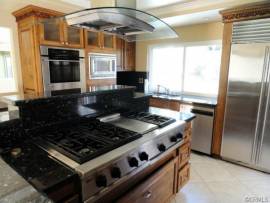
Welcome to the wonderful Northwood community in Irvine. This home features a remodeled kitchen with dual ovens, 6 burner cooktop and a Subzero fridge. The master suite features a balcony for you to relax on. The property also has jacuzzi and pool to enjoy those warm summer days. There are many other upgrades done to this home for you to come view.
——————————————————————————————————————————————-
Proprietary IHB commentary and analysis 
Resale Home Price …… $649,000
House Purchase Price … $547,000
House Purchase Date …. 10/30/2008
Net Gain (Loss) ………. $63,060
Percent Change ………. 11.5%
Annual Appreciation … 5.7%
Cost of Home Ownership
————————————————-
$649,000 ………. Asking Price
$129,800 ………. 20% Down Conventional
4.20% …………… Mortgage Interest Rate
$519,200 ………. 30-Year Mortgage
$125,290 ………. Income Requirement
$2,539 ………. Monthly Mortgage Payment
$562 ………. Property Tax (@1.04%)
$0 ………. Special Taxes and Levies (Mello Roos)
$135 ………. Homeowners Insurance (@ 0.25%)
$0 ………. Private Mortgage Insurance
$0 ………. Homeowners Association Fees
============================================
$3,237 ………. Monthly Cash Outlays
-$416 ………. Tax Savings (% of Interest and Property Tax)
-$722 ………. Equity Hidden in Payment (Amortization)
$195 ………. Lost Income to Down Payment (net of taxes)
$182 ………. Maintenance and Replacement Reserves
============================================
$2,475 ………. Monthly Cost of Ownership
Cash Acquisition Demands
——————————————————————————
$6,490 ………. Furnishing and Move In @1%
$6,490 ………. Closing Costs @1%
$5,192 ………… Interest Points @1% of Loan
$129,800 ………. Down Payment
============================================
$147,972 ………. Total Cash Costs
$37,900 ………… Emergency Cash Reserves
============================================
$185,872 ………. Total Savings Needed
——————————————————————————————————————————————————-
.png)
Shevy Akason and Larry Roberts will host a short sale and REO workshop at 6:30 PM Wednesday, October 19, 2011, at the offices of Intercap Lending (9401 Jeronimo, Suite 200, Irvine, CA 92618). Register by clicking here or email us a sales@idealhomebrokers.com.
…The most inflated zip code remains 92603 — Turtle Rock, Turtle Ridge and Quail Hill…
Spot on analysis. I follow Turtle Rock very closely and I have sometimes wondered if the prices have been stuck [on high] with super-glue.
However, as noted, the logjam may be finally breaking. Example: 15 Skycrest (listed last week).
Question: Does the rental parity calculation include the influence of property taxes, HOA dues, maintenance and limited insurance (i.e. fire) on the property owner?
It would seem to me that these costs could significantly skew these calculations, particularly at the higher end.
I make a broad estimation of these costs when I factor in the percentage of rent I apply toward the payment. For example, when I calculate rental parity for conventional financing buyers, I use 90% of the payment as the cost of ownership. If you look at today’s featured property, the payment is $2,539, and the cost of ownership is $2,475. This property applies nearly 100% of the equivalent rent toward the payment, but this property has no HOA or Mello Roos. When you factor in those costs on a typical property, the applied rent is about 90%. Contrast that to an FHA financed property with its high FHA insurance, and only 75% applies to the payment.
Using this applied rent percentage approximates the impact of the other factors on the cost of ownership.
Below rental parity mean you can finally buy your 4 bedroom single family house in Irvine for…. Wait for it….
$650,000
Not $400,000 not $450,000, and not $500,00 like so many clowns said you would be able to….
$650,000 welcome to below rental parity
Let’s all rejoice, the day is here.
Also another example in Irvine where someone had excellent timing buying when the world was coming to an end in winter 2008 at auction.
Yes they will be selling well above that 2008 purchase price. Welcome to Irvine.
They will sell for more than their 2008 price because they got a 20% discount at auction, not because their timing was good. People who bought in the 2008-2010 period off the MLS overpaid. They are underwater, and their cost of ownership exceeds a comparable rental.
Yes you are correct
Thank god prices in Irvine are so much different now than they were in January 2009
The devastation of a $650,000 single family house
Now is the time, not 2 years ago when prices were about the
same and lower in many cases
Thank god you were right, we can all rejoice now
Affordability is here today, not 2 weeks ago, 6 months ago, or 2 years ago… It’s today !!!! Rejoice and be merry.
Were you bullied on as child PR? You sound like you have some serious issues, constantly having to prove yourself right.
You could have had rental parity if you bought in 2005 with a large downpayment. It’s all relative, MOST people do not want to be landlords due to all the hassles. But I’m sure you are scooping up Irvine rentals left and right because they will be cash flow positive forever. Give it a rest man!
Beef, how’s life in the South Bay? Can a dual income family earning $300,000 per year now afford a run down crap box west of PCH? It’s practically 2012 I hope so…
The Manhattan Beach blog is one of my favorites because it so pertinent to the realities of our economy for the top 20%.
I try to post the humorous or not so humorous reality. The one we must all deal with.
Looks to me like prices are continuing to drop 7% to 13% YoY in Irvine depending on the slice you are looking at.
Why bother buying until the bleeding has stopped? Rental parity or not. There is still too much pressure on supply and not enough on demand.
“Why bother buying until the bleeding has stopped? Rental parity or not. There is still too much pressure on supply and not enough on demand.”
Yes. There is certainly no urgency to buy under those circumstances. Rental parity simply means the red light is no longer red. The green light will be on when it looks like prices have found a natural bottom and prices are still below rental parity. I estimate we are two years away from that.
I bought my 4/3 11 months ago for $600k so this smells like a recovery to me. Where is my HELOC!? There is $50k locked up in my house that should be speeding Greece towards another economic golden age/borrowing binge!
Absolutely.
This is the golden agen of austerity only for the austere few. You either want to be wealthy or have your prosperity be tied to the balance sheets of the wealthy.
But we may all rejoice that today in the wee hours of the morning it became the rental parity golden age. Its a damn shame you bought 11 months ago at or below current market value of this golden morning. A social program to support your devastation must quickly be established.
Reality, the South Bay for most part has tons of old money or pre-bubble money. Even the young doctors/lawyers/consultants trying to buy in Manhattan Beach today are in for rough times. I see these clowns all the time with their trophy wives who love to spend money, driving the fancy Land Rovers and Benzs, 3 cute little kids, 1.5M loans on their 300K salaries. Trust me friend, these guys are living on borrowed time in a big way.
As we’re seeing, things are slowly correcting. As they say timing is everything in life, unfortunately today’s buyer in the South Bay didn’t quite quite get in at the best time…and this includes your top 20%.
Hmmm. Economy getting worse, unemployment stuck, No QE3, yup, its today..Buy today and you will be a further 20% underwater EOY13.
I laugh at those who project out these interest rates in perpetuity and conclude the bottom has arrived. The bond bubble burst will send mortgage rates to 8% to 10% to 12% to 14% and higher. Values will be cut in half from these levels and possibly more. Buy now and lose major money, but have fun mocking people in the meantime, sucker.
…will send mortgage rates to 8% to 10%…
Even if the rates rise to the historic mean (which I think is around 7%) we are in for a very major shakeout.
Personally, I would like to see rates north of 14% (I am a cash buyer).
My major frustration is to try and predict *when* (not if) interest rates will rise. I have absolutely no idea when, but I am sure willing to listen to other (more well informed) opinions as to when that event might occur.
I believe the short to answer to “when” is simply when there is no other choice. Why? Because the federal government cannot finance its activities and old debt with high interest rates without destroying itself. Therefore we must first inflate away as much of the debt as possible, then, in order to quell inflation, raise interest rates. The other option is to default on our debts which would skyrocket interest rates for a few years.
The actual timing is always so difficult. You’ll likely have to wait another 5 years or so.
Yep, it’s one of those times where you are going to get your cake and eat it too…
By the time rates are high again inflation will have been so high for so long, The currency will have been devalued so you’ll get both your high rates and highly inflated prices.
We will be remembering the good old days when prices were low and rates were low. The good old days were always one or two decades ago. A time machine is always the best solution.
In this economy, with this unemployment… you think mortgage rates will hit double digits?
That’s like someone predicting Irvine house prices are going to drop by over 50%! :cheese:
Payments may well be less to buy but you are missing the vital point that if your circumstances change you are stuck with an anchor around your neck that will take every penny you have and bankrupt you. Whereas if you rent you have the painless process of down scaling. Until prices bottom it is worth the premium.
“if your circumstances change you are stuck with an anchor around your neck that will take every penny you have and bankrupt you.”
The whole point with buying below rental parity is to avoid the outcome you describe. At prices above rental parity, the monthly losses are a black hole in the family balance sheet which could cause bankruptcy. However, at prices below rental parity, rent will cover the costs of ownership, and the dire consequences are avoided.
You’re right that paying a rental premium still has value. I am renting, and I plan to continue to rent locally for at least two more years. Prices below rental parity doesn’t create buying urgency, but it does create a buying opportunity when before buying was simply foolish.
As long as you could get quality renters and have 100% occupancy then the numbers work. What happens when you do not. Many rentals have sat empty around PCH in HB where I rent for many months now. These landlords are slowly reducing the asking prices so would rent falls not render the numbers incorrect.
Yes, rental parity does not factor in vacancy and collection losses or maintenance expenses. Of course, it also doesn’t factor in a likely increase in rents over time. If someone needs to move two or three years after moving in, rents have probably risen enough to cover those additional costs. Right now, rents are slowing rising across most of Orange County.
Yeah I mean it’s not like you could rent it out and have someone else pay down your principal… And dare I say be cash flow positive every month paying no taxes on the positive cash flow when you factor in the depreciation tax shelter.
No, nothing like that
Finding quality renters that can afford these rents is becoming more and more difficult. It is only the low end that will keep your balance sheet black. Investment companies like to buy below 250k to make the numbers work.
In Huntington Beach I agree with you, finding quality renters is damn near impossible.
What does Huntington Beach have to do with anything?
I was just giving a more desirable area. Rather than an inland concrete jungle.
The difference between HB and Irvine when it comes to rentals is there is no shortage of UCI students in Irvine.
Back when we used to rent our home, we would easily get 10 applications from students each year. But that’s a problem in itself… the key is finding responsible students who won’t trash your place.
Also, I believe the rental market in Irvine is stronger for the same number of reasons why prices are still inflated.
TIC keeps building apartments… is there some developer new rental units in Huntington Beach?
Planet RealPain,
Sarcasm sucks,
Speak your point and stop being such a weakass ..
The Prices have gone nowhere in Irvine since they hit bottom in 2009 and there are more deals to be had today than there were then,
and less jobs, and of those jobs, less pay and benefits. Unless you are making $300,000+ per year and are part of the 1%.
Personally, I hope the whole rotten system collapses and all the people sitting on piles of cash realize the entire financial system of the world is one huge Ponzi scheme.
Only then will people start to “get it” that corporations are not people, and money is not speech. Now, enjoy your servitude and get back on the hamster wheel, there are plenty of beans to count today.
Unfortunately investors who make over a certain amount cannot leverage the depreciation in their tax returns but they have to carry them forward until they sell…
Your example of different interest rates and purchase prices held to term doesn’t make a lot of sense to me.
Yes, if you look at 3 different loans with a 30 year term and a $3000 a month payment, all of them will add up to $3000*360. That isn’t anything surprising, its just math.
But prices don’t automatically adjust to maintain a $3000 level. People in normal parts of the country don’t automatically adjust their housing expectations so that they always pay 31% DTI.
And at the end of a 30 year term, and spending $1.1m I’d much rather have an asset worth $628k in your 4% example than an asset worth $291k in your 12% example.
Maybe I just missed your point…
While I agree with most of the analysis. In my head I worry the most about my monthly cash outlays. The money that I am making on my down payment is small, and when I throw it at a house I won’t worry much about the interest that I am losing on it.
If I were doing a rental parity analysis I would look at it like this:
$3,237 ………. Monthly Cash Outlays
-$416 ………. Tax Savings (% of Interest and Property Tax)
-0 ………. Equity Hidden in Payment (Amortization)
$0 ………. Lost Income to Down Payment (net of taxes)
$182 ………. Maintenance and Replacement Reserves
=$3003. That is the true monthly cost of carrying the property. That is what I would need to rent it for to not have a real cash loss every single month.
The Equity hidden in the payment is irrelevant. Price may continue to drift down for a LONG time as in Japan. If that is the case, I might lose more equity that I gain through payment due to the market if I have to sell in less than 10 years. Hell 20 years.
If the equity hidden in the payment is wiped out by a slow decline in prices — which is likely over the short term at least — then, yes, your method of calculating makes sense.
Everyone will have different assumptions. Rental parity is a static analysis which makes no attempt to consider future changes in price or rents. If you believe prices and/or rents will decline, then you should use more conservative assumptions and factor in what you believe to be true about the future.
What I like about rental parity is that it doesn’t try to factor in all the factors which could impact prices and rents in the future. There are too many intertwined variables to do that well. Rental parity looks at today, and it serves as a basis for what each person believes about tomorrow.
If I tried to introduce inflation or other changes in these numbers over time, it gets far too easy to manipulate the numbers. Most cost of ownership or buy versus rent calculators circulating around the web have this problem.
First, thanks for everything that you do. I probably would not have even thought about this sort of logic had I not read been reading your blog daily for years now. You are the man! That said. . .
I looked around a bit to determine if this method of calculating “Rental Parity” was a common one. Is it that everyone does it this way or is this a calculation that you have come up with?
Next, I really feel that including the equity hidden in the payment is in fact a manipulation of the numbers. While it is an assumption that prices might go down, it is also an assumption that prices stay the same. This paints a significantly brighter picture of the financial reality than what someone will actually face when they buy this home. For example, the tax benefit decreases over time which will increase the monthly outlay. Additionally, it may cost them 6% to sell the house and that comes right out of the equity. That 6% is equal to the first FOUR years of equity hidden in the payments!!!
When I think about what I pay each and every month for my housing I have to look at the check I write for all my bills that month. The tax benefit and maintenance costs are on my mind each month as well.
Assuming we are AT instead of below rental parity. If I could rent a similar home for $2500 a month then. . . I could simply save the $500 extra on a monthly basis.
So. . . comparing the two situations.
Rent: Pay $2475 a month + Save $528 a month. = $3003
Own: Pay $3003 a month + Have equity that I can’t touch of $722 a month. . .the first four years of which get chewed up by selling costs.
If I owned and then was forced to rent at $2500 a month then I would be losing $500 a month out of pocket to pay for the place. That doesn’t seem like parity to me. It might be equivalent if you look at it in a particular light. . . but it surely isn’t equal. When I was drunk and young most girls looked good in a dark bar.
Which is better? For me and pretty much everyone that I talk to (except investors and real estate agents) it is pretty clear that a bird in the hand is worth two in the bush.
I want to buy in Irvine, I really do. The way this market looks to me now I will:
1) Pay more on a monthly basis to own than to rent.
2) Get locked into a potentially depreciating market.
3) Not have the flexibility to move in a terrible jobs market.
4) Perform my own repairs.
5) All for the possibility in X years that I can sell the place and hopefully not lose money.
When I look at those things. . . in order to buy a house I need to believe that housing is a good investment. Housing as an investment is how we got here. A house is a house. Four Walls and a roof that rots in the rain. The more I talk to people, the more I get the feeling that housing is becoming a detested asset class. Yet I wonder if I just associate with like minded people. I think it will have to be way below your Rental Parity point before I will be comfortable with the decision. Ultimately though, given how much my wife wants a home I may use your calculation to comfort myself so that I can sleep at night. Although, I know that won’t like it. Bahhh! Stupid emotional financial decisions.
Where is that crystal ball when you need it?
A detested asset class is a sign of capitulation, in turn signaling a potential bottom. IMO, we are a long, long way from the bottom.
Also,
After ten years on this loan my loan balance would be = ~$408,000.
In other words I’ve gained ~110k in equity on a 649k house.
Therefore, if prices drop another 17% over ten years, all my payed equity is wiped out.
Inflation is your friend in this case
The renter pool at present is artificially boosted due to buyers renting till the bottom is reached. Once these buyers do not need rentals anymore there is going to be a huge glut of empty houses looking for non existant renters causing rents to crash. My landlord bought the condo I am renting for 900k my rent is 32k a year and he has already lost 400k in equity this is a very sobering example of why being a landlord at the high end is fraught with risk. Buying in areas like vegas for 150k makes sense buying to rent in OC does not.
Yep: rents can fall as well as rise, which they did for a couple of years after the housing bust began. The population can rise, or remain stable, yet household formation can be negative if incomes are declining.
If I were forced to base my buying decision on a single metric, I would choose rental parity. But since I can also consider other things, I want to see that rents are reasonable relative to my understanding of local household incomes now and as far into the future as I can imagine.
I’m not greedy: I don’t insist on knowing tomorrow’s stock prices or winning lottery numbers. It would be nice to know where incomes are going over the next couple of decades if I’m signing up for 30 years of debt, but even this is damned hard to imagine in a convincing fashion right now.
It’s good to see prices starting to fall there in 2011. I’m surprised it’s taken so long. I would expect that home prices in communities to the south now to decline even further. I think renting is the wise thing to do.
I bought an SFH in LF in Sept 2010 after renting for 6 years. According to Zillow.com I’ve lost $50K in value over the last 12 months. I’m sure it will lose much more valuation over the next 12. If my home were a dividend paying stock, it definitely has been a “non-performing dog”.
My main worry is about interest rates and the value of the dollar over the next 12 to 18 months. At some point rates will increase and perhaps suddenly to the point where home prices have no where to go but down. This would be a good development for long-time renters with savings and solid jobs in recession-resilient industries to swoop in and “make a killing”.
I don’t see how interest rates can remain this low over the next 2 to 3 years. The US debt situation remains completely out of control, so how long until confidence in the US debt sales abroad starts to wane? The Fed can’t lower rates much more. They do have barrels and barrels of green, black and peach ink though.
Thanks for another execllent article.
I am a renter, I live in a shoe box of a room in the University District up north in Washington State.
I believe that the interest rate on the US Ten Year Note, $TNX, will be rising rapidly; and there may be a influx of supply as banks my release shadow inventory.
And I see a rising 30 Year Interest Rate, $TYX, from deleveraging out of US Government bonds, ZROZ, EDV, TLT, caused by China retribution for being labeled as a currency manipulator, as seen in the Flattner ETF, FLAT, falling, and the Steepner ETF, STPP, rising; and about disinvesting out of World Government Bonds, BWX, and Emerging Market Bonds, EMB, caused by debt deflation, that is, falling world currencies, DBV, and falling emerging market currencies, CEW. The 10 30 Yield Curve, $TNX:$TYX, is steepening, opening the door for bond vigilantes to start capital depletion of US Treasuries. The world is passing through peak credit as is seen in total bonds, BND, falling lower. Lee Adler writes in Financial Sense Foreign Central Banks Selling US Treasuries At Unprecedented Levels. And Tyler Durden reports 30 Year Bond Prices At Record Low Yield As China Flees, Direct Purchases Soar.
I am even more concerned about Money Market Funds, MMFs as they are between a rock and a hard place: the managers want safety and need safety, but are ever seeking yield to maintain customer base, which exposes them to buying high yield French bank debt. I see the very real possibility, as US Treasury yields continue to increase caused by a flight by China, that the MMFs wil break the buck and that there will be a run on the MMFs.
International central banks will be unable to stem the ongoing competitive currency devaluation which is due to global soveign debt angst, inflation destruction, unwinding yen carry trade investing, and the failure of China’s ponzi credit system with its reliance on copper as collateral. I see the major global banks BSBR, ITUB, BBD, BMA, BBVA, BFR, IBN, HDB, WF, UBS, RBS, STD, DB, LYG, seen in this Finviz Screener and this ongoing Yahoo Finance Chart, falling strongly lower.
Basic material stocks and small cap stocks in carry trade investment countries, such as BHP, KROO, VALE, BRF,COPX, ECH, KOL, will be turning lower. As will the US Small Caps, the Russell 2000, IWM, which are highly dependent upon credit funding to buy inventory, cut checks, and meet payroll and as a result there will be a total economic collapse in the US.
These are factors that all those who are going to invest in becoming a debt owner should consider.
IR,
Your calculation includes the mortgage interest deduction. In the near term, the mortgage interest deduction appears to be in play in Congress as the Feds look for ways to close the deficit. I’m not sure I would count on this deduction continuing, I think there is a 50-50 chance it will be modified in the future, so buyers should be advised of this possiblity…
Yes, I have written about this being debated in Congress, but until they actually act, I will leave the calculations alone. The HMID isn’t quite as sacred as Social Security, but it isn’t far behind. I am amazed talk of reducing, capping, or eliminating it has gone this far.
I agree, if anything they will propose new measures to support housing since you can’t win elections against the 65% of households who own a house and a lot of politicians (and the media) see the housing “crisis” as a key factor preventing the economy from growing at a faster rate(I know that would just mean inflating the next bubble but I don’t think politicans care as long as they win the next election)
IR,
Apologies for being OT but a while ago we were having heated discussions about title defects caused by robo-signers, improper securitizations & MERS. Looks like something recently blew up in Massachusetts called the Bevilacqua case.
I do realize that CA foreclosure laws are different from MA (or for that matter, TX) foreclosure laws but anything that clouds the chain of title is something I find vey disconcerting and is why I would be very leery of buying real estate these days. Your thoughts?
House buying is such a minefield now that I am beginning to wonder if it might be better to keep the cash in the bank and just rent forever rather than buy in two years. it certainly is a lot less stressful.
And the Fed is printing so much money that your money in the bank account is actually worth less and less each year. Real estate is a way to hedge against the coming inflation.
That ruling will put quite a chill on the trustee sale market. For secondary market sales, there will be title insurance to clean up the mess (although that insurance may now get more expensive). For trustee sales, if you don’t have any assurance the foreclosure is valid, why would you bid on the property? That risk will almost certainly lower bids at auction and reduce the recovery banks will obtain there.
I’ve read nothing saying Bevilacqua did or did not have any idea beforehand he was buying a faulty foreclosure. I have heard of title insurance companies refusing to write polices when MERS was in the chain of title. I also found a recent White Paper from the Harbinger Analytics Group that has a very clear explanation of the title chain problem starting at page 22. They also point out that one person’s title-chain problem can mean problems for all the surrounding properties as the MERS connection clouds the distinction between junior & senior property rights.
For the most part I’m with you on wanting the foreclosure process to speed up, the idea of someone squatting for 1-2 years is not right at all. I’ll make an exception when the foreclosure is initiated because the servicer screwed up or made a loan they knew beforehand they shouldn’t have made. But this chain of title stuff seems even more insidious, I really don’t want some foreclosed neighbor causing me title problems on a house I supposedly own free & clear.
BTW, didja hear that the Merril branch of BofA recently unloaded 75T of derivatives on the bank branch of BofA so the derivatives now have FDIC protection?
I’m not sure there would be a title insureer who would touch a foreclosure sale after this decision (not without a major exclusion). From the article, it appears that the court is saying that you cannot be an innocent buyer if you buy at a foreclosure sale. I’m not sure how you clear that defect.
There might be more to this case than what was reported in the article. I honestly can’t beleive that the court would hang a bona fide purchaser by altering what has been farily settled law.
As I am neither a lawyer nor a realtor, I’d be interested in hearing what you find out about this.
Interesting decision and contrary to most cases dealing with real property that find in favor of an innocent buyer (one who buys in good faith for fair value and without notice of any claim or interest of a third party). I’m not sure how this is a workable decision in the real world of foreclosure sales/auctions. It certainly will have a major affect on the foreclosure market in Mass.
I would be curious to read the entire decision if you find a copy of it out on the web.
I think the case is here.
Thanks for the link. It is fairly complex reasoning but not a major issue for actually innocent buyers (bona fide purchasers).
The court found here that the buyer was not an innocent purchaser because the chain of title was clear that the “bank” didn’t have record title at the time of the purchase. It was subsequent to the purchase that the bank recorded the confirmatory deed showing a transfer of title to the “bank” was filed in the public record. Had the confirmatory assignment been filed in the public record prior to the purchase, this guy wins his case (even if the bank had no authority to foreclose at the outset).
I want to dig into it a little more before really saying whether it is a good or bad decision or what the lasting effects would be on the title insurance or foreclosure purchaser industry.
It’s still a little shocking that the bank found it equitable to take property away from a person who paid real value at a foreclosure sale and gave the property back to a person who had not made their mortgage payments. There may be more going on here than what is in the decision….
I really look forward to your thoughts to come
Me too, Honcho. This case is very interesting.
Honcho, thanks for your analysis, I look forward to your updates as you seem to know of what you speak. ‘Legalize’ always holds more meaning for those in the know than what the words themselves imply and I really appreciate having it decoded.
I’ll try to be as non-legal as possible here.
I don’t think this decision will do anything to the title insurance industry in the State of Mass that the Ibanez decision from the same court did earlier this year. There is no magic pill here that makes foreclosures impossible. The moral of the story is not to buy at a foreclosure auction unless you know what you are doing and not to buy a property that was a prior foreclosure unless you have title insurance. Title insurance may become more expensive, not because they are taking on extra risk, but simply because more work will need to be done on foreclosures to document the record title in the land records (although I will be the first to admit that I don’t know exactly what title insureres looked at when pulling documents out of the land record anyway).
I don’t think the Court’s decision is very practical in the sense that they could have provided a very workable solution to cleaning titles rather than forcing third party buyers to go back and re-initiate foreclosures. They certainly added more time and expense for third parties who happen to buy one of these properties where documents were not filed in the proper order in the land records. The Court gave a road map for this particular purchaser and it is fairly simple, but not without additional time and costs.
I still think there is something else going on here since the court did not rule that this purchaser was an innocent buyer (known as a bona fide purchaser in legalese). He bought the property in 2006, well before there was anything wrong with buying a foreclosed property and well before the Mass Supreme Court answered the question (in a very technical decision) of what was required to document in a foreclosure. The fact that they rule this guy wasn’t an innocent purchaser under those circumstances leads me to speculate that the buyer was either 1) a fairly sophisticated party and/or 2) paid nominal value compared to what the property was really worth. I just don’t see how/why the court would reach their decision and force this guy to take on additional costs/time unless one or both of those factors were in play. The Court could have narrowly answered the question here in that sense and left open the question but, as I read this opinion, no one who buys a foreclosed property has the protection afforded an innocent purchaser.
I just don’t see this decision having any application outside of the state of Mass, either as the decisions in both Ibanez and here turn on technical analysis of state laws in Mass.
As I stated earlier, the moral of the story is not to buy at a foreclosure auction in the state of Mass unless you know what you are doing and not to buy a property that was a prior foreclosure unless you have title insurance.
Thank you for your analysis of this opinion. If this issue doesn’t die out, I may return to your comment and make a post around it. I suspect since this issue does not have broad application, it will quickly fade from the headlines.
The headline is catchy, especially since the simple thing is to say the court decided to rule against someone who paid money for a property and for the benefit of someone who wasn’t paying their mortgage. The reality is that they merely delayed the new purchaser acquiring record title to the property.
Again, most of this turns on technicalities in the Mass. statutes and the earlier Ibanez decision.
Here is the basic timeline of what happened from what is set forth in the opinion (this is simplified but is the basic story):
1) mortgagee of record is American Finance LLC
2) securitization (pooling of mortgages) and US Bank is the new mortgagee (but nothing is recorded in the land records under the terms of the mortgage, nothing needs to be recorded to effectuate a valid transfer/assignment of the rights under the note because MERS is listed as the nominee of the note holder and its assigns)
3) default
4) foreclosure and new buyer buys property from US Bank (the trust that holds the note, but not “record” title holder)
5) confirmatory deed is recorded stating that US Bank is the mortgagee of record because it acquired the note from American Finance LLC(this was out of order since the property was already sold at foreclosure auction. This should have been done prior to the foreclosure action)
Basically, 4 and 5 were out of order. Now, the new buyer has to go back and re-foreclose since the Court ruled that you can’t merely have an equity lawsuit to establish title (again, technical state law issues at play that I won’t bore you with). Re-foreclosure should be a fairly easy thing to do, but the new owner has to go back and conduct the foreclosure with the proper records in order.
Again, these are completely different issues than anything that we see in California (non-judicial foreclosure state). Also, once the foreclosure occurs in CA and the Trustee’s deed is delivered, you have a conclusive presumption of a valid foreclosure that can only be overturned on the most narrow of grounds. New purchasers are protected and there is not any cloud on title (the purpose of the foreclosure action).
This was an especially good post! I would make one change in this sentence: “I remember early astute observers on the blog who quipped, “Irvine has never traded at rental parity.” Well, actually it has. In fact, it traded well below rental parity during the late 90s, and it will likely dip below rental parity again for at least the next few years.”
Exchange the word “likely” for the word “certainly.”
I remember people telling me over and over again the same basic thing “houses in California never go down.” I always responded by saying “what happened between 1991 and 1996?.” This always resulted in people either not knowing what to say or saying “well that was just a one time thing.”
Memories are short. Very short. Every 20 years a new generation comes through and knows little about what happened before. We’ll get here and where we were in 2006 again by 2030. In the interim it is 1993 again. It’ll take a few more years to get to 1996.
Finally, low interest rates often make for a poor time to buy in my mind. Buying with a 30 year mortgage when interest rates are very high and prices are forced low enough for rental parity would be a far better time, since you can always refi in the future at a lower rate and if not, you still have rental parity or better. Alas, we must live with the markets we have…
Is zestimate true? I see many properties bought in 2009 have gone up in value according to zillow.
Once again, I need to provide adult supervision …
Don’t use “rental parity” and “bubble-inflated comps” in the same sentence.
The average house price in the USA is $200,000.
So rental parity is about $1,000/month.
If you don’t think that applies to California, then you need to explain away the hollowing of our economy, and the fact that half the adult population is not productive (either unemployed or public employees.)
Interest rate and purchase price matters little when the loan is held to term. If a borrower makes 360 (30 x 12) equal payments, the composition of principal and interest is irrelevant. However, very few borrowers hold a loan to term as many sell or refinance.
If the interest was not deductible I would agree. However, I think you are ignoring the tax consequences of this set up. Lower principal/higher interest rate will be more affordable since you are using a larger percentage of your “gross income” to pay for you housing expense.