The weak economy and crashing house prices has left many trapped in their homes unable to move.
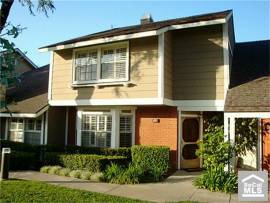

Irvine Home Address … 40 ATHERTON Irvine, CA 92620
Resale Home Price …… $423,000

I'm holding you captive
(You can't be released)
Captive, holding you captive
(I won't let you go)
Holding you captive, you captive
(You leave?)
Holding you captive, captive
(The answer is no)
Chris Brown — Captive
Americans are captives in their own homes. The economic malaise and the abundance of underwater loan owners has immobilized our country. The mobility rate has recently fallen to its lowest reading every recording — and records go back as far as 1948.
Mobility falls to record low as Americans stay put
Published October 27, 2011 
WASHINGTON – Yet another symptom of the economic downturn: Americans aren't moving.
Young adults are staying put, often with their parents. Older people aren't able to retire to beachfront or lakeside homes.
And loan owners are trapped underwater in the bank's house. Underwater borrowers are the root of population immobility.
U.S. mobility is at its lowest point since World War II.
New information from the Census Bureau highlights the continuing impact of the housing bust and unemployment on U.S. migration, after earlier signs that mobility was back on the upswing. It's a shift from America's long-standing cultural image of ever-changing frontiers, dating to the westward migration of the 1800s and more recently in the spreading out of whites, blacks and Hispanics in the Sun Belt's housing boom.
Rather than housing magnets such as Arizona, Florida and Nevada, it is now more traditional, densely populated states — California, Illinois, Massachusetts, New York and New Jersey — that are showing some of the biggest population gains in the recent economic slump, according to the data released Thursday.
Residents have been largely locked in place. Families are stuck in devalued homes and young adults are living with parents or staying put in the towns where they went to college.
Population mobility has always been a key aspect of American society. People can more freely and easily move from state to state to take a better job or start a business. Without population mobility, America does not get the most value from its workforce creating a drag on the economy.
“The fact that mobility is crashing is something that I think is quite devastating,” said Richard Florida, an American urban theorist and professor at the University of Toronto's Rotman School of Management. He described America's residential movement as an important element of its economic resilience and history, from development of the nation's farmland in the Midwest to its coastal ports and homesteading in the West.
“The latest decline shows we are in a long-run economic reset and that we never really recovered — we've just been stagnating along,” Florida said.
There are other reasons than mobility that are contributing to our economic stagnation. The huge mortgage debt overhang which drains our economic resources and dampens household buying power is the real culprit. This debilitating debt also causes much of the social immobility.
About 11.6 percent of the nation's population, or 35.1 million, moved to a new home in the past year, down from 12.5 percent in the previous year. The current level of low mobility comes after the recession technically ended in mid-2009, beating a previous low of 11.9 percent in 2008.
It is the lowest in the 60-plus years that the Census Bureau has tracked information on moves, dating to 1948.
The share of people moving has been declining for decades, due in part to increases in two-income families that are more tied down by jobs and to an aging population that is less mobile. The peak for U.S. mobility came in 1951, when it hit 21.2 percent. The rate had leveled off at around 13 percent before falling off notably in 2008 during the recession.
Among young adults 25 to 29, the most mobile age group, moves fell to 24.1 percent from 25.9 percent in the previous year.
Longer-distance moves, typically for those seeking new careers in other regions of the country, remained largely flat at 3.4 percent.
The biggest drop-off occurred in local moves, down to 15.4 percent from 17.7 percent in 2010. It's a sign that young adults in the prolonged slump weren't even willing to venture outside their counties, continuing instead to live with relatives or on college campuses.
People most often cite a desire to live in a new home as the main reason for moving, as well as reasons of family or economy such as marriage or a new job. But analysts say with many young adults delaying marriage while struggling to find employment and aging baby boomers expressing financial worries about retirement, the current mobility freeze could continue for several more years.

There is no reason to think the problems with mobility will go away until we deal with the issues of underwater loan owners and excessive mortgage debt. Foreclosures and short sales are the way ahead.
An Associated Press-LifeGoesStrong.com poll this month found that more than half of baby boomers born between 1946 and 1964 say they are unlikely to move somewhere new in retirement; about 4 in 10 say they are very likely to stay in their current home throughout all of their retirement.
The annual growth of retirement-destination counties, typically in Sun Belt states such as Florida, Arizona and New Mexico, has fallen sharply since the recession that began in late 2007. It's down nearly half compared with the period 2000-2007, according to recent census data.
I think Nevada and Arizona will see a resurgence in retirees moving in over the next several years. The baby boomers are just starting to retire, and house prices in Nevada and Arizona are relatively cheap.
As I mentioned in a previous post, my parents have purchased three homes so far in Las Vegas. One is going to be empty half the time as they split between their Florida home and the one in Las Vegas. The other two homes are investment properties which provide enough excess cashflow to cover the expenses of the one they use half the year. Basically, a retiree with $50,000 and the willingness to own rental properties can obtain a modest primary residence with no monthly costs. It's a sweet deal that won't go unnoticed by other retirees.
In all, the mid-decade housing boom and subsequent bust took a toll on virtually all age and race groups.
Homeownership declined in 47 states and the District of Columbia while the national ownership rate fell by its largest amount since the 1930s. Hispanics who moved and purchased homes in new destinations in the Southeast were hit especially hard, with bigger drops in average income and increases in poverty after low-wage construction jobs dried up in states such as South Carolina, North Carolina, Alabama, Kentucky and Tennessee.
In contrast, middle-class blacks from the North who migrated to Southern states such as Georgia, Florida and Texas fared better, maintaining higher incomes than African-Americans who remained in declining industrial centers such as Michigan and Ohio.
Other bright spots in the housing bust included urban, high-tech college meccas that are proving to be a draw for young, college-educated adults of all races and ethnicities.
The data covering 2008-2010 show that Raleigh, N.C.; the Texas cities of Austin, San Antonio and Houston; Denver; Pittsburgh; and Baltimore and Washington, D.C., had some of the biggest gains in residents. All of them tend to promise specialized tech jobs and hip lifestyles.
Pittsburgh is hip now?
William H. Frey, a Brookings Institution demographer who reviewed the education and race data, said many of these cities will continue to attract new residents after the economy fully recovers. He said other cities must seek ways to diversify their industries, draw new investment and build partnerships with local universities to attract young talent, much like Pittsburgh has been striving to do after the collapse of its steel industry.
“Right now, the 'cool' cities are serving as way stations for the small number of adventurous young people who are willing to move in a down economy. But when the broader economy picks up, a much larger group of people will move to wherever the jobs spring up,” Frey said, noting that people are staying put for now because they have to, not because they want to.
“We are now just in a lull, albeit a hyperextended one,” he said.
Other findings:
— Texas posted increases in average income across all race groups even after the housing bust. The District of Columbia had the biggest overall gain in average income between 2005-2007 and 2008-2010 time periods, increasing 9 percent to nearly $60,000. Thirty-six states had declines.
— The district, New York, Connecticut, Louisiana, Mississippi, Texas, Alabama and California have levels of income inequality that rise above the national average. Broken down by large metropolitan areas, New York City, Miami, Los Angeles, Houston, Memphis, Tenn., New Orleans, San Francisco, and Birmingham, Ala., each had wider-than-average gaps between rich and poor.
— Across smaller areas of geography, Fountainhead-Orchard Hills, Md., just north of Hagerstown, had the greatest measured income inequality. Country Knolls, N.Y., near Albany, registered the least.
— Suburban and rural homeowners were more likely to stay put than others. Some 93.5 percent of the suburban and 93.7 percent of the rural population in owner-occupied units are residing in the same house as one year ago, up from the 2005-2007 time period, according to Kenneth Johnson, senior demographer at the University of New Hampshire.
— Renters were more mobile: Overall, 68.8 percent lived in the same rental unit one year ago.

 Besides not losing hundreds of thousands of dollars, being a renter for the last ten years has given me the freedom to move wherever and whenever I wished.
John R. Logan, a sociology professor at Brown University, described consequences for mostly minorities should U.S. mobility stay frozen for extended periods. His research on neighborhood segregation has found that the average black or Hispanic household earning over $75,000 lives in a poorer neighborhood than the average white resident earning under $40,000.
“Being locked into place has its most severe effects on blacks and Hispanics, who are often segregated into disadvantaged neighborhoods regardless of their own incomes,” he said. “Many middle-class homeowners in these neighborhoods have lost home equity, making it harder to move to communities with better schools and safer streets. Even the slow decline in black-white segregation that we've seen in the last 20 years will be hard to maintain under these conditions.”
The lack of mobility kills the move up market. It's not that people are moving shorter distances, it's that they are not moving at all.
The census findings were based on the Current Population Survey as of March 2011, as well as comparisons of the 2005-2007 and the 2008-2010 American Community Survey to provide a snapshot of every U.S. community with at least 20,000 residents. Figures on income inequality come from a census analysis of survey data from 2005-2009.
A few weeks ago, I noted that an entire generation is trapped in their starter homes. This is a big problem, and it will be with us for a long time.

She went Ponzi
The owner of today's featured property bought near the end of the last housing recession on 11/17/1998. She paid $226,000 using a $180,800 first mortgage and a $45,200 down payment. It didn't take her long to start making withdrawals.
- On 12/7/1999 she obtained a stand-alone second for $50,000.
- On 7/9/2001 she refinanced with a $251,500 first mortgage.
- On 11/21/2002 she refinanced with a $269,160 first mortgage.
- On 7/28/2003 she refinanced with a $285,000 first mortgage.
- On 4/19/2004 she obtained a $60,000 stand-alone second.
-
On 4/29/2005 she got a $90,000 stand-alone second.

- On 4/20/2005 she refinanced with a $388,000 first mortgage.
- On 8/22/2006 she refinanced one last time with a $564,000 first mortgage.
- Total mortgage equity withdrawal is $383,200.
- Total squatting time is more than a year so far.
Foreclosure Record
Recording Date: 04/25/2011
Document Type: Notice of Sale
Foreclosure Record
Recording Date: 01/18/2011
Document Type: Notice of Default
This woman pissed away nearly $400,000. The shocking part is how ordinary she seems. I have profiled many larger cases, and despite how obvious it was that this woman had gone Ponzi, her lenders didn't seem to care. After profiling nearly a thousand of these cases, $400,000 in mortgage equity withdrawal hardly registers. It doesn't even earn my half-million dollar club graphic. No, this is an ordinary borrower living an ordinary Irvine life. That's what's so shocking.
.png)
Larry Roberts is hosting a Las Vegas cashflow properties presentation at the offices of Intercap Lending (9401 Jeronimo, Suite 200, Irvine, CA 92618) on November 9, 2011. Please RSVP at sales@idealhomebrokers.com. Register online here: Las Vegas cashflow property – Intercap Lending
——————————————————————————————————————————————-
This property is available for sale via the MLS.
Please contact Shevy Akason, #01836707
949.769.1599
sales@idealhomebrokers.com
Irvine House Address … 40 ATHERTON Irvine, CA 92620
Resale House Price …… $423,000

Beds: 3
Baths: 2
Sq. Ft.: 1668
$254/SF
Property Type: Residential, Single Family
Style: Two Level, Cape Cod
View: Park/Green Belt, Trees/Woods, Faces South
Year Built: 1980
Community: Northwood
County: Orange
MLS#: S677776
Source: SoCalMLS
On Redfin: 3 days
——————————————————————————
 Charming 3 Bedroom Townhome Located In The Desirable Sheffield Manor Community. Light & Bright Floor Plan Features Laminate Wood Flooring, Vinyl Slider, Custom Baseboards, 6 Panel Doors, Plantation Shutters, Ceiling Fans & Mirrored Wardrobes. Upgraded Kitchen Includes Granite Enhanced Counters, Stainless Steel Appliances, Breakfast Counter Bar & Garden Window Overlooking The Private Patio Area. Large Master Bedroom Suite With Raised Ceiling, Greenbelt Views & An Upgraded Bath With Granite, Travertine Tile & Shower. Wonderful Association Amenities & Steps To Award Winning Elementary & Middle Schools. Centrally Located Near Walking Trails, Restaurants & Shopping. Low HOA Dues & No Mello Roos
——————————————————————————————————————————————-
Proprietary IHB commentary and analysis 
Resale Home Price …… $423,000
House Purchase Price … $226,000
House Purchase Date …. 11/18/1998
Net Gain (Loss) ………. $171,620
Percent Change ………. 75.9%
Annual Appreciation … 4.9%
Cost of Home Ownership
————————————————-
$423,000 ………. Asking Price
$14,805 ………. 3.5% Down FHA Financing
4.18% …………… Mortgage Interest Rate
$408,195 ………. 30-Year Mortgage
$121,375 ………. Income Requirement
$1,991 ………. Monthly Mortgage Payment
$367 ………. Property Tax (@1.04%)
$0 ………. Special Taxes and Levies (Mello Roos)
$88 ………. Homeowners Insurance (@ 0.25%)
$469 ………. Private Mortgage Insurance
$220 ………. Homeowners Association Fees
============================================
$3,136 ………. Monthly Cash Outlays
-$313 ………. Tax Savings (% of Interest and Property Tax)
-$570 ………. Equity Hidden in Payment (Amortization)
$22 ………. Lost Income to Down Payment (net of taxes)
$73 ………. Maintenance and Replacement Reserves
============================================
$2,348 ………. Monthly Cost of Ownership
Cash Acquisition Demands
——————————————————————————
$4,230 ………. Furnishing and Move In @1%
$4,230 ………. Closing Costs @1%
$4,082 ………… Interest Points @1% of Loan
$14,805 ………. Down Payment
============================================
$27,347 ………. Total Cash Costs
$35,900 ………… Emergency Cash Reserves
============================================
$63,247 ………. Total Savings Needed
——————————————————————————————————————————————————-
.png)
Larry Roberts and Shevy Akason are hosting an OC housing market presentation at the offices of Intercap Lending (9401 Jeronimo, Suite 200, Irvine, CA 92618) on November 9, 2011. Please RSVP at sales@idealhomebrokers.com. Register online here: OC Housing Market – Intercap Lending.
Measures like this are by definition rear-facing and behind the eventual trend. Young adults have been staying at home for the past 3 years. The financial world was brought to its knees Sept. 2008. 3 years ago. Mobility started declining even before then, because prices were decreasing for at least a year prior to that. Another reason for decreased mobility is the terrible job market.
Not getting the most qualified people to the jobs where they will be the most productive can theoretically be a drain on our national production. This is only true if we are capacity constrained. If magic Martians instantly ordered $2-3 TRILLION more in goods and services from the US, we could instantly meet that demand. Our actual national output is far below our potential output – that is what is keeping unemployment high.
Even worse than that, however, was the poor allocation of capital to those moving frequently and cashing out on overpriced bubble homes.
What will help mobility in the future is the trend away from buying homes to renting. Without double-digit appreciation, it is easier to move while renting than while owning. You will also have many of those young adults living with parents moving out over the next 1-2 years (my data point is my siblings who are currently living with my parents, but will be moving out within a year).
The situation is bad, but it’s been bad for 3 years. The situation will get better, through young people leaving the nest, and by those who are furthest underwater either short-selling or getting foreclosed.
“The situation will get better, through young people leaving the nest, and by those who are furthest underwater either short-selling or getting foreclosed.”
I think you are correct on both counts. However, increased mobility caused by short sale or foreclosure is not what loan owners and lenders want to see happen.
Winstongator makes perfect sense, but I think you are leaving out some important demographic factors. The baby boomers are hitting retirement age and older and they will be wanting to downsize. More homes will be coming to market and the market may have to decrease prices to absorb them.
They will want to downsize, but will they actually do it? They may just stop using the rooms upstairs, or unneeded rooms at ground level, rather than sell at the non-peak price that they were expecting for so long. Until they are actually forced to sell by one event or another, I can see them generally staying put rather than taking a real or imagined loss, however much they would prefer to downsize. At least in Irvine the yard maintenance costs and efforts are low.
The more likely scenario is that much of SoCal becomes dominated by elderly retirees living in big homes filled with rooms they never visit. It’s already quite common to see hoods where new residents pay 10x the property tax compared to their older neighbors. Why would boomers give up their perceived “equity” and property tax advantage just to downsize? Especially the ones with tight fixed incomes. Meanwhile younger families will still have the choice of cramming into apartments or smaller houses, or taking on massive debt/tax burden for the bigger homes.
Even large houses are rather small in CA (comparatively speaking) so I would not bet on downsizing happening
New residential construction is effectively at zero, and has been for nearly 3 years. Excess inventory is getting absorbed – granted there was a lot more inventory in some areas, and some of those areas have had much slower absorption rates.
Ideally, retiring boomers will move to FL, NV, and AZ – where there are the most excess homes/condos.
I agree awgee,couple that to the fact that there is a massive shortage of EXPERIENCED Skilled People now and the situation is getting worse because Baby Boomers are retiring.
All one has to do is google “Skilled Labor shortage” to see why this is going to be yet another blow to the economy.Baby Boomers get lots of mentions btw.
We have been actively trying to hire skilled People for the last 4-5 years,with pay scales varying from $85-125K, it’s gone from Applicants saying ” I can’t afford to move from [insert State] to Orange County, Property/Rent is rediculously high” to today’s “I can’t sell my House so I can’t leave [Insert state] and Rents are still too high”
We calculated that in one plant alone (In Irvine) 66% of our skilled workforce will be retired within 5 years.
It would be interesting to see how many Jobs one skilled Person in Manufacturing supports if you take into account the ‘Unskilled or semi skilled’ Operators that are employed to run the high-tech automated Machinery and Tooling that skilled People create, plus the Jobs that are created in the supply chain, then the warehouse People in the Plant, Drivers that deliver the Goods to Distributors, the ‘Middle Men’ who profit off these goods, Salespeople, Marketing, Advertising, the People who work at Car Dealerships, Bestbuy, Target…
OK, let’s just say that Skilled People need to have mobility to beable to help re-build the economy and Bail the Banks out (again) by stabilizing the Housing market.
Can somebody start working on that, Please?
We have had a similar issue on a much smaller scale. We’ve been trying to fill an attorney position with a particular type of experience for months. We have tried to attract attorneys we know well who live in other areas of the country. The universal response is they’re nervous that the salary is high, but would not make-up for the other high costs.
Who knew $600K average homes would deter people from moving to the Irvine area?
The shock is your $600K average Ivine home is only $200K in Texas. That’s $400K difference, meaning you have to save $600K+ to make up the difference since you buy your home with post-tax money. So you end up giving up a couple years of salary to pay for the difference in home prices between Irvine and TX. My prediction is that homes will continue to come down and jobs will continue to move out of state until the “Irvine premium” becomes more realistic.
Higher skills translate into higher wages. The high-skill laborer might be in the Alternative Minimum Tax bracket. In doing so, California’s high tax is just like money down the toilet for the ones relocating from Texas.
You must be fvcking desperate to move to Irvine.
I know no one wants to say it, but I will: baby boomers will not just sell and move. They (and those who are older still) will die.
When homeowners skew older as (young newcomers remain priced out or unemployed) the demographics point not just to more people “aging in place.” They point to more “dying in place” too.
One way or another more places will come on the market and drive prices down.
Yes, but now the time scale is not 2 to 5 years but 15 to 25 years. So slow and gradual that prices are only drifting down, or not growing at some historical 3% that people seem to think is normal. I think that waiting for Baby Boomers sales driving prices down will be a long wait beyond anyone’s patience. Maybe good for their grandkids though.
…They (and those who are older still) will die…
I follow R/E in Turtle rock and Corona Del Mar. I do see a fair number of R/E estate sales. Hard to tell if the current rate of for sales are above the historical norm.
A related issue is the topic of “must sells”.
Must sells would include death, divorce, marriage and forced job change.
(i.e. husband/wife both have kids from previous marriages and can’t live in present household OR
husband/wife both each have 1 unaffordable home and must sell 1 to afford the other).
I have often wondered if the must sells will finally break the market loose.
My reasoning is that if a critical mass of homeowners die, get divorced, get married or change jobs it would force average prices down simply because they are on a very tight time-to-sell deadlines. (As opposed to the banks which seem to be happy to let squatters squat.)
What number would constitute a critical mass? It would certainly vary by neighborhood, but my hunch is that it wouldn’t take very many.
After all, it didn’t take very many sales in a rising market to force the neighborhood valuations up.
The R/E valuation knife cuts both ways.
It’s an open question for me as to how many boomers will downsize.
Sure, there are those who simply must bail, because their retirement savings is nil, but I have no idea how many of those own in the top half of the market, which is the segmen still needing some help over the cliff.
And those who sensibly should sell will, indeed, die in situ. I have known wealthy people who downsized in favor of modest houses after 70, but many become emotionally immobile: Change is ruled out, no matter how sensible. A friend in social services in the Santa Barbara claims that much of the higher-end properties have old couples living in them – one or both impaired physically or mentally: why not die in the high-status neighborhood you were born into or worked to attain, even if you can no longer get to the second floor?
What will drive boomers to move is the higher costs of their current homes. Take high HOA dues, living somewhere where lots of driving is needed, and more on utilities. Even if they have equity, a lot of what might have been available through heloc is no longer. My in-laws have a 4 BR home that has had just them, apart from visits from my family and my sister-in-law. There is a hotel within walking distance, so I don’t know if the extra 3 bedrooms are really justified. My father-in-law’s parents downsized in their mid-50’s to a small condo. The different attitudes towards housing consumption are interesting to observe.
baby boomers will not move because old people do not like change.
What loan owners and lenders want to happen is irrelevant. They can only delay the inevitable.
> Social mobility has always been a key aspect of American society. People can more freely and easily move from state to state to take a better job or start a business.
IR:
You mean “population mobility” in the above paragraph (and other paragraphs above. See wikipedia.)
Social mobility is a change in socioeconomic status, not location.
Thank you. I have updated the post.
However, OWS is all about social mobility … the 99%’ers are protesting their frustration at their inability to follow the American Dream as their parents did.
If you ever watch “Roadtrip Nation” on TV, the young people are often scolded by their mentors to just do their homework before worrying about “getting their dream job” or “wasting their life like their parents did.”
(Check out the episodes with the Spawn cartoonist and the black female IBM programmer/manager.)
The disconnect between generations is quite apparent.
A little off-topic, but the economy does include housing.
It looks like the Euro situation is unravelling again, as US stocks tank again this morning.
The reason I’m not surprised is this: Europeans that I’ve met believe that talking is the same as results.
A great reason to not contribute to the EFSF is that once you do, your representatives would become volunteer Eurocrats – stuck attending circular meetings for years, if not decades.
And having to look at Merkel. I can’t wait for that battle-axe to retire.
I don’t think that people understand that there is no solution to the sovereign debt crisis.
“The Greeks are very upset that their whole character seems to be being called into question, that they are being portrayed as profligate, irresponsible.”
cnn.com: Why is unity so important to Europe?
Oh. My. God.
Perhaps they are being portrayed that way because based on their observable behavior, they ARE profligate and irresponsible.
I heard this quote on TV a couple times last week, “Anywhere the olive tree grows, tax collection is not systematic.”
Pretty much covers Greece, Spain and Italy.
“This woman pissed away nearly $400,000. The
shocking part is how ordinary she seems”
Booorrrring…. YAWN….YAWN
Frank McCourt bought the Dodgers with $9 mil of his own money, financed the rest of the $400+ mil purchase and managed to extract $180 mil over the course of his ownership. Now that’s some good stuff.
Yes, that is HELOC abuse at a very high level.
What I found funny/sad/a sign of reading IHB too long:
As I read the ponzi details, I was thinking to myself: “not bad, only $20k-$30k per year”
One thing I like about this downturn is that it’s eliminating the weak competitors in virtually all fields. There were so many of them and I always wondered how they stayed in business. Or lousy business models to begin with. Anyone remember those promotional stores where they’d brand pencils, key chains, and other useless junk with your logo? Ugh. Or the days when Option One and other mortgage companies seemed to be taking over every building in the Irvine Spectrum?
Speaking of weak businesses, I live in Lake Forest, about a half mile south of the toll road. When driving home from the airport I frequently exit at Bake and take that northbound. It’s almost exclusively commercial real estate all the way up the hill on both sides of the street, and in the old days, I’d count the number of “for lease” signs.
Eventually it got to the point where I couldn’t count fast enough, and now I just look for buildings which do NOT have a “for lease/sale” sign on ’em. Earlier this year there was a stretch of time when I couldn’t find a single one. Even now you have to look hard to find a building that’s not up for lease or sale along that 3-4 mile stretch of road.
The odd thing is that some companies are doing well. I fly an ultra long-range category business jet for a charter company and they’re expanding as fast as they can.
> Anyone remember those promotional stores where they’d brand pencils, key chains, and other useless junk with your logo?
Since the 2000 recession, several online on-demand swag merchants have exploded onto the scene, including CafePress.com, and dozens of tshirt sites.
I have to admit that not seeing a Countrywide store front on every block is an improvement, though in NorCal there’s just as many title offices.
What amazes me is that people had enough capital to open thousands of marijuana shops throughout California. If you’ve ever opened a brick-and-mortar store, you know you’re looking at roughly $100,000 a piece to open a non-franchise, so that’s half a billion dollars or so in retail investment.