The deflating housing bubble has done little to curb American's enthusiasm for owning real estate. However, the collapse has provided people sound reasons for not buying a house.
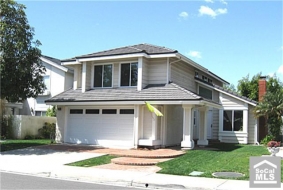
Irvine Home Address … 8 WHITECLOUD Irvine, CA 92614
Resale Home Price …… $700,000

Hey it’s good to be back home again – you know it is
Sometimes this old farm feels like a long-lost friend
Hey, it’s good to be back home again
I said hey it’s good to be back home again
John Denver — Back Home Again
The need for shelter is basic as is the desire for community. In the United States, this translates into a desire to take on a very large mortgage to buy real estate. These basic human emotions drive much of the activity in real estate markets.
Most people buy because it is the right time for them. Their career, age, family circumstances all come together to push people toward ownership at different times. Some are fortunate and buy at the bottom of the real estate cycle. Some are not so fortunate and buy at the peak.
The most damaging aspect of our current system is the price volatility. It capriciously rewards some and destroys others. Home price volatility creates a culture of Ponzi borrowing and dependency. The goal of government policy should be price stability, but lately it seems their goal is price maximization.
Why Some Americans Will Always Buy
Seven Reasons We're Buying and Four Reasons We're Not
By Julia Edwards and Edmund L. Andrews
Wednesday, March 23, 2011 — 12:28 p.m.
Although the housing bubble and bust may have shattered notions that home prices have nowhere to go but up, Americans haven’t lost their love for owning a home. In the latest Allstate/National JournalHeartland Monitor poll, homeownership ranked second, just behind raising a family, in people’s definition of the American Dream. Despite new home sales' drop to a record low, about four-fifths of respondents said that owning a home is still a better financial decision than renting, and nearly nine in 10 homeowners say would buy their home again.
Those results also underscore the extent to which Americans see buying a home as a deeply personal decision. It seems the decision to buy a home is made from the heart, while the decision to rent comes from the wallet.
That is a great way to look at the situation. Most people want to buy and own. Those who look rationally at the costs often chose to rent, not because it's the most emotionally pleasing choice, but because it's the most financially sound decision. Those who chose to rent recognize that being house poor is its own form of unhappiness that so takes away from the joy of ownership as to make it undesirable.
We reveal the top seven reasons why Americans are still drawn to owning a home, and the four reasons that make them hesitant to buy, according to the Heartland Monitor poll.
Reason to Buy No. 7: Getting a tax deduction
Only 2 percent said they considered the tax deduction for homeowner’s a reason to buy a home. That number may come as a shock to members of the Obama administration, who designed the first-time homebuyer tax credit, now expired, as an incentive to bring more buyers to market.
That is a surprisingly low number. Nationally, only about a third of home owning taxpayers take the home mortgage interest deduction, but the proportion in Irvine will be much higher. For high wage earners borrowing upwards of a million dollars, the tax deduction is very motivating.
Reason to Buy No. 6: Following in your parents’ footsteps
Following the path of mom and dad tied with a tax deduction among participants. Only 2 percent said they considered it important to own a home because they had grown up in a house.
I suspect this number is so low because people are unaware of their true motivations. So much of our behavior is subconscious, and the familiarity of house and home provides a psychological anchoring to real estate that runs very deep.
Reason to Buy No. 5: Being part of a neighborhood and community
Putting down roots in a community was a reason to buy a home among 6 percent of participants.
This is another area where Irvine is a special subset of buyers. Many people chose master planned communities like Irvine because they want neighborhood involvement. The number may only represent 6% of America, but it is much higher among readers of this blog.
Reason to Buy No. 4: Acquiring an asset you can pass along
The security that used to come with owning a tangible property may have faded, but 9 percent of participants said they still consider it a reason to buy a home.
Our society has become so mobile that people have come to recognize the impermanence of all living arrangements. We no longer buy family homes and stay there through our passing.
Personally, I plan to acquire several investment homes to pass on to my son. I guess I am one of the 9 percent.

Reason to Buy No. 3: Making a good, long-term investment
Although foreclosure rates may tell us otherwise, 13 percent still believed that owning a home is a good, long-term investment.
The question is a bit vague and misleading. All the terms are up for interpretation: What is good? What is long-term? And what is investment? I believe a good long-term investment is an income property with an 8% cap rate in today's market. Some believe a good long-term investment is a speculative flip in the North Korea towers. Over the very long term, real estate values rise in nominal dollars along with inflation. Is that good?
Reason to Buy No. 2: Building equity rather than paying rent
Building equity was the strongest of all financial reasons to own a home. Twenty-six percent of participants said they would own a home to build credit through a mortgage payment rather than earning less credit through paying rent.
The reason people want to own the home is to obtain appreciation. This nonsense about paying down a mortgage is not what people really think. No California Ponzi believes they have to reduce the balance of their mortgage. Mortgages are made to get larger.
realtors like to spin this as “throwing money away on rent.” Of course, they ignore the fact that they are throwing away much more money renting the bank's money, but the tax deduction makes it all okay, right?
Reason to Buy No. 1: Having a place to raise a family
An overwhelming 40 percent said that raising a family in a place of their own was the ultimate factor in their decision to buy. The housing market may rise and fall, but the value of the home to the American family seems set in stone.
People have come to equate ownership with stability. Unfortunately, our concept of ownership has been perverted into money rentership. Ownership with a huge mortgage is tenuous compared to renting. Capricious landlords evicting good tenants are much less common than robo-signing lenders evicting delinquent borrowers.
The timeless and the new
The reasons listed above are timeless. No matter when an article like this is written, the above reasons will be on it, and they will be just as compelling to buyers. The new are the reasons not to buy. These are a direct response to the collapsing housing bubble.
Reason Not to Buy No. 4: Entering into many years of debt
The bursting of the bubble and the horror stories that followed made 13 percent of respondents hesitant to agree to pay the high price of a home.
Five years ago, nobody cared about debt levels.
Reason Not to Buy No. 3: Losing the flexibility to move if you need to find a new job
In our mobile society and fickle job market, 21 percent said they would be hesitant to lock into a place that they may not be able to sell should they have to move to take a job.
Five years ago, everyone assumed you would simply sell your house for a huge profit if you needed to move.
Reason Not to Buy No. 2: Risking you home losing value if real-estate prices drop
“Price Reduced” signs cropping up in the yards of neighbors desperate to sell led 21 percent to back away from buying a home that could sell for less than the price they paid for it.
Five years ago, with exception of a few of us crazy bloggers, very few people believed prices could go down.
Reason Not to Buy No. 1: Monthly mortgage payments are too high
As opposed to the familial emotions that made 40 percent lean toward homeownership, the harsh realities of high monthly mortgage payments was the ultimate reason that 40 percent of participants said they would not buy a home.
The last reason is why house prices still need to come down. Despite the low interest rates, the cost of ownership is still too high in many markets.

What's it like to be immobile?
Today's featured property is an example of reasons number 3 above. People who buy now, or who bought since 2009, are facing the problem of a flat or declining market. When prices don't go up, people have to pay the sales commissions out of their down payment. That was their money rather than the market's. When free money from the appreciation fairies doesn't materialize, owners generally price their properties to accomplish three things:
- Provide negotiating room to lower price,
- Pay the realtor, and
- Get their down payment money back.
Hence, we see properties priced just over breakeven like today's.
I want every buyer looking today and over the next two or three years to be forewarned that they could find themselves in this situation. And reinforcing risk #2 — dropping prices — it could even be worse.
Imagine this is your house. What would you do?
Irvine Home Address … 8 WHITECLOUD Irvine, CA 92614 
Resale Home Price … $700,000
Home Purchase Price … $660,000
Home Purchase Date …. 3/20/09
Net Gain (Loss) ………. $(2,000)
Percent Change ………. -0.3%
Annual Appreciation … 2.8%
Cost of Ownership
————————————————-
$700,000 ………. Asking Price
$140,000 ………. 20% Down Conventional
4.82% …………… Mortgage Interest Rate
$560,000 ………. 30-Year Mortgage
$141,986 ………. Income Requirement
$2,945 ………. Monthly Mortgage Payment
$607 ………. Property Tax
$0 ………. Special Taxes and Levies (Mello Roos)
$117 ………. Homeowners Insurance
$82 ………. Homeowners Association Fees
============================================ 
$3,750 ………. Monthly Cash Outlays
-$714 ………. Tax Savings (% of Interest and Property Tax)
-$696 ………. Equity Hidden in Payment
$258 ………. Lost Income to Down Payment (net of taxes)
$117 ………. Maintenance and Replacement Reserves
============================================
$2,716 ………. Monthly Cost of Ownership
Cash Acquisition Demands
——————————————————————————
$7,000 ………. Furnishing and Move In @1%
$7,000 ………. Closing Costs @1%
$5,600 ………… Interest Points @1% of Loan
$140,000 ………. Down Payment
============================================
$159,600 ………. Total Cash Costs
$41,600 ………… Emergency Cash Reserves
============================================
$201,200 ………. Total Savings Needed
Property Details for 8 WHITECLOUD Irvine, CA 92614
——————————————————————————
Beds: 4
Baths: 2
Sq. Ft.: 1860
$376/SF
Lot Size: 1 Sq. Ft.
Property Type: Residential, Single Family
Style: Two Level, Cape Cod
Year Built: 1980
Community: Woodbridge
County: Orange
MLS#: S652539
Source: SoCalMLS
Status: Active
On Redfin: 1 day
——————————————————————————
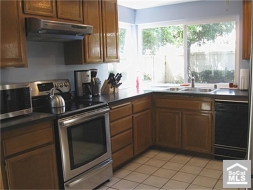
Location, Location! One block from the Lake. .. 4 bedrooms, 2.5 bath single family detached home in premium 'inside the loop' location. Walk to award winning elementary and middle school or perhaps stroll to the lake and enjoy the view or activities at the South Lake Beach Club/Lagoon. Rarely on the market, this spacious Wildflower model has an open floor plan, cathedral ceilings, newer Low E dual paned vinyl windows throughout, newer roof. Separate living room with charming inglenook seating area with own fireplace, large slider window and door invites the entertainer's backyard into the room. Kitchen has updated stainless steel appliances, countertop, tile flooring and recessed lighting – separate family room flows from the kitchen with built in shelving. Bathrooms have updated glass shower doors and lighting fixtures. Closet organizers in all bedroom closets. Great location, great house, come see and make it your home.
I believe the lure of home ownership is waning for the younger generation; living in one town for years is unappealing. The job market is fragile; mobility is key. Gen Y wants to travel and experience life; marriage, kids and a tract house don’t have the appeal they once did. Many who do marry don’t want kids. A generation ago out of wedlock births were rare; now its unusual I hear of a child being born to a married couple. Woman has baby, takes baby back to Grandma’s house, birth dad visits. Or he moves into Grandma’s house too. These new families won’t be buying OC homes anytime soon, unless helicopter grandparents provide a down payment to keep the kids and grandkids living close by, or to get them out of the house.
Every generation when young wants to travel, experience life, make a difference etc etc
Until they have kids, get married and buy a tract home
I don’t want to travel or make a difference. I certainly don’t want to experience life.
But I didn’t buy and I’m not going to for a while. There are rational actors in their 30-40s with money in the bank who can see there’s no rush, and possibly a bit more to gain by watching a little longer. FCB’s notwithstanding, I don’t see prices in my Irvine neighborhood doing anything but slowly petering.
Birth and marriage rates are declining amongst the under 40 crowd; most of the population growth in CA is due to immigrant births. Many GenX/Y enjoy single life, or double income/no kids, prefer dogs to children. Many under 40 watched their parents marriages implode due to money problems, always some sacrifice for the house/kids, keep up with the Joneses, boredom, conformity. Many have no desire to marry, breed, buy SUV’s and move to the burbs.
where are you making up your data from?
rkp, I believe he is basing his data on the most relevant data point: people are living longer, all of his other conclusions follow after that
Here are some links…
http://factfinder.census.gov/servlet/MYPTable?_bm=y&-qr_name=ACS_2009_1YR_G00_CP2_1&-_lang=en
http://www.usatoday.com/news/nation/2005-07-18-cohabit-divorce_x.htm
http://pewhispanic.org/states/?stateid=CA
http://www.npr.org/blogs/thetwo-way/2010/09/29/130218357/for-most-americans-marriage-is-an-economic-decision-sociologist-says
Agreed. I am 40, and now that I’m no longer my mother’s caretaker, I plan to travel, enjoy life, and do what I want when I want. That doesn’t include being stuck at home, having to go to the 1,000th f*#&ing; soccer game, or fighting over whose in-laws we’re going to visit to screw up THIS helliday season. And it definitely doesn’t mean throwing hard-earned money at overpriced real estate.
Gemina13, that’s so funny and so true.
IR – what kind of person can afford to borrow $1M for a house and then qualify for ANY mortgage interest deduction? I don’t consider myself capable of paying the P&I on $1M dolllar loan and I make enough to hit the AMT. ALL – EVERY DOLLAR – of tax deductions are wiped away.
I don’t get it… how do they do it??
BD
I suspect many of them don’t. People take out $1,000,000 thinking they are getting a big deduction, and when they go to their accountants, the AMT is a complete surprise.
on top of the surprise of property tax,
maintenance, HOA dues and insurance.
Other than that, whats not to like?
Yes it’s a huge surprise for people putting down $500,000 to $1,000,000 cash in the purchase.
If only they were as smart as you.
When you go to sell the property you purchased in early 2009 and you face the same circumstances as today’s featured owners, what will you do?
It’s going to be the end of the world for me. When that happens this year, however will I survive? I guess I’ll go flip houses in Vegas with my own money. It’s going to be devastating, it’s guaranteed to happen any day now.
Dude WTF are you smoking these days?
Sensitive much?
Maybe you should be the one smoking something to calm your nerves.
Let’s get into just how devastating this is going to be for these tragic early 2009 purchasers.
Going by the Irvine median down payment it’s likely they put down $198,000 to $243,000. For arguments sake let’s assume they only put down 20%, $132,000.
Ok, for arguments sake let’s say they don’t get their asking price, they only get $680K which is $20,000 more than their 2009 purchase price. Since 2009 they have paid off roughly $12,000 of the loan.
They’ll probably get back around $120-$125K cash. Maybe more, maybe less.
Whatever money they lose isn’t devastating. What may be devastating is the divorce, death, health problem, or job loss that may or may not have occurred. The toll here, if there is any, is the life circumstance that occurred, the money is nothing. It’s not normal to sell a house 2 years after you buy it.
But maybe these folks are lucky, and a corporate move is picking up the small loss?
Since they bought in March of 2009, the S&P has nearly DOUBLED. Think of what that $120,000 in cash could have done, rather than taking a “small” loss…..
Ouch.
Ok ok I give up, it’s going to be devastating. They will be ignoring the life circumstance and focusing on all that money they could have made perfectly timing the S&P500;. Thank god you doubled your money.
They probably should not have bought if they had to move in a year in any type of normal market. It is probably an unforeseen move and like most things that happen when you don’t plan on it, it will cost them something. Homes are relatively illiquid.
However, even if they might lose in this transaction but show me any data point that says that home prices haven’t appreciated nominally in any 10 year period, 20 year period, 30 year period. If only at the rate of inflation, the returns are great precisely because it is a levered purchase with a fixed rate (hopefully).
The problem of upgrading and wanting more house and better neighborhoods constantly is a differently issue but that is a different issue than a function of the benefits of home ownership. That problem will exist whether they rent bigger or better equally as well.
You were the one who was trying to minimize the “small” loss they suffered by buying with a significant down payment in early 2009. In reality, there is about a $140,000 swing if they put 20% down when their money could have been working for them in other ways.
Maybe a $140,000 loss for some is “small.” It’s not for me.
Why leave it at only a $140,000 imaginary loss, they could have started a company that is now worth billions. It’s more like a billion dollar loss here, not a few thousand dollars and they won’t be getting back anything close to $150,000 cash in this transaction, no sir.
You can try to deflect with some IMAGINARY scenario or you can deal in actual “reality.” “Reality” that includes what the S&P or any other index has done since March of 2009. “Reality” shows that they will be down $140,000 or so on this transaction (if they put 20% down). Maybe IR or someone with the property records can tell us what they actually put down on this house and we can come up with a quantifiable loss.
Yes, we should get the actual down payment numbers and calculate the actual loss. Could it hav been 100% cash, $700K loss right here? Oh man I hope so
I have to say you have enlighented me. I’ve lost tens of thousands of dollars this morning not having all of my
money in the S&P500;, it’s amazing how much money you can lose in a few hours, my balance is still showing a considerable gain but I know better now. Thanks
@Corner Office:
The reality is hindsight is 20/20. Did this buyer have any guarantees any index would go up from March 2009?
They probably did not foresee having to sell after two years either.
While I agree that investing money is probably wiser than putting it down on a home right now, there are risks involved in that too. I’m not sure your stance is as strong as you would like it to be.
It’s ok to admit that these people made a bad decision to buy with a significant down payment in March of 2009, PR. I get that you don’t want to recognize that.
The bigger point, that IHO seems to grasp below, is that there are significant costs associated with making large downpayments (lost opportunity costs that IR puts in his calculator).
Would I go all in right now in the market, no (there’s a reason people diversify). But, I wouldn’t go all-in on a downpayment on a home either.
Maybe this owner has significant funds, and the “small” loss doesn’t affect the owner? Maybe the owner is kicking himself for missing out on a big jump in the market, I don’t know. What I do know, is that if the owner did make a sizeable downpayment that the owner paid for it with the lost opportunity that money had in other areas.
I recognize that it’s not normal to sell a house after 2 years. Something likely happened to this family, I wish them well.
Are you willing to recognize that the current market price may end up higher than the early 2009 market price? Come on, I double dog dare you.
I’m totally willing to say that this property might sell for more than it did in early 2009. In fact, I would be surprised if it sold for less (before transaction costs).
Ok, progress, now we are getting somewhere. If they viewed this as an investment it certainly was a bad decision. More importantly if there was a negative life event that caused this I hope they recover quickly.
My stance has never been that buying in early 2009 is necessarily a good investment. I’ve simply observed that in more premium areas current prices are higher than early 2009.
Exactly. If they were 100% in the market since 2009, they were 100% in the market in 2007 and 2008. In spite of recent gains, they are still way down from the peak. Or of course they have perfectly and repeatedly timed the market, in which case they have enough cash to buy far more than some $700k house, and wouldn’t notice writing the whole thing off completely.
As they should be (especially from a downpayment perspective). If S&P and other investment markets have seen significant (nearly double) gains since 2009, why wouldn’t premium areas see a push higher. I think those with significant funds available for downpayment have seen their purchasing power grow significantly over the last 2 years and are happy to grab properties at/near what the same property sold for or would have sold for in early 2009.
To that end, it might be surprising that premium areas haven’t seen bigger gains over what they were selling for in early 2009. I think that this speaks to the overall market and that there are other less premium areas that are pulling premium areas down (I know I have seen IR discuss the substitution effect).
PR,
You’re close, the owners refinanced 11/10 for 515K, they had originally put 20% down.
These sellers are going to lose 6% to transactions costs. It’s the cost of taking the gamble. They’re smart to get out now before they lose the whole thing.
Westparker, thanks for the confirmation.
Assuming they were to get asking they’ll leave the transaction with $143,000 cash.
Maybe they’ll only exit with $100,00 or $120,000 cash. The greater point here is that we should all hope they did not experience a tragic life event such as a death or health problem.
If if’s and but’s were cans of nuts, it would be a merry merry christmas for all!
How about if we had taken that $120,000 and invested in the Wall St. casino when the market was at 14,000?
Gotta luv them returns. Kind of how they said if I started putting $3,000 a year away at age 25, by age 65 I would be a millionaire. Yup, I did my side of the “investment” but is there a million there? LMFAO!!
It will get worse before it gets better. Makes you wonder what the 46th world’s richest man knows developing thousands of units on his land in the worst housing sales since it’s been tracked. Perhaps The Donald knows his land holdings will degrade even further so he is cranking out the homes while he can get decent money?
Housing is screwed as investment, that’s why I think all this development is going on, for Donald to get the F out of dodge.
Corner Office – I posted about large downpayments last week. My wife and I have a sizeable downpayment and this is outside of what we have invested in stock market, 401k, outside of rainy day savings, etc. This money was saved for a house and while I can put it into stock, I havent had the fortune of great returns over the years. Even since 2009, I havent made massive gains. There is no gaurantee for a better stock picker to make money either. For me, putting the money into the house saves me the interest and in a sense, I am paying myself that interest and getting a better rate than my CDs.
You make it sound like no one should put large amounts into a house. Both my parents and inlaws pride themselves on paying off their houses in 10 years vs 30. Could they have made more money refinancing into low rate loans and investing that money? maybe but there is a sense of being down with house payments that for many is very valuable.
Don’t confuse my assessment/analysis of this current situation as being anti-down payment or anti-paying off a home loan. My analysis was more of a rebuttal for PR’s statement that these buyers suffered a “small” loss on this transaction.
I think that the specific scenario that is being discussed above shows that:
1) the current owner took a big hit by making a large downpayment in 2009 when the S&P was basically half of what it is now and now selling their home at a loss (after transaction costs),
and as a further discussion point:
2) other potential buyers who did not purchase in early 2009 and had greater exposure to other investment markets have seen their purchasing power grow since March of 2009.
I think that IR’s calculator is very good in that it takes into account the lost opportunity costs associated with downpayments. Certainly, you would agree that these “costs” should be evaluated when determining what type of downpayment to make?
1) i dont think they planned to sell so quickly so guessing some other decision is causing the sale now. furthermore, how can you say that the decision to put that money in 2009 was wrong when very few people could predict that the stock market would go up so quickly
2) i disagree that people who had large DPs in 2009 have seen their purchasing power grow. my DP money is separate from my stock market money and i imagine many have the same situation. i am patiently letting it grow at an amazing 1% interest rate and basically hasnt really changed since 2009
while its generally a rewarding feeling to poke at PR, you are way off base here. furthermore, it is not a large loss in the first place.
C’mon you know the “average” investor is completely clueless.
The Dow is off a couple of hundred points, they panic sell thinking the end is near.
All I can do is look back at what actually transpired.
1) the S&P has doubled, while the house this owner purchased has minimally appreciated. I consider a $140,000 loss to be a “large” loss. Lost opportunity costs are real and need to be accounted for when purchasing a property. This owner was, unfortunately, unlucky with his timing and it cost him big.
2) As for your situation, note that I said those who had investment market exposure from March of 2009 to now have seen their ability to make a downpayment grow. The fact that you didn’t participate in that rapid growth (by having your money in investments not exposed to various fiancial markets) doesn’t mean that others didn’t capture that appreciation that can now be used for a bigger downpayment.
i really have no clue what your point is. you are basing your points on what could have transpired and all one can do is make the best decision at the current time frame
go back to 2009 and you are in these people’s shoes without a crystal ball on the stock market. what would you do? i am guessing they werent planning on selling in 2 years so lets assume they were buying for a longer stay. if you can tell us what a better decision would have been, than you have something of value to add to this discussion.
The point I was/am making is that this owner lost more than the minimal amount that PR tried to initially claim they lost.
Next time, please follow the discussion before jumping in and then saying you can’t figure out what the point is or trying to tell me how I can contribute to the discussion that PR and I were engaged in.
All this talk, we could have already moved on to the next 100% return in 2 years. How much money was lost here? We could have launched a company greater than apple and Facebook combined. I’d say we lost hundreds of millions here. All this lost over a few thousand dollar mistake on an Irvine house purchase… what a shame.
Well, if someone is able to amass $500K-1M cash in order to sensibly buy a house, more power to them I guess. Sadly, I won’t be among their number unless the Prize Patrol shows up first 🙁 And practically speaking, I suppose similar circumstances would impact most of us out there.
i don’t know your situation but i see people’s ability to save and many people just dont know how to truly save.
my friends, coworkers, etc have similar incomes and i have seen very very wide differences in savings and how they deal with bonuses, unexpected expenses, tax returns, etc. obviously this is a very limited sample and not scientific but i think we can agree that ability to save varies widely from person to person.
i have shared how my wife and i have saved in the past and its not rocket science. yes making more money helps but saving can start at any income level. i personally believe that its really easy for a young couple both working to set aside at least $250K for a house if they are smart and frugal until their first purchase…ie, dont buy right after you graduate from college, save hard, and buy in your early 30s. i can go through the math and data to back.
$500K-$1M for a house is harder obviously but point is savings is possible. AZDave thinks everyone in irvine with large downpayments is bringing that money from previous house sales but i think that with many being indian and chinese and having a savings culture, they are like me and just saved hard and ready to buy in their 30s with all that cash
i personally believe that its really easy for a young couple both working to set aside at least $250K
What are the circumstances of your young couple? Are their circumstances better than most in their cohort?
its not rocket science
Is it more like Voodoo?
i can go through the math and data to back.
Go for it.
Let’s assume rkp is not smoking crack and blowing the smoke all over the forum.
Assuming that the Wikipedia figure is still correct, let’s say Irvine’s median household income is $98,923. This means half of the Irvine workersheep households are making less. Since rkp is fantasizing about young people in his example, I think it is a fair bet that they are on the lower end of that median income number as they are not at their peak earning potential right out of college. Nevertheless, let’s assume that all these folks are making $98,923 – the median of the entire city (impossible).
Paycheck calculator says the monthly net pay after taxes is: $5,876.97.
Back of the envelope, common sense expenses assume:
1700.00$ monthly rent
200.00$ monthly electric bill
100.00$ monthly cable and internet bill
60.00$ cell phone bill
250.00$ car payment
100.00$ month car insurance
100.00$ gas
400.00$ month groceries and entertainment
I think these are conservative. Obviously some of the households will be dual earners so some of these expenses will double.
Expenses total about $2910.00
That leaves these households about 2967.00$ per month disposable income.
How long will it take these successful households to casually set aside that 250K? Little over 84 months or about 7 years.
That is assuming that every single one of these younger households are earning at least the Irvine median income the day the set foot out of college which is impossible by definition of median income which we know tells us half the earners make less and I think it is pretty safe to say that the lower end of the median contains more young workers than older workers.
So a total pie in the sky impossible scenario says 7 years for the average Irvine workersheep to save up 250K. What happens when you plug in more likely income numbers? Let’s assume that the entry level college workersheep makes 2/3 median income his first year out of college and averages a 3% raise each year thereafter (not everyone is going to land that big promotion):
Year | Salary | Net Monthly Pay | Disposable
———————————————-
1 65948.66 4,101.29 1191.29
2 67927.11 4,208.72 1298.72
3 69964.92 4,319.34 1409.34
4 72063.87 4,433.30 1523.3
5 74225.78 4,550.67 1640.67
6 76452.55 4,671.58 1761.58
7 78746.12 4,796.10 1886.1
Assume that all the disposable income for each month went into a savings account:
1191.29 x 12 = 14295.48
1298.72 x 12 = 15584.64
1409.34 x 12 = 16912.08
1523.3 x 12 = 18279.60
1640.67 x 12 = 19688.04
1761.58 x 12 = 21138.96
1886.1 x 12 = 22633.20
Total saved: $128,532.00
Let’s assume they put it into a savings account and averaged 2000.00$ a year in dividends making $14,000 for the 7 years.
Total saved: $142,532.00
Happy birthday, you just turned 30. You still have a ways to go before that 250K is casually set aside.
But don’t worry, Irvine HO knows a couple of folks in their 20’s who saved up 300K without batting an eye.
yes making more money helps
It certainly does if you want to make it to 250K by age 30.
And please don’t tell me that you know Joe Blow who makes 100K at age 25 writing software unless you are prepared to prove that every 25 year old worker in Irvine writes software and earns 100K doing so.
We are talking about people “on average”. Not your little straw dog example that assumes the best case scenario applied to all workers across the board.
And AZDavidPhx didn’t even include student loan payments. If you’re the typical young Irvine couple earning well-into six-figures combined, then that usually comes with hefty student loans.
e.g. I met my wife in grad school and in the last 10 years we’ve paid in principal + interest nearly $180k to student loans (and we’re only half-way through the principal).
@DaveAzPhx:
“But don’t worry, Irvine HO knows a couple of folks in their 20’s who saved up 300K without batting an eye.”
You sure like to exaggerate when you can’t back up your “beliefs”.
What I did say is it’s close to impossible for 20s to have a down payment sourced from an equity sale when they never owned a home prior (which you keep contending).
The source of their large payments can be a combination of savings, investments and the oh-so-popular relative donation.
So let’s play… based on your breakdown, where are these people getting their large down payments from? The houses they bought when they were 15? Or even 20? Yeah… cornered yourself again.
David you won’t want to hear, especially not from me, but here goes:
In Irvine it’s very common for a young couple to make $120-150K combined. They won’t even be in mid level jobs. the wife will be an admin making $60k and the husband a chump low level tech worker making $80k.
i personally believe that its really easy for a young couple
Not to mention that I was pretty generous with my income assumption when you look at facts like these.
Median Income by Age
Age < 25 $43,707 Age 25 - 34 $73,537 Age 35 - 44 $100,736 Age 45 - 54 $114,008 Age 55 - 64 $114,256 Age 65 - 74 $83,265 At least it confirms my assumption that young people right out of college are not making as the older side of the median age. But don't go letting stuff like burst your fantasy. I am just a forum troll who throws stones and does not back anything up. Tell us how easy it is, rkp. What should these people do to easily hit that 250K?
where are these people getting their large down payments from? The houses they bought when they were 15?
Nice strawman argument, Irvine HO.
No, like I said, I don’t believe that many people in their 20’s are buying in Irvine (as I have said dozens of times now). Just as you would recommend your children not buy their first house in Irvine, but move up later.
Well since you are bringing your straw animals up:
Median income for Age < 25 does note equal 22-24 median income (unless that site is breaking that stat down). And if you can save up $125k in AZ by what I assume is your mid 20s... why can't a couple in Irvine who probably makes more than double you do save up $250k in the same time frame?
why can’t a couple…save up $250k in the same time frame
I never said that it could not be done. Try arguing against what was actually said rather than rewording what I say and ripping into it which is the very definition of a Straw man argument.
I argued that it is highly unlikely that the median Irvine workersheep falls within the circumstances to make it very easy to save up 250K.
You then reworded it as though I said that it is impossible for anyone to save up 250K and then went into an example “prove” your point.
Do you see the strawman? It’s right there – sitting on the couch waving at you.
Yay, fantasy math guys is back..this time armed with some math for a change.
First, household income vs. family income.
Household income is not to be confused with family or personal income. Household income is often the combination of two income earners pooling the resources and should therefore not be confused with an individual’s earnings. Even though the term family income may sometimes be used as a synonym for household income, the U.S. Census Bureau defines the two differently. While household income takes all households into account, family income only takes households with two or more persons related through blood, marriage or adoption into account.
Hence since RKP spoke about a COUPLE, that is by definition family income.
Next, using your very own statistic accurate 2/3 number of a family income and your own wage increases and your estimated expenses, after 7 years of earning annualized return of 3% a year but compounded monthly since they are saving monthly, their total would be 209k. Not quite 250k, but hell of a lot closer than your bullshit numbers.
And since you are on do a math bent, why don’t you help us out dave.
60% higher nominal incomes. 52% lower interest rates.
What would relative values of homes be all else being equal?
Do the math for us Dave.
@DaveAzPhx:
I never said that it could not be done. Try arguing against what was actually said rather than rewording what I say and ripping into it which is the very definition of a Straw man argument.
Oh please… your first volley at me in this thread was the straw man, saying I said I knew 20 yos who could save 300k… I said no such thing.
Do you see the strawman? It’s right there – sitting on the couch waving at you.
I don’t even think you really know what a straw man is because you keep accusing everyone else of doing it without realizing that’s your soup du jour.
Your hypocrisy is worse than your math.
soscared,
You do realize that family income is a subset of household income?
Please get your facts straight before you go popping off. Did you read the part about household income often including 2 incomes pooling resources?
Even if we assumed your moronic statement were true, how many of these young people are married and living together the day that they enter the workforce? Not many.
Nice try.
Haha. Now, who is popping off. Rkp specifically said he believes a couple could do this together. Btw, your calculator must have broke after all the heavy lifting you did on previous posts because you still won’t do the value math for us huh?
Come on. Do the math for us. Or if you calc is broken at least some nice comments about my parents undead offspring or something. 🙂
You are a moron. The reason that family income is higher than median income is because married people tend to be older and therefore closer to peak earning potential.
So your trying to apply family income to young “couples” just because they are a couple is like saying companies pay you more money if you have a spouse or significant other; some kind of an award for not being single. Pretty idiotic don’t you think?
A young couple who lives together unmarried will not be counted in family income. A young couple who do not live together will not be counted in family income.
How many 23 year olds setting foot out of college and joining the workforce are married and ready to sign up for rkp’s easy money plan?
lol. You are so good at calling me names! You must have majored in it or it must be your defense mechanism for always being a little off when you were in high school.
First, precisely because your stated “married couples” tend to be old metric, we used 2/3 of income right? So you are saying two “young” people straight out of college cannot make 37k each? WOW that is a HUGE FUCKING stretch since my first job out of college in Irvine in 1995 was 36k. But oh ya, nominal wages haven’t gone up at all according to you.
RKP assumptions may seem a bit aggressive in terms of that they are a couple when they first leave college.
So lets just use your wonderful example again. So what happens in your totally realistic example and this supposed 30 year old now meets another 30 year old and the “couple” purchase a home together. Is that unrealistic as well? That by 30, they might have found someone similar to themselves in age and income and decide to pool their INDVIDUAL resources to purchase. Super stretch.
What now David? Since each should have been able set aside your supposed 142k.
Let’s 142k+ 142k= totally off from RKP purportedly impossible task for a COUPLE saving 250K.
What now math wiz?
I’m amazed that the list of 7 reasons to own a home doesn’t have our top reason:
Having total control over your living space so that you can:
1) customize it to fit the needs of your family
2) live in the same house as long as you like
As I previously commented (Last Remaining Hopes Crushed, Homedebtors Defend Home Ownership 8/31/11), you have less control when the landlord is in charge. While of course a landlord will not throw out a good tenant, the landlord can decide to sell the property at any time and the new owner may want to live in it (has happened to me before).
More importantly, a landlord is not likely to want to do the same kinds of improvements on a house that you and your family may feel is necessary and that you would certainly do if you owned a house. Things like optimizing the house for those with asthma or other breathing issues (eliminating all traces of mold, whole house HEPA air cleaner, etc.), making the home super energy efficient, replacing ancient appliances that still work, changing the yard to suit your family, etc.
As a single person or perhaps even as a couple having control over the home improvements may not matter so much but when you have a family they matter quite a bit more. A reasonable landlord will usually keep the home in good repair and no more.
We bought our house last year (short sale) knowing that it will likely decline in value over the next 2-4 years but it is far more valuable to us than our prior house. Probably the main reason is control, and the only reasons from above that mattered were:
#5: We did want to be part of a community/neighborhood we liked, and connected with that our 6 year old’s school is 2 blocks away.
#1: Perhaps by “having a place to raise a family” the authors are implying some of the things I’m saying are important reasons for us – such customizing the house and being assured of not having to move.
And – assuming we stay in the house for 20 years or more (which we intend), building equity rather than paying rent will pay off in the long run, barring a multi-decade deflation. That’s reason #2, but it’s very far down on our list of reasons as to why we bought a house.
@Joe:
Great points.
Going from owner to renter and back to owner again… the only reason to rent for me is the financial savings.
Everything else, at least in my situation, favors owning. Especially when renting from a private party, then you find yourself not only worrying about your own situation, but also your landlord’s (something that people who rent from large conglomerates like The Irvine Company don’t realize).
And at rental parity, the pendulum swings even farther because it removes the wallet factor.
As for reason #3 not to buy… a bit of a no-brainer there, if you’re not in a stable job or are unsure if you will put roots down in an area… that’s the anti-thesis of owning. But for people who know where they want to live (like Irvine) and will make sure that their careers stay local to that area (oceanographers should not buy homes in Las Vegas), then owning even with a financial hit may be worth it.
Heartily agree on reason #3 not to buy. On the other hand (as I’m sure you already know), if your calculation shows that renting out the house you buy would cover all mortgage/insurance/maintenance/property tax costs, then this reason is mitigated as you can turn your home into a reasonable investment after relocating.
I live in the Richmond/El Cerrito/Berkeley area. The home we bought is in a less expensive neighborhood where the rent would nearly cover all these costs.
Joe, I couldn’t agree more with these reasons. They are also at the top of my list. While I agree with so many of the benefits of renting (eg. all those listed on the homepage of http://www.patrick.net), what you list are STRONG factors in my humble opinion in favor of owning.
how much customizing are you thinking about? the places we rent generally meet what we like and the types of customizing is paint and decor which i tell my wife is nothing compared to how much we would have lost if we had bought.
if you are talking about breaking down walls and major remodels, i agree that its harder to customize but why not just find a property that meets your needs
on number 2, i dont think its as bad as you think. my father in law owns rentals and would love 5 year leases if his tenants wanted to sign.
rkp – For starters, both my wife and I have developed breathing issues. When we bought our new home, we first had a competent engineering firm dig up the crawl space dirt and install drainage systems under the house, topped by drain rock, vapor barrier, and then cement to make the space usable for storage. Then we replaced the ailing ductwork, the ancient furnace, and installed a high quality HEPA whole house air filter. Not only was our former landlord not able to afford anything like that – he did not even do anything about moldy smells in one of the 2 bathrooms – so my wife did not use that bathroom during the three years we lived there.
Next – the kitchen. Very discretionary, I know. But with 15 years of daily cooking for a family ahead, my wife wanted it the way she wanted it. Our prior rental had a 15amp circuit into the kitchen and other electrical issues and he was not willing to put money into upgrading that, let alone an aesthetic remodel.
My wife had many ideas what she wanted to do with the yard ranging from fencing, to planting (or removing) trees, and various garden ideas. We probably could have worked some of that out with a long-term rental situation, but perhaps not all of it. But why sink a ton of effort into a yard when it’s not even yours and may get sold out from under you? Obviously, we’ll do whatever we want with our current home.
I could continue with a long list of more minor items but you hopefully you get the idea. Given that we are intending to be in our home for 20 or more years, we wanted to take care of all the infrastructure things up front, and wanted to suit the home to our desires.
In the East Bay where we live, it is very hard to find a home in fantastic shape that rents for less than $2500/month, though there are plenty in not-so-good-shape for $2000 or a little more (I’m talking 1200-1400 sq ft homes). On the other hand, homes with 1500 or so sq ft in our neighborhood have been selling for around $350,000 in the last year.
Many of the owners renting out their homes for $2100 or $2200 per month are financially strapped and owe more in loans than their home is worth. So they’re certainly not in any position to sink lots of money into the property.
Is it possible we could have found a landlord willing to sink $50,000 into their property and give us a 10 year lease? I doubt it. Though it may have been possible to find a really great 1500 sq ft home in great shape and totally suiting us had we been willing to pay $2700-$3,000/month and taken many months of looking at many homes till we found it.
Perhaps in Irvine the home value vs. rent equation is different. If where I lived all homes cost over $700,000 with rents being the same as I outlined above, then I’d think different In fact, it was closer to that scenario 4 years ago and the financial craziness of buying outweighed our desire to own a space that we could customize to suit our desires. But prices dropped in many neighborhoods (though not Albany, Berkeley, and Kensington), and after 1.5 years of home shopping we finally found something we could afford that suited our requirements.
I agree the most people buy a house for emotional reasons, but there can be wallet ones as well. For instance, the govt being so desperate to stop a second Great Depression that they were willing to loan ludicrous amounts (the confirming jumbo loans) at ridiculously low 30 year fixed interest rates to purchase distressed assets (ex. houses). And then they plan to keep printing money to allow inflation (real inflation, like you can see at the grocery store and the gas pump, not their artificially low gauge designed ti nerd Social Security benefits) to magically make everyone in debt and underwater whole again.
In that case, don’t fight the Fed, just go with it.
This has got to be one of my favorite all time listing flubs …
http://www.redfin.com/CA/Corona-Del-Mar/506-Narcissus-Ave-92625/home/5796704
“Great open floorplan with 3 bedrooms and an office/den than can be used as a 4th bathroom.”
The stocks doubled after they crashed so most people are break even, unless they made the mistake to take some money out of the market before the recovery had occurred (which many did).
I just bought a house (not Irvine by close by) because all-in I can save about $1k per month over renting (without even considering any positive tax implications). My 50% down payment was sitting in the bank making 1% a year (and I had to pay taxes even on that). The second reason that closed the deal for me for the fear of inflation which I think is very real.
If I sell in 5 years they prices could go down about 10% and I would still break even but I had the benefit of living in a nice house rather than in an apartment…If prices drop 30% I will hold onto it and rent it out since it is in a desirable area and the rent is currently probably at 150% of my monthly payment so there is also some wiggle room in case rents continue to drop…
Overall I think SoCal will continue to be a desirable location and prices in many areas (Laguna, Aliso, etc) have reached an level where people from out of state could for example move in for retirement (e.g. from the cold mid-west) or buying is much cheaper than renting (as it is in my case). It is tough to perfectly time the market but there is also risk in missing the bottom, especially with the Fed printing money which will result in inflation. Real estate will be one of the safest assets classes that are accessible for Joe Shmoe and give some shelter from inflation. For the same reason you see real estate prices in some European countries soar – in anticipation of inflation. It might be a self-fulfilling prophecy, but it still happens…
What I also forgot to mention was that I think I can pay the mortgage off in a few few years. After that I will only pay property taxes making the gap to renting even bigger. I probably could have invested all the money in the stock market but I am not willing to take the risk of another 50% drop, this time without a quick recovery…And again, there is some personal benefit of owning your own house.
You have shown why there is a general consumer surplus surrounding owner-occupation, but I think you’ll agree it is not a reason for prices to remain high. How could it, if there are investors buying property too?
The thing I often see is people buying a property and putting in “sweat equity” to make custom improvements to suit their lifestyles. They then use this “sweat equity” as justification for raising the structure price when they sell. So they want it out of both ends: they want the customization and the enjoyment of it, but want it to be remunerated when they sell. Too many are surprised when the property is slow to sell because buyers are picky about customizations, just as they were, and put little value in them. They either get reduced equity or reduced insolvency. Pick your poison.
“Whatever money they lose isn’t devastating. What may be devastating is the divorce, death, health problem, or job loss that may or may not have occurred. The toll here, if there is any, is the life circumstance that occurred, the money is nothing.”
“Something likely happened to this family, I wish them well.
“
“More importantly if there was a negative life event that caused this I hope they recover quickly.
“
“The greater point here is that we should all hope they did not experience a tragic life event such as a death or health problem.
“
Disingenuous, thy name is Planet Reality
Why didn’t you mention these reasons not to buy?
1. When the San Onofre nuclear plant explodes, it’ll be easier for a renter to pack and go.
2. When the next Big Earthquake happens, a renter can quickly move to a safe place.
3. When Santa Ana winds bring another huge fire, a renter can move out in a moment.
Nice additions to the list.