Today we have some creative cartooning and analysis from our favorite lender, Soylent Green is People.

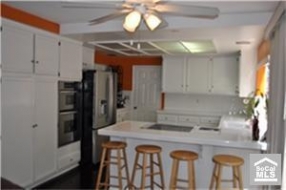
Irvine Home Address … 4 SHARPSBURG Irvine, CA 92620
Resale Home Price …… $729,000

Out of the ruins
Out from the wreckage
Can't make the same mistake this time
We are the children
the last generation
We are the ones they left behind
And I wonder when we are ever gonna change
Living under the fear till nothing else remains
We don't need another hero
We don't need to know the way home
All we want is life beyond the thunderdome
Tina Turner — We Don't Need Another Hero
The following cartoon strip and commentary is the orginal writing of Soylent Green is People. My commentary will pick up at the end.


.png)


Soylent Green Is People's take on the falling conforming limit
Will the 2011 Real Estate market hit a tipping point with the reduction in loan limits, or are we seeing much made out of nothing? It’s a bit of both I’d say.
Numbers don’t lie..jpg)
Let’s assume that current spreads between Portfolio Jumbo financing and Standard Conforming mortgage rates runs a half percentage point. For a $729,750 mortgage, that translates into an increase of $219.92 per month. Some might say that’s an acceptable change in terms. Others will have this increase weigh heavily on their commitment to buying. Quantify this expense not as a mortgage payment, but food, entertaining, air conditioning, gasoline. $219.92 is real money to most prudent buyers when viewed in context.
During the hyper bubble period payments rose primarily because of price inflation, not higher rates. The market counteracted this trend with expanded “No Ratio”, Stated Income loans, and ever lower rates, culminating in the Option ARM origination explosion of late 2006. The days of zero underwriting standards have passed. We’re already back to historic low rates. The only unconventional loan product left are Interest Only ARM’s. Will we see a flood back into these products when fixed loans become more expensive? From what I’m seeing now, the answer is no. ARM loans still comprise a very small portion of new loan origination and is not trending higher for now.
The impact on qualifying?
A buyer able to purchase a $912,000 priced home with 20% down needed an annual income close to $120,000. With Portfolio Jumbo loans tighter debt to income ratios come into play. The income needed to purchase now swells to $150,000 per year. The reason? Debt to Income ratios can be pushed to 45% for Conforming loans, higher in some select cases. Ratios for Portfolio Jumbo loans have crested in the high 30’s to low 40’s. Is that a bad thing? Not in the long run. Weaning the Government out of the mortgage standardization business is a good thing, but will come at a high price for some.
A real time price pressure example:
18811 Tabor Drive was purchased in 2007 for $895,000, closing with an ARM first loan and a second mortgage. The total indebtedness appears to be $805,000. It’s listed for sale at $875,000 as an “Equity Sale” however after you subtract for commissions due, whatever equity remains is becoming razor thin. After August 1st, the income required to purchase this home, assuming 20% down, jumps from $123,000 per year to $145,000 per year. What price fits a buyer pool with incomes at $123,000? It would need to sink below $830,000. A $45,000 price reduction to overcome a $22,000 income gap, caused by a one half percent increase in rate. At this point the home becomes either a delisted property or a short sale. Homes in this position are the first fruits of the unintended consequences created by years of lending policies gone amok.
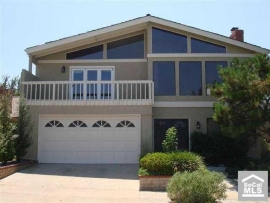
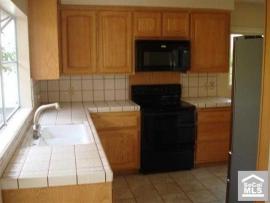
$875,000 — 18811 TABOR Dr Irvine, CA 92603
It’s the guidelines, stupid.
Prior to August 1st, Temporary Loan Limit Conforming loans and Jumbo FHA loans offered extraordinarily generous qualifying guidelines:
45% to 55% Debt To Income Ratios
Credit scores to 620
3.5% down payment minimums.
2 Months Standard Cash Reserve Requirements.
County by County Loan Limits.
In this new lending landscape, the rules of the road have changed quite a bit:
40% debt to income ratios on average.
Credit scores minimums from 700 to 720.
20% down payments required..
12 to 24 month cash reserves needed.
Zip Code by Zip Code loan limits.
5% reduction in ratios, 80 point increase in FICO scores, 17% increase in down payments, and a geometric increase in cash reserves are simply minor tips of the greater iceberg. Normally a buyer could shop for their loans based on rates and fees. That will not longer be the case. Company ABC may have the best rates in town, but what if your score is 719? Some companies won't finance you without a 740 score so there goes your great rate. I've seen starting FICO score requirements as high as 760 from some brokers! 
Want to buy a home with a $1,000,000 loan in Newport Beach? Along Newport Coast you can, but in some cases not by the Airport in Newport Heights. Lenders are beginning to look carefully at price trends not by County, but drill down even to the Zip Code. Buyers then will need to go from company to company comparing qualifying conditions first, perhaps then to settle on a terrible rate just to buy the home they want. Will most buyers subject themselves to this high level of scrutiny and effort prior to purchasing? My guess is yes, but only the hardy ones will take on that task.
There are some who believe that smaller banks will rise to the occasion, that bigger banks, hedge funds, and insurance companies will recognize an unmet need and fill the gap created when Auntie Agency changed the rules. What this thinking is based on remains a mystery to me. Lenders aren't in the good will business. Their are in the risk avoidance business plain and simple. Does it seem rational to pour good money into a depreciating asset class, where the buyer profile tends to consider strategic default over bill paying as a first option? No one said bankers were rational, but it defies logic to think once the lending market vapor locks, bankers will be there to rescue this section of the market.
Circling back to our home on Tabor, prior to August 1st a buyer had to provide only $10,000 to $15,000 in post closing cash reserves. Now that amount is over $50,000. You would think that most high net worth buyers have a huge retirement plan or some cash in the bank substantial enough to meet this criteria. I can tell you from experience that is often not the case. Once a 20% down payment is offered, many buyers simply have run out of spare cash – if there is really such a thing! A $50,000 post closing cash level requires a 401k to have about $85,000 in available funds. Why is that? Lenders will use only 60% of the accounts value assuming the penalties incurred should you need to tap into these funds. Do you have $85,000 in a retirement account? Congratulations! Your in the minority for the most part.
Negative feedback loops and buyer psychology.
When the limit changes take place, they will coexist with seasonal factors. Sales volume usually drops off starting in September. Any new loan limit reduction will take some time to impact the market, and buyers are already beginning to realize this. When the Main Stream Media begins reporting slow sales, buyers who have started to wait all the way back in August now will have more reason to stay on the sidelines. Lower sales volume, lower prices, higher qualifying guidelines, fewer buyers. Lower sales volume, lower prices….ad infinitum. Some comments seen on-line:
“…we are also thinking of waiting…There are reasons why prices may come down (not counting on it), but none for them to go up. The pool of qualified buyers is decreasing. Those of us who are here and do not have a home we need to sell in order to buy another one, have been waiting a long time for prices to return to normalacy. We can wait awhile longer for the right place” – EastBay1st (Redfin Forums)
“if you would be personally negatively affected by jumbo loan changes, waiting makes sense for me. prices are generally lower in NOV +, IMHO…” – Lexa (Redfin Forums)
“So my guess is that you'll see properties in the >$925k range get fewer offers (less competition), and you'll see more transactions in the $800k-$900k range fall out of escrow because the buyer can't remove the loan contingency” – Prechter (Redfin Forums)
Financial advisors have started the drum beat of “wait and see”
“So, for those buyers who are willing to wait for a deal, this fall may be a golden buying opportunity, with both prices and interest rates going lower (as discussed in my prior blog). Keep saving up in the mean time.” – Michael Cheng (Trulia)
With Realtors trying to get ahead of the coming slow down….
“If you are a seller, and especially if your home is worth over $700,000 I would recommend that you put your home on the market as soon as possible, even if it means putting it on in Aug, price it aggressively, and get it sold before it becomes much harder for a buyer to qualify for your home making it depreciate in market value”. – Marcy Moyer (Trulia)
So once the tap is turned, how bad might it get? It won’t be Armageddon. It's not a mass extinction event. It won’t even impact the market very much in the next 90 days. Come October 2nd, 2011 there will still be money to lend. There will still be deals to be made. There just won’t be as many of them. Trend lines both in transaction numbers and prices won’t favor the sellers or their Realtors, but buyers should be rewarded in time. The silver lining out of all of this remains clear: less government intervention will hasten the rebalancing of prices, begin the process of reforming the market, and finally confine Aunty Agencies influence on the financial industry more than ever than before.
(end of Soylent Green is People commentary)
Banks gearing up to fill looming gap in jumbo loans
Fannie Mae, Freddie Mac and the FHA are facing an upcoming cutback in mortgage limits, but banks say they're planning to expand their jumbo loan business in high-cost housing markets.
By Kenneth R. Harney — July 10, 2011
How big a deal is the upcoming cutback in mortgage limits for Fannie Mae, Freddie Mac and the Federal Housing Administration? Will buyers and sellers who depend on jumbo-sized loans find themselves in a financing squeeze after Oct. 1, when the limits plunge in key markets around the country?
Housing and realty lobbies are pushing hard on Capitol Hill for a continuation of the $729,750 high-cost area maximum, but one industry is delighted by the prospect and is gearing up to fill the gap.
From small community banks to megabanks, the message is the same: Bring on the switch to lower limits. We plan to expand our jumbo loan business wherever market demand requires. There will be no financing squeeze for anyone who needs a mortgage too big for Fannie, Freddie or the FHA, provided the applicant is creditworthy and has enough of a down payment.
Creditworthiness and sufficient down payment are the problem, particularly after a long recession when many people lost thier homes, their credit, and their savings.
… On Oct. 1, the maximum loan at each of the three federal mortgage giants will fall to $625,500. Though the upper-limit decline is only $104,250 below where it is today, some realty and business analysts worry that buyers who need big mortgages — especially in California, New York, New England, Florida and Washington, D.C. — will be forced to make much heftier down payments, pay higher interest rates or be prevented from purchasing the house they want.
Bankers say those worries are way overblown. Cam Fine, president and chief executive of the Independent Community Bankers Assn., says his 5,000-plus members plan to take up the slack in the jumbo arena and have the financial capacity to do so. Community banks, which generally range in size up to $20 billion in assets, “are very adept at creating products that fit the needs of customers,” Fine said.
Matt Vernon, national mortgage sales executive for Bank of America — the country's largest by assets — said his institution has been aggressive in the jumbo segment for more than a year, and is planning to pick up the pace even more in the coming months. Bank of America funded $4.1 billion in jumbos during the first quarter of this year alone.
Meanwhile, interest rates on jumbos are near their lowest levels ever — in the 5% range for 30-year fixed-rate loans, around 3% for some hybrid adjustables. Spreads between conventional-sized loans and jumbos have narrowed from 200 to 250 basis points (2% to 2.5%) three years ago to just above half a percentage point today. On loans of $400,000, Bank of America is offering “5/1” adjustables at 3% plus 0.875 point. A 5/1 loan's interest rate is fixed for the first five years, then converts to a one-year adjustable. A 5/1 loan of $800,000 goes for 3.5% with 0.875 point. Other big banks have competitive rates.
And interest rates on jumbos are falling.
Big Mortgages Are Back
By ANNAMARIA ANDRIOTIS — July 16, 2011
So-called jumbo loans—generally those bigger than $417,000—are a better bargain now than they have been in years. The average rate on a 30-year jumbo mortgage is 5.15%, down from 6.41% two years ago, according to mortgage data firm HSH Associates. That means the monthly payment on a 30-year $600,000 home loan is now about $3,280, some $480 less than the cost of the same loan two years ago, for an annual savings of nearly $5,800.
Not only are jumbo loans cheap relative to historical rates, they are cheap relative to smaller “conforming” loans, which are backed by Fannie Mae, Freddie Mac and federal agencies. The difference between the rates on a jumbo mortgage and a conforming loan is just 0.43 percentage point, the narrowest spread since 2007.
The interest rate spread may be narrowing, but it is still quite significant. Further, it isn't just the cost of the money that's the problem, the amount of down payment required is going to be a real barrier, and with the huge losses lenders are taking on subordinate loans, I don't see a second mortgage market springing up any time soon to fill the gap.
Depending on location, jumbo loans typically require a down payment of 20% to 30%, says Keith Gumbinger, vice president of HSH Associates—double or triple the typical 10% down payment for a smaller loan. Buyers also need to be able to document their income, assets and net worth, including two years of tax returns and recent brokerage and bank statements, he says. They also will need high credit scores, at least 740 to 760 on the FICO-score range.
But borrowers should act quickly. Since lenders won't be able to sell as many jumbo loans to government-backed agencies—thereby unloading risk—they may not originate as many, says Mr. Gumbinger. What's more, the added risk means they likely will raise their interest rates. The upshot: buyers could have fewer choices and face pricier loans.
Many lenders will have to stop originating mortgages over the $625,500 limit by the end of July for home purchases and by mid-August for refinances, Mr. Gumbinger says, since mortgages can take up to two months to close.
I received an email from a reader who told me Bank of America has already stopped processing loans above the conforming limit for sale to the GSEs. The word on the street is there is no chance of the government changing their mind on the drop of the conforming limit.
All of this could make it harder for home buyers to get financing, possibly leading to fewer home sales and pushing down prices.
Still, some housing analysts say that with the government out of the way, more lenders will eventually start competing against one another—perhaps as early as next year. The renewed competition could result in easier lending standards over time.
Credit standards will tighten further for a while, but then the pendulum will swing back the other direction, and slowly and methodically, lenders will forget every lesson they learned in the housing bubble and start giving out loans to people who will default. Don't count on this happening until the foreclosure debris is cleaned up. Default losses from poor lending practices are only disguised in an appreciating market, and we won't have one of those until the foreclosures are gone.
Did they use that HELOC?
Today's featured property is one of the many that will fall in the new jumbo loan category. With 20% down, the GSEs could cover it, but with only 10% or less down, it's not going to happen. The buyer pool to pay off the huge debt on this property just got smaller.
These owners refinanced with a $700,000 Option ARM from Downey Savings, and JP Morgan-Chase was dumb enough to give them a $150,000 HELOC on top of the Option ARM. Think about that for a minute… some banker thought it was a smart idea to put a second mortgage on top of a huge Option ARM. I doubt lending standards will ever get that stupid again, will they?
If they maxed out the option ARM like most debtors, they managed to get over $200,000 in HELOC booty. If not, the only got about $65,000 plus negative amortization. Either way, this is going to end up a short sale. JP Morgan-Chase
——————————————————————————————————————————————-
This property is available for sale via the MLS.
Please contact Shevy Akason, #01836707
949.769.1599
sales@idealhomebrokers.com
Irvine House Address … 4 SHARPSBURG Irvine, CA 92620
Resale House Price …… $729,000
Beds: 4
Baths: 2
Sq. Ft.: 2699
$270/SF
Property Type: Residential, Single Family
Style: Two Level, Colonial
Year Built: 1979
Community: 0
County: Orange
MLS#: S666058
Source: SoCalMLS
Status: Active
On Redfin: 3 days
——————————————————————————
* * TURNKEY EXECUTIVE HOME IN ONE OF THE BEST FAMILY ORIENTED NEIGHBORHOODS OF NORTHWOOD. OFFERS LIVING ROOM WITH HIGH CEILINGS AND SKYLIGHTS, LARGE FAMILY ROOM, LARGE AND OPEN KITCHEN, FORMAL DINING ROOM, & SPACIOUS DOWNSTAIRS MASTER SUITE. 3 BR AND A LARGE LOFT UPSTAIRS. INSIDE LAUNDRY ROOM, & NEWER TILE ROOF. NEWLY REMODELED WITH GORGEOUS HARDWOOD FLOORS THROUGHOUT DOWNSTAIRS, NEW WINDOWS, NEW FRONT DOOR, STONE SHOWER AND BATHTUB, STAINLESS KITCHEN APPLIANCES, NEWLY INSTALLED AIR DUCTS, NEWER TILE COUNTERTOP IN KITCHEN, RECESSED LIGHTING & CUSTOM INTERIOR PAINT. LARGE BACK YARD, 2 CAR ATTACHED GARAGE, 1 COVERED CARPORT. LOCATED IN A QUIET CUL-DE-SAC, WALKING DISTANCE TO NEIGHBORHOOD PARKS. NO MELLO ROOS & NO MONTHLY ASSOCIATION DUES. AWARD-WINNING IRVINE SCHOOLS.


.png)
.jpg)
——————————————————————————————————————————————-
Proprietary IHB commentary and analysis 
It's rare that a listing hits so many realtor buzzwords.
How does a $2,900 cost of ownership compare to a rental on a 2,699 SF 4/2? I haven't seen too many like this under $3,000 per month.
Resale Home Price …… $729,000
House Purchase Price … $635,000
House Purchase Date …. 12/11/2003
Net Gain (Loss) ………. $50,260
Percent Change ………. 7.9%
Annual Appreciation … 1.8%
Cost of Home Ownership
————————————————-
$729,000 ………. Asking Price
$145,800 ………. 20% Down Conventional
4.48% …………… Mortgage Interest Rate
$583,200 ………. 30-Year Mortgage
$126,346 ………. Income Requirement
$2,948 ………. Monthly Mortgage Payment
$632 ………. Property Tax (@1.04%)
$0 ………. Special Taxes and Levies (Mello Roos)
$152 ………. Homeowners Insurance (@ 0.25%)
$0 ………. Private Mortgage Insurance
$0 ………. Homeowners Association Fees
============================================
$3,732 ………. Monthly Cash Outlays
-$492 ………. Tax Savings (% of Interest and Property Tax)
-$771 ………. Equity Hidden in Payment (Amortization)
$241 ………. Lost Income to Down Payment (net of taxes)
$202 ………. Maintenance and Replacement Reserves
============================================
$2,913 ………. Monthly Cost of Ownership
Cash Acquisition Demands
——————————————————————————
$7,290 ………. Furnishing and Move In @1%
$7,290 ………. Closing Costs @1%
$5,832 ………… Interest Points @1% of Loan
$145,800 ………. Down Payment
============================================
$166,212 ………. Total Cash Costs
$44,600 ………… Emergency Cash Reserves
============================================
$210,812 ………. Total Savings Needed
——————————————————————————————————————————————————-
I was going to disagree with the idea that lowering conforming loan levels would have a minimal impact, but if households with $120k total income are really buying $920k homes, then I have no idea what will happen. That is a 50% DTI. I don’t think those happen in my part of NC.
A home I was following got sold for about $900k. It had a jumbo with 20% down. Same bank, different home, with a conforming first and large 2nd to get to a total loan value around $700k. Smaller local bank. Bigger local bank also doing similar. However, I don’t think DTIs are anywhere close to 50%. Closer to 15% than 45%.
It boils down to how close people are running to the absolute maximum underwriting limits. If an area is flat-out maxed, a small change (as I view the conforming limit & 0.5% jumbo premium) can have a big impact. If you’re talking about going from a 22% vs 20% DTI I don’t see much of an impact.
I choked when I read that too – the $120K income to finance a $920K mortgage!
There were discussions around 2006 of Bay Area buyers with $100K household incomes purchasing million-dollar homes. For me, that was the height of the sickness.
My household is currently doing much better than this, and I won’t bother with anything above $450K.
(Actually, I won’t bother with anything anyway, because sellers are still hallucinating, and I refuse to play ball in light of coming price declines and no certainty that my household income will remain as good as it is.)
I watch $500K sales happen around here for half-duplexes in shitty neighborhoods, and I wonder how many idiots are left in the buyer pool.
There has to be the return of some sort of laugh-out-loud threshold at about $500K. In light of median household incomes in most places, $500K is an outrageous price for an asset which will eventually rot and fall over.
In 2004, I looked at $1.1 million property in Palo Alto. 4000 sf lot on busy street. Property was “Red Tagged” and lender will willing to finance me at 50% DsTI (debt service). It would of taken at least $50,000 to make it habitable (but not to city codes)–likely a tear down. Guess people are willing to pay for a good school. I decided to rent a 2600sf at $2500 across the Bay.
If that was University or Embarcadero, you should have bought it regardless of whether it was a tear down or not with that price. That area currently can fetch around $2 mill for a really crappy place if I’m not mistaken.
You can thank Zuckerberg, Brin, Page, etc for that.
Household incomes do great…until divorce. Can’t always count the chickens from the eggs, about 60-70% of household incomes suffer from divorce.
Good luck.
That’s what cheap money did to our economy.
IR and SGIP both outline the true impact beyond just the lower loan limit:
When the agencies leave this space, it will be filled by private lenders (several programs are already up and running), but with much higher down payment requirements; higher FICOs; lower DTIs; vastly higher reserves required; etc.
Plus additional (stricter) rules regarding employment, occupancy, listing history, etc.
THE INTERESTING PART TO ME… this is what it will look like when they get around to dissolving Fannie/Freddie altogether. Clearly private lenders are no as generous (stupid) as the current government sponsored lenders!
“Clearly private lenders are no as generous (stupid) as the current government sponsored lenders!”
where you hiding in a cave from 2003-2008? (bear, merrill, wamu, wachovia, indymac, lehman…)
That was back then, the rules of the game have changed in a big way. Many of those banks no longer exist today, the ones that do are fighting for their lives trying to stay solvent (or use use fuzzy math to prove solvency). They got their one time get out of jail free card, I seriously doubt there will be another one. The politicians know that the general public will not tolerate another huge round of bank bailouts.
So yes, private lenders will be very picky and choosey of who they lend to from now on!
Those banks with WS repackaged the loans and sold them off as safe investment. Another box of chocolates that reeked and was not cocoa based.
Those banks were corporations and not owned by those in-charge. It’s having the foxes running and guarding the hen houses.
you guys think that private banks have “learned” from their mistakes? a month ago, i wanted to refi and was shopping rates, the lender from b of a asked me if i would like to cash out, 90% ltv.. i’m at about 25%… i told her that it would would put me at 40% dti (i was shocked because everyone here was saying 28% dti)… she said we can do loans up to 48% dti…
Like I said those banks are not private but publically traded corporations, i.e., owned by shareholders.
If the money was coming out of the CEO’s pocket, the lending abuse would not have occurred. The losses are passed to the shareholder or the taxpayers.
The other time stuff like that occurs when a private company wants to massage its books before becoming public or trading hands. Cash out now and let the turd blow up in someone else hands.
“…Do you have $85,000 in a retirement account? Congratulations! Your in the minority for the most part…”
We all know the reasons why you should save, and why you should save in a retirement account. One of the reasons I’ve always used to keep my 401k contribution rate high is that a sizable portion of retirement accounts can be used as “reserves” in mortgage lending.
First, imo, if you don’t have 85k in a retirement account or other future savings account, you need to have a very high income to even think of buying a $1Mil home – I’m thinking well over $400k/yr. Even the extremely strained $120k/yr person could get $85k at 10%/yr w/no match in 7 years.
What would motivate someone to get into that $1Mil home with less than $85k in their 401k? Might it be the potential investment gains from appreciation?
If you look at real estate as an capital appreciation investment, you will put a bigger chunk of your income towards your primary residence. If everyone in an area does this, you get higher overall price levels. Rinse/repeat and you can see better levels of appreciation…for a period. You can only increase your level of income towards housing so far, minus creative financing. If people are at the max, and the max moves down, then you will see an impact on a market.
“…What would motivate someone to get into that $1Mil home with less than $85k in their 401k? …”
It’s the same thing that motivates people to finance two luxury cars on a $120K income. Others can see your fancy new cars and your large million dollar home. But they can’t see your retirement account balance. You can’t show-off your phenominal balance sheet, or even your great income statement.
For a $900k home and 20% down, PITIHOA at 4.25% is roughly $4,800 per month. With no debt and 10k per month, it’s a 48% DTI. That’s just over FNMA’s 45% tolerance, but under their 50% DTI ceiling. There are… were… lenders willing to make these loans as late as July 15th. Remember, FHA allows for 55% DTI if the deal makes sense.
Thanks for enjoying the post.
Soylent Green Is People.
Hands down, this is the best explanation I’ve read anywhere concerning impact of the GSE loan limit changes. No one else has mentioned the sharp increase in reserve requirements or DTI for jumbo loans. Private loan limits by Zip? Wow. Most articles seem to wave away the whole thing with a vague statement that buyers will just come up with a little more somehow. As you showed here, the amounts needed to make up that difference are a higher hurdle than most realize! Thanks!
Thanks for the info!
Those numbers were about what I came up with. In my head, 24% DTI is closer to normal. So you go to 5% and it’s another $300/mo. DTI now around 26%. 24 or 26 not a big difference, so no trouble with the higher rates.
The rate is not really the problem, it’s qualifying.
But that’s just it. Technically, a lender might give a loan on a $900K home to a person making $120K. But it’s madness for both the lender and the borrower. I make more than that, and there’s no way I can imagine being able to afford those kinds of payments as well as actually live life. How would that borrower sleep at night?
I enjoy SGIP’s humor.
When banks use solid and prudent leaning criteria for under writing, the banks is not taking much risk. The downpayment of 30% and 1% origination fee should cover, one year of squatting and depression on the property. Say the property prices goes down by a huge 10% and the bank takes 1 year to foreclose (6% lost interest), that would leave a 15% cushion that in theory is refunded to the borrow after fees (6% lost interest, 3% late fees, 1% attorney’s fees, 7% RE fee = ~ 17%) and the banks is whole. With a 20% the bank would need to FC sooner to “stop their losses.” The borrow is left with a bad credit score and lost of the DP.
The feature property is a short sale? What the likelyhood that the sale price will be the asking price on a short sale. The second is not like to agree to take the loss with a smile (unless that loan was sold-off with a real risk assessment/rating). What about running the rental parity after the sale?
$2900 monthly carrying costs?
let’s get rid of that $771 ‘equity payment’ and call it your market risk in a declining market, with some small chance that you get it out at the end.
let’s double that ‘Maint. & reserve’ to $400/month (really, $5k/yr for a 30 year old house is still low)
That brings your monthly cost to at least $3800/month.
And consider your time to mow/maintain.
And being tied to the local market for god knows how long.
Doesn’t sound like a bargain over renting to me.
I completely agree. My rental parity numbers are much higher as well…since the first 7 years or so of the equity payment goes to the 6% commissions and selling costs at the end, and the average time in a home is about 7 years.
PIMCO posted an interesting article today on the demand for housing:
“Are There Any Rungs Left on the Housing Ladder?”:
http://www.pimco.com/EN/Insights/Pages/Are-There-Any-Rungs-Left-on-the-Housing-Ladder.aspx
Irvine condo tower sold out
http://lansner.ocregister.com/2011/07/19/irvine-condo-tower-sold-out/117653/
Forecast: Calif. to power U.S. construction rebound
http://lansner.ocregister.com/2011/07/19/forecast-calif-to-power-u-s-construction-rebound/117693/
Oh my god this was a funny post.