The published figures for negative equity doesn't account for necessary sales discounts, sales costs, and realtor commissions. The true negative equity rate is much worse.
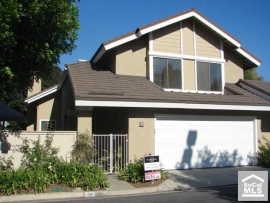
Irvine Home Address … 38 WILLOWGROVE Irvine, CA 92604
Resale Home Price …… $559,900

Well I know, I miss more than hit
With a face that was launched to sink
An' I seldom feel, the bright relief
It's been the Worst Day Since Yesterday
If there's one thing I have said
Is that the dreams I once had, now lay in bed
As the four winds blow, my wits through the door
It's been the Worst Day Since Yesterday
Fallin' down to you sweet ground
Where the flowers they bloom
It's there I'll be found
Hurry back to me, my wild calling
It's been the Worst Day Since Yesterday
Flogging Molly — The Worst Day Since Yesterday
Almost a quarter of all homeowners with a mortgage are underwater. It's a staggering number. But the effective home equity is worse than the officially reported figures would suggest. Since selling a house has a cost paid by the seller, 6% to 10% of home equity is pulverized to grease the wheels of commerce.  That being the case, a prolonged period of stagnant home prices immobilizes the population. With no equity to pay the transaction costs of leaving, homeowners with less than 10% equity are effectively underwater.
IMO, the actions taken by lenders, the Federal Reserve and our government to create an artificial bottom in house prices is going to drag this problem out for years. Ultimately, not letting home prices fall will be viewed as a mistake.
When a market bottoms and prices start moving up slowly but consistently, the buyers during the bottoming phase begin to have equity in their properties. Once prices rise off the bottom, sellers with newfound equity raise their bids on prime properties, and the move-up market adds to the sales volumes. It is the additional demand of move-up buyers with equity that lifts the market out of the doldrums.
By creating the false bottom at a price higher than what the market would have, the powers-that-be prevented the formation of a true and durable bottom, and none of the buyers during the period of the false bottom will have the equity to get out. We trapped several more years worth of buyers in their homes and delayed their move-up purchase.
Buyers who are selling their current house to obtain another — move-up buyers — usually form 25% of the market activity. Today it is effectively zero. Thanks to the manipulations of the market, it will be effectively zero for several more years. In a market suffering from sales rates 30+% below historic norms, the move-up buyer segment is urgently needed. Unfortunately, these buyers cannot be manufactured.
Negative Home Equity Is Worse Than You Think
By: Diana Olick — Wednesday, 15 Dec 2010
There was a lot of talk last week about how negative equity, now at 22.5 percent of all homes with mortgages, according to CoreLogic [CLGX 18.20 -0.06 (-0.33%) ], will affect the housing recovery. Then mortgage rates popped up to 5 percent overnight, thanks to the 10-year Treasury, and more folks voiced concern over today's potential home buyer and his or her ability to take advantage of this low-priced housing market.
Owing more on your mortgage than your home is currently worth doesn't necessarily mean you can't afford your monthly mortgage payment or that you're going to go about your day any differently, other than feeling a little financially depressed. While it may make some more likely to walk away or "strategically default," most won't.
It does mean that you can't use your home to pay for anything, like a new car or your kids' college tuition, and it does mean that you can't move up to a nicer home without having to take a hit by paying off your mortgage with whatever stash of cash you have. Now here's the issue: The move-up buyer (which is the market we're counting on now to get us out of this mess, given that the home buyer tax credit pulled a lot of first-time buyer demand forward to the beginning of 2010). A significant number of move-up buyers, even if not underwater on their mortgages now, may be in a negative equity position when it comes to buying a new home.
Let me just preface that if you happen to be wealthy independent of your home, or a relative just died and left you a sizeable chunk of cash, this doesn't apply to you. Now here goes. Mortgage expert Mark Hanson makes an excellent point and did some math, which I want to share:
"In order to sell and re-buy, a homeowner must receive enough proceeds from the sale to 1) pay off the mortgage(s), 2) pay a Realtor 5-6 percent and 3) put a 3.5-20 percent down payment on a new vintage loan," begins Hanson, and those alone may be too financially off-putting in today's economy for many potential buyers.
"Effective negative-equity is the big weight on housing that has no easy or quick cure," continues Hanson.
His math:
* Real effective negative-equity as it pertains to house selling and buying starts at:
* <9.5% positive equity for FHA repeat buyers (6% Realtor fee + 3.5% down payment)
* <16% positive equity for Fannie/Freddie repeat buyers (6% Realtor fee + 10% down payment)
* <26% for Jumbo repeat buyers (6% Realtor fee + 20% down payment)
When lowering Corelogic's negative equity threshold to 75% on CA mortgages, 53% are effectively underwater.
And I would add to Hanson's logic, that CoreLogic also noted that an additional 2.4 million borrowers are in a "near-negative equity" position, with less than 5 percent equity in their homes. That puts them out of the move-up market as well.
With rising mortgage rates, even if they don't go much higher, the "effective" negative equity rate of the move-up buyer will impact recovery, slowing sales as more buyers/demand are priced out of the market.


The negative equity situation is a lead weight on the mid to high end of the local housing market. Most of the people who can afford to buy these houses already have, and they are locked up in that 53% of California mortgages effectively underwater (for 20% down buyers). The effect of so much mortgage equity withdrawal is to leave so many potential buyers are hopelessly underwater on their existing mortgages that they are removed from the buyer pool. It is only a matter of time before many of these people become supply when they sell, but they will create no demand as they move to the rental pool.
.jpg)
18 months of squatting and 18 months in shadow inventory
- Today's featured property was bought on 3/2/2006 near the peak for $745,000. The owner used a $633,250 first mortgage and a $117,750 down payment.
- They refinanced on 6/25/2007 with a $632,000 Option ARM and opened a $78,000 line of credit.
- They quit paying in late 2007 or early 2008. They did not pay for more than 9 months.
Foreclosure Record
Recording Date: 01/08/2009
Document Type: Notice of Sale
Foreclosure Record
Recording Date: 06/06/2008
Document Type: Notice of Default
The property was taken back by the bank on 6/11/2009 where it has rotted in shadow inventory for 18 months until it was listed for sale.
Irvine Home Address … 38 WILLOWGROVE Irvine, CA 92604 
Resale Home Price … $559,900
Home Purchase Price … $745,000
Home Purchase Date …. 3/2/2006
Net Gain (Loss) ………. $(218,694)
Percent Change ………. -29.4%
Annual Appreciation … -5.9%
Cost of Ownership
————————————————-
$559,900 ………. Asking Price
$111,980 ………. 20% Down Conventional
4.87% …………… Mortgage Interest Rate
$447,920 ………. 30-Year Mortgage
$114,223 ………. Income Requirement
$2,369 ………. Monthly Mortgage Payment
$485 ………. Property Tax
$0 ………. Special Taxes and Levies (Mello Roos)
$93 ………. Homeowners Insurance
$337 ………. Homeowners Association Fees
============================================
$3,285 ………. Monthly Cash Outlays
-$403 ………. Tax Savings (% of Interest and Property Tax)
-$551 ………. Equity Hidden in Payment
$210 ………. Lost Income to Down Payment (net of taxes)
$70 ………. Maintenance and Replacement Reserves
============================================
$2,610 ………. Monthly Cost of Ownership
Cash Acquisition Demands
——————————————————————————
$5,599 ………. Furnishing and Move In @1%
$5,599 ………. Closing Costs @1%
$4,479 ………… Interest Points @1% of Loan
$111,980 ………. Down Payment
============================================
$127,657 ………. Total Cash Costs
$40,000 ………… Emergency Cash Reserves
============================================
$167,657 ………. Total Savings Needed
Property Details for 38 WILLOWGROVE Irvine, CA 92604
——————————————————————————
Beds: 3
Baths: 1 full 2 part baths
Home size: 2,040 sq ft
($274 / sq ft)
Lot Size: n/a
Year Built: 1978
Days on Market: 26
Listing Updated: 40505
MLS Number: S639895
Property Type: Condominium, Residential
Community: Woodbridge
Tract: Gr
——————————————————————————
According to the listing agent, this listing is a bank owned (foreclosed) property.
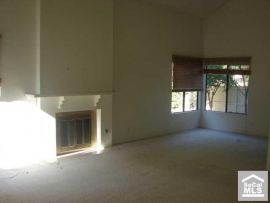
Large attached single family home with granite counters in kitchen, cozy fireplace in living room, large walk-in closet in master bedroom, lovely arched doorways, high vaulted ceilings and a private rear courtyard with in-ground spa. Needs a little TLC, but has great potential! Close to schools, parks and North Lake!
.
> They quit paying in late 2007 or early 2008.
> They did not pay for more than 9 months.
> Recording Date: 06/06/2008,Notice of Default
> Recording Date: 01/08/2009,Notice of Sale
> property was taken back on 6/11/2009
> it has rotted in shadow inventory for 18 months
i should be desensitized, but i’m still amazed by all the nonsense that’s going on.
– 9 months owner’s squatting.
– 12 months from NOD to REO.
– 18 months sitting before it’s listed
– 39 months total so far and the house hasn’t even sold yet.
As I have said in the past:
9 months with your NEIGHBOR squatting
39 months and counting for bankster welfare
A new commandment the banking cartel gives you, “hate one another, as I have hated you”.
Keep voting your same party fuddy duddy into office. They manipulate you into thinking the world will end if the “other” party wins.
Lehman kept this one in the shadows for some time.
Since they were wrongfully denied a bailout it was finally time to let go.
awesome song.
just played a particularly brutal back nine.
really hit the spot.
thx 4 that
Why is it assumed that the only source of a down payment would be from the closing of another home? Do people save anything? Counting on appreciation as the source of down payments is a dangerous situation. Many markets throughout the US did not have the degree of appreciation where you could double the cost of your home with your down payment coming only from the sale of your previous home – to go from 200k – 400k, you’d need your 200k home to have appreciated 40%.
“Why is it assumed that the only source of a down payment would be from the closing of another home? Do people save anything?”
From the early 90s through 2007, Americans consistently borrowed more and saved less. In 2006, the savings rate actually went negative.
I understand that, but the move-up market that the author talked about is predicated on price appreciation that was not happening everywhere. Of course, those are the same markets that saw the largest price declines, and are the places where the highest percentages of mortgages are underwater, by any measure.
The places where people didn’t save have more underwater loans. Double whammy. Other areas should be in less bad shape – not really at the time to say good shape.
Americans in general save nothing. They spend it all and borrow for the things they are allowed to borrow for by banks which either think it is a good risk and keep it on their balance sheets or sell it to someone else if they think it is crap.
I’m convinced that most people in the OC or SoCal in general, believe that they will “cash out” of their CA property and relocate anywhere from NV to TX or AZ for much cheaper property and or taxes and take the balance (if there is any because of their huge win fall) and live…
This is a house of cards. Not sustainable.
I personally am working to change my status as an FTE in CA to one that is an independent consultant living and working remotely out of NV. For what I pay in CA income tax I can afford to get an apartment in CA and live somewhere else just based on the f’ing income tax in CA.
Either, CA homes and living have to decline dramatically or wages in CA have to rise dramatically to even make it a question we can debate…
I am seriously thinking about moving back to the Midwest. I will earn 25% less but, living is 50-75% less…I’ll keep an apartment here to enjoy the whether but, live so much better in the Midwest.
So much is in trouble in CA….very sad.
My .02
BD
“…With no equity to pay the transaction costs of leaving, homeowners with less than 10% equity are effectively underwater…”
Agreed, and remember, this isn’t just a “move-up unlikely” issue; it’s also a “refi unlikely” issue.
Some of my friends were refinancing into 15 year loans fixed at 3.75% a couple of months ago (30 year rates were ~4%). We have cash to cover our underwater portion, but you need to be prepared to spend even more to refinance. Even if you’re looking at an FHA refi ~97% LTV, the appraisal process has been improved and is more conservative. So you’ll need to bring even more cash to the closing to get to 97% LTV due to the conservative appraisal.
i.e. The underwater situation is worse than meets the eye for any homeowner wanting to refinance to take advantage of lower rates.
I’m actually surprised that home prices are in the 500’s because it’s the Irvine area. I’ll surprised if it gets into the 400’s because a lot of homes in Oceanside are in the 400’s and the number of jobs are up in the OC area not North County SD.
Gotta love this … from the LA Times (Good for the country, but Bad, Bad, BAD for The OC:
_____________________________________________
Tax deduction for mortgage interest could be on the chopping block
… “I don’t have a problem with it,” said Sterling Hyden, 51, an insurance agent in Corsicana, Texas.
… So for someone like Hyden, who is paying about $3,300 in interest this year on his mortgage, he would stand to get a tax credit of nearly $400, as opposed to nothing under the current system.
… Home prices in his town, about 50 miles south of Dallas, average less than $100,000, he said. With a mortgage of a little more than $60,000 on their ranch-style house, Hyden and his wife don’t pay nearly enough mortgage interest to benefit from the tax deduction.
… On the other hand, younger homeowners in wealthier areas are likely to feel the biggest pinch. Take Hyun K. Chung of Orange County.
… The 37-year-old occupational therapist has a mortgage of about $500,000 on her house, which she bought at the peak of the market in 2006. Her loan carried an interest rate of 6.4% last year, putting her interest payments at about $32,000.
__________________________________________________
I like this … point out the disparity in the tax code where a little town in Texas is subsidizing Orange County. LoL
Most of the country is subsidizing places like Orange County.
Hey, if the only folks feeling the pinch are in wealthier areas then oh well. No sympathy here. Let them pay through the nose.
This is one sad, fugly house. I notice that the listing has no photo of the kitchen- it must be a fright.
I can see why people would pay the list for most of the Irvine homes you’ve featured, but I don’t see why anybody would give more than $300K for this sad place. Additionally, the HOA seems steep- is this an older development with deferred maintenance?
That $337 association payment is too high for me!
You write: “The actions taken by lenders, the Federal Reserve and our government to create an artificial bottom in house prices is going to drag this problem out for years.”
The cost to sustain the banks to create this false bottom has been enormous.
Tyler Durden in the linked article, US To End 2010 With $13.9 Trillion In Debt, Total Debt Incurred Since Great Financial Crash: $4.4 Trillion, says “This is in essence the cost to US taxpayers to keep the financial system solvent, as the US has become the biggest marginal leveraging actor in the world.”
There is a limit on all things, such debt leverage cannot be maintained.
The stimulus given to the small cap US companies, that is the Russell 2000, traded by the ETF IWM appears to have maxed out as it rose 0.4% manifesting three white soldiers, a reversal signal, to close at 78.48.
The global investment bubble was likely pricked December 17, 2010, when the European Leaders, as John Mauldin said kicked the can down the road, having failed to provide a comprehenensive solution to the European Sovereign Debt and Bank Debt Crisis.
Thus the current support level for real estate is going to give way soon.
But where is the bottom?
Debt deflation is the contraction and crisis that follows credit expansion. One of the most famous quotations of Austrian economist Ludwig von Mises is from page 572 of Human Action: “There is no means of avoiding the final collapse of a boom brought about by credit expansion. The alternative is only whether the crisis should come sooner as the result of a voluntary abandonment of further credit expansion or later as a final and total catastrophe of the currency involved.”
Global Debt Deflation commenced on April 26, 2010, when the value shares failed to outperform the growth shares.
The Value Growth Yield Curve, RZV:RZG, steepened today December 20, 2010, as small cap value shares rose more than the small cap growth shares. The strong rise in the value-growth yield curve documents the demand for small cap value shares over the growth shares, and documents how investors are seeking a safe haven, if it be called that, in US based bank and revenue shares. It is also a measure of tension in carry trades, that is to say that carry trades are greatly wound up; when these release there will be a terrific deleveraging and fall in asset value of the small cap shares.
I expect debt deflation to get underway soon, and I believe real estate values in Orange County will be much like those in Detroit Michigan before it is all said and done.