With house prices falling, particularly at the high end, many of the wealthy are choosing to rent and wait out the storm.
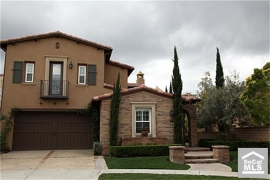
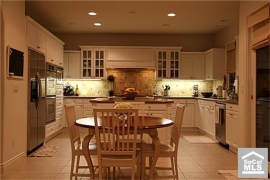
Irvine Home Address … 52 FANLIGHT Irvine, CA 92620
Resale Home Price …… $1,190,000

I am, I'm too fabulous
I'm so, fierce that it's so nuts
I live, to be model thin
Dress me, I'm your mannequin
Fashion put it all on me
Don't you want to see these clothes on me
Fashion put it all on me
I am anyone you want me to be
Lady Gaga — Fashion
Renting is the latest fad. The rich are dumping their high end real estate and renting instead. Without house price appreciation, even the rich don't like to waste their money owning real estate. Prices at the high end are falling, and with large inventories both visible and shadow, prices will continue to fall.
Orange County asking prices by price range

Leasing is in fashion among wealthy house hunters
Niche data and anecdotal evidence point to a surge in high-end rentals. Instability in housing prices is one reason the rich are shying away from purchases.

Real estate agents have been hustling lately but not necessarily to sell homes. Instead, leasing is in vogue, particularly at the top of the price spectrum.
If phone inquiries are an indication, interest in leasing luxury homes is intense, said Justin Mandile, an agent in the Sotheby's International Realty office in Beverly Hills.
He and partner Mary Swanson received 10 to 15 calls a day for two months on a five-bedroom house in the Sunset Strip area priced at $3.5 million for sale or $10,000 a month to rent. After initially holding out for a sale, the owner recently accepted a short-term lease.
“Surprisingly, there are that many people looking for a $10,000 lease,” Mandile said.
The cost of ownership with a big loan would be about $20,000 a month. Not exactly a great cashflow deal, but some properties truly are special enough to command huge ownership premiums — not single-family detached homes in suburbia (see: Irvine). Unfortunately for this seller, there are too many special properties and not enough buyers who think they are that special. 
No single clearinghouse tracks such data for all of Southern California, and many top-dollar leases are handled privately, away from the prying eyes of the public. Still, niche data and anecdotal evidence point to an upswing in upscale rentals.
Lease offerings priced at more than $10,000 a month were up 15% through the first part of April over the same period last year on the Combined L.A./Westside Multiple Listing Service, while those in the $7,500-to-$10,000 price range saw a 7% increase. OCHouseRentals.com, which specializes in luxury leases, reports that business has been brisk in Orange County as well.
“We're seeing increased leasing across the board — both luxury and non-luxury properties,” said Cary Hoffman, manager of Rodeo Realty's Encino office, which has more than 70 agents and listings from the Westside to the south San Fernando Valley.
 Are people wising up to the renter's subsidy? When real estate prices aren't rising, it's much cheaper to rent high-end real estate than it is to own it. Wise rich people will chose to rent and let someone else be an owner who is subsidising their housing, particularly when prices are falling.
For instance, let's say you own a million dollar home like today's featured property where the cost of ownership is nearly $7,000 per month. This house, or one similar to it, could be rented for $4,500. If the price of the $1,000,000 property does not change, the renter saved $30,000 just in cost of living. If the value of the house also declines — as is happening at the high end — then the owner loses two ways. When you also take into account the fact that the renter got beneficial use of the property while the owner made huge payments and lost equity. I'd rather be the renter — at least until the market turns.
Underlying the activity in leasing is consumer uncertainty about the direction of housing, said Paul Habibi, a UCLA lecturer on real estate, investment and development.
“People want to wait to buy when they are sure there is a floor underneath the housing market,” Habibi said. “When government intervention pulls back, then we will see where the housing market really is.”
 We are seeing where the housing market really is. Sales are weak and prices are down. The market is falling again because a natural bottom was not allowed to form the first time. We delayed the bottom two years, perhaps raised the bottom 15% to 20% locally, but we prolonged our agony to adjust to the reality of the housing crash.
Beyond the usual remodelers and divorcees, those seeking leases include people who can no longer qualify for mortgages.
“The high end got hit last with the wave of foreclosures” and short sales, said Hoffman, who has been an agent for 29 years. “People coming out of those homes have to have a place to go.”
They may want to stay in the same school districts or close to familiar shops and businesses. For others, it's a matter of keeping up appearances.
“Some people who are losing $3-million homes are very happy, happy to lease for $10,000 a month because they want to still look like they are making it,” said broker Anita Rich, who oversees the Rich Group Keller Williams in Encino. “It's really important they still have an address that goes along with the lifestyle.”
Interesting that posers turn to renting when the housing ATM gets shut off. Perhaps that's a renter's buy signal? Be a poser contrarian.
Leasing still represents a relatively small segment of the market compared with sales, but it's not uncommon to see homes listed both for sale or lease these days, creating a safety net for the homeowner if the house doesn't sell right away.
Rich recently completed three leases for $8,000 a month and up. One was a Hollywood Hills three-bedroom listed for sale at $1.7 million or for lease at $12,000.
“They got a lease offer before an offer on a sale,” said Rich, who has 30 years of real estate experience.
Adding to the supply of lease houses are absentee owners and investors who haven't been able to sell and decide to take their for-sale homes off the market, put them up for lease and “sit out for six months or a year” or more, Rich said. “They don't want the perception that the property is getting stale or old.”
Other houses for lease are owned by people who purchased at the height of the market. The owners are keeping their homes and renting them out to cut costs.
Floplords are everywhere. The failed plan B of any speculator is to rent the property out. Only when they try this do they realize the ramifications of negative cashflow. If held long enough, the property may go up in value, but it may never recover the accumulate negative cashflow while the floplord waited for prices to go up.
“I know of several cases where people moved into other arrangements that cost them less,” UCLA's Habibi said.
Downsizing is the reason that restaurant owner Benny Borsakian gives for leasing out his primary residence.
He recently signed up a two-year tenant for his 4,400-square-foot home in Encino with the help of Rodeo Realty agent Carol Wolfe, who also represented the renter. His family grown, Borsakian no longer needs a house of that size.
“It's just me, my wife and a housekeeper,” he said.
Borsakian, whose house is nearly paid off, plans to re-evaluate the situation when the lease is up.
Although she doesn't agree with the thinking, Wolfe is seeing more potential sellers choose to be landlords rather than sell now. “They are going to hold on to the property longer and sell when the market is better,” she said.
Everyone's playing the housing market. It's a big casino where timing your position to flip from renter to owner and visa versa has a major impact on your financial well being.
It's a sentiment also being expressed on the part of tenants unsure that the housing market has hit bottom. Luc Vanhal, who is renting Borsakian's home, looked at four or five other places before settling on the Encino house.
The first-time leaser needed a place close to his children's schools but didn't want to buy another house. “Why make a huge commitment to something that's clearly not worth it right now?” said Vanhal, president of a direct marketing company.
In Orange County, Jay Gordon of OCHouseRentals.com recently leased out a house on Newport Beach's Lido Isle, where homes can cost from $3 million to $25 million, for $9,500 a month. “You'd spend twice that to live in the same exact area” if you bought, said Gordon, chief executive of the Laguna Beach company.
“Renters are not worrying about losing money,” he said. “Leasing takes the guesswork out of where the market is going.”
Was it all a dream?
What if prices grind lower for a decade or more here like they did in Japan?
Californians have come to believe their real estate market is truly magic. Prices go up at rates that far exceed inflation or wage growth enriching every home owner. If you own a house you have the potential for unlimited wealth and HELOC buying power for doing absolutely nothing. It is free money from the housing market gods.
.png)
Like a child outgrows magical thinking in their pre-teens, will Californians let go of their fantasies about real estate? Would a slow grinding decline squeeze the kool aid out of the California dream? The generation burned by the California housing market may continue to shun real estate just as a generation after the stock market crash of the 1930s stayed away from the stock market.
If the house doesn't provide the HELOC money to support an upscale suburban lifestyle, what's the point in the high price and huge payment?

If interest rates go up, HELOC money goes from being free to being very expensive. Falling interest rates to permit larger debts to be serviced with the same payment. Rising interest rates cause larger payments on the same debt.
Those people who come of of this recession with large debts need to hope the upcoming monetary inflation translates to higher wages. For those in the right industries, rising wages will enable them to at least tread water with their old debts. Those who are in stagnant industries, like real estate, may not see rising wages, and the upcoming inflation may make their debt service payments untenable, and many may be pushed into bankruptcy.
Was it all a dream? Will Californians realize their delusions about housing were all wrong? Or will the gold rush mentality of California's past stay alive and prompt a new generation to chase free money in the housing market? The market is always right, no matter how irrational it is.

A multi-generational house in Irvine
This property a semi-private room or casita for long-term guest stay or running a home business. There aren't many houses like this in Irvine, which is probably a good thing: I see the lure of staying home in Irvine. Many would probably never leave.
Peak buyers iin Woodbury are taking big losses to get out. The owners of today's featured property borrowed nearly the current asking price. After nearly 5 years of ownership, if they sell the property, they lose all their equity, and if they don't have other resources, it may become a short sale.
That's got to hurt.
Irvine House Address … 52 FANLIGHT Irvine, CA 92620 
Resale House Price …… $1,190,000
House Purchase Price … $1,476,500
House Purchase Date …. 11/17/2006
Net Gain (Loss) ………. ($357,900)
Percent Change ………. -24.2%
Annual Appreciation … -4.9%
Cost of House Ownership
————————————————-
$1,190,000 ………. Asking Price
$238,000 ………. 20% Down Conventional
4.87% …………… Mortgage Interest Rate
$952,000 ………. 30-Year Mortgage
$215,793 ………. Income Requirement
$5,035 ………. Monthly Mortgage Payment
$1031 ………. Property Tax (@1.04%)
$450 ………. Special Taxes and Levies (Mello Roos)
$248 ………. Homeowners Insurance (@ 0.25%)
$0 ………. Private Mortgage Insurance
$105 ………. Homeowners Association Fees
============================================
$6,869 ………. Monthly Cash Outlays
-$1371 ………. Tax Savings (% of Interest and Property Tax)
-$1172 ………. Equity Hidden in Payment (Amortization)
$446 ………. Lost Income to Down Payment (net of taxes)
$169 ………. Maintenance and Replacement Reserves
============================================
$4,942 ………. Monthly Cost of Ownership
Cash Acquisition Demands
——————————————————————————
$11,900 ………. Furnishing and Move In @1%
$11,900 ………. Closing Costs @1%
$9,520 ………… Interest Points @1% of Loan
$238,000 ………. Down Payment
============================================
$271,320 ………. Total Cash Costs
$75,700 ………… Emergency Cash Reserves
============================================
$347,020 ………. Total Savings Needed
Property Details for 52 FANLIGHT Irvine, CA 92620
——————————————————————————
Beds: 6
Baths: 6
Sq. Ft.: 3649
$326/SF
Property Type: Residential, Single Family
Style: Two Level, Contemporary
Year Built: 2006
Community: 0
County: Orange
MLS#: S648953
Source: SoCalMLS
Status: Active
On Redfin: 52 days
——————————————————————————
Fabulous Mille Fleur plan 3, majestically sitting on a Cul-de-sac, this beauty offers 6 bedrooms and 6 1/2 bathrooms. main house has 5 bedrooms, each bedroom with their own bath and independent Casita with its own bath, ideal for in-laws, Teenagers, .. .Professionally designed landscaped and hardscaped, gorgeous brick steps with light collumns invites you in, Beautiful back yard with built-in BBQ and Bar. Rediscover passion in cooking in this grand gourmet kitchen with kitchen Island, granite counter tops and stone back splash and SS appliances. Just walking distances to Woodbury elementary school and Woodbury Town Center and to the Common. This is a must see.


The premium to own vs. rent is not universal, geographically speaking. The house across the street from me is currently rented and under contract to close in the summer. The cost-of-ownership at its current price ($520k) is around $2300/mo, but, while I don’t know how much my neighbors are paying, the wife said she was embarrassed to say. That tells me it is at least 50% over the $2300, in the $3500-$4000/mo range. (It makes sense for them to overpay for the rental because they’re building a home in the neighborhood, so being close to check on construction is valuable).
If the cost to rent a home in our neighborhood was, even 25% less than the cost to own (so someone could rent the house across the street from us for $1750/mo, I do not see people in my area buying. We rented a 1000 sqft home in a rental community with no yard (or insulation) for $1100/mo. It was a market rent, because our unit rented out very quickly after we moved.
What I think may happen in some areas is that rents will rise with inflation as selling prices stagnate nominally (go down in real terms).
The financial proof is in the pudding. In many markets, the maxim, ‘the market can stay irrational longer than you can stay short’ might be true. However, if you’re buying based on future appreciation, be careful.
Of course it isn’t universal, winstongator. I owned a house in Raleigh until recently and it was SIGNIFICANTLY cheaper to own it than to rent nearby. That said, it is more risk to own so it is hard to quantify exactly the cost/benefit.
There are large sections of the country where it is cheaper to own… most of the midwest, most of the south (except, notably, DC) and Vegas and California’s central valley.
It certainly is NOT cheaper to own in coastal California. I’m moving into a 2-bd flat in San Francisco next month and the rent is about 50% of the cost of ownership for an equivalent property (I did a lot of research, just like Suzanne). And San Francisco is a REALLY tight rental market right now, recession be damned. If anyone has insight on the San Francisco real estate market I’d love to hear it, since I want to buy at some point but now it is still insane. And there is no good sanfranciscohousingblog.com, sadly.
That said, the rent on this flat in SF is about 75% higher than the rent on my beautiful 4 bedroom house with 1/2 acre lot in Raleigh, but that is neither here nor there. And before any of the California snobs speak up, Winstongator will agree with me that NC is a lovely state. Particularly the Triangle.
I just wanted to give a concrete example of owning being cheaper, today. You’re right about the risk, although the rents make me think that the downside to prices is pretty much past us.
There are people who will say, even though owning is 2X as expensive (slight exaggeration), it is a great financial move.
I wouldn’t go as far as to say that owning when cheaper than renting is a ‘great’ move, as it depends on the flexibility you need in your location and finances.
I prefer the triangle to the triad area I live in, but my and my wife’s jobs are here. I am seeing a significant number of tech people moving here from Boston, and to a lesser degree out west. Cost of living is a driver, with weather another driver for those coming from Boston.
Boston tech people moving to GBO? Is Analog Devices expanding in NC?
I agree that owning-vs-renting isn’t a clear question even when owning is “cheaper”. When I got laid off in Raleigh last January I sure wished I were renting…
It could be that buying now in California or NC is a good move. Maybe not. Time will tell. I think we can all agree, though, that buying is risky. And I’m not buying in the SF Bay Area for the foreseeable future.
One more thing, I do believe that most of your downside risk is behind you, since the Triad is reasonably priced these days. It has been deindustrializing for a couple decades now, and the prices already reflected that.
ADI has some openings in NC, but there are also people with the flexibility to work in different locations moving from MA to NC.
What drove our purchase was the stability of my wife’s job.
I would say that if you can rent for less than buying, it makes sense to rent, at least short-term. I don’t see conforming rates much above 5.5% in 12 months, so the ‘low rates, you need to buy NOW’ rings hollow.
ripcord: indeed, the cost of owning in the city of San Francisco is probably 3x (or more) the cost of a comparable property in most parts of the country. That said, there are parts of the Bay Area where prices have dropped by more than half since the peak and which are near transit that easily reaches SF, if you are looking. Also check out the blogs On The Block (part of sfgate.com), Curbed SF, SocketSite, and others for constantly updated info about the market. There are numerous other blogs about SF real estate but beware of the accuracy since they are often written by realtors.
cost of a house is mostly based on avg income in the particular area. AVG wages are much higher in SF compared to anywhere in NC. It has nothing to do with NC not being a pretty place.
That’s only partially true, at best.
According to the US Census Bureau, the median family income of the Bay Area in 2008 was: $76,500
The median family income of Raleigh, NC was:$60,8845
This is not even CLOSE enough to account with the huge difference in housing costs. There is something else going on.
The tales of a recession in Silicon Valley have been greatly exaggerated. It’s booming. Similarly Manhattan Beach is chugging along while lowly Irvine only get by in these troubling times.
Thinking that most of America lives in places like Silicon Valley, MB, or Irvine comes from living on Planet Reality.
Here is a great post from Barry Ritholtz @ The Big Picture “How to Read a National Association of Realtors Press Release”
http://www.ritholtz.com/blog/2011/04/how-to-read-national-association-of-realtors-news-release/#comments
The best thing about rentals for the owner is the depreciation factor for taxes. You can deduct your losses as long as you rent. Those can add up and really get you out of the mess you are in. I would rent a home before selling it and taking a loss you can’t deduct.
The main problem for those who are renting and myself and my son included is the owner not paying his mortgage. I rent one in Irvine and have been for four years now and my son rents a home in Huntington both owners are taking the money and not paying the mortgage.
The financial part of renting is no tax deductions for us so we may not be losing on owning but we are not gaining any breaks from renting.
No one is winning
that’s why two owners living at comparable houses in the same neighborhood should rent to each other
In addition to depreciation, I believe after just one year of renting-out your home, you may deduct any capital loss.
e.g. For a high-earning couple with some cash whose house is worth ~$100k less than their purchase price, they can: rent it for one year, sell it for a $100k loss, and claim the loss. To the extent the loss exceeds that year’s income, it can be applied as a net operating loss to the prior two years’ returns.
Ummm, the Passive Activity Loss limitiation rules severely limit one’s ability to deduct losses on casual rental real estate. Once a married couple filing jointly’s MAGI exceeds $150K, any losses on rental property are carried forward and cannot be deducted currently. A nasty trap for the unaware.
We have been renters and never owners. After 7 years of on and off house hunting, we are getting very close to buying and have a couple offers out.
I believe we are at rental parity in higher end irvine like featured house w 20% down and tax deductions. I know that’s not great as I lose the deduction if I have to rent it out but as long as I am living there, I will be paying about the same as rent.
I realize we might be on verge of another major leg down so trying to lowball and hoping to pad a 10% buffer. Ultimately though, after years of waiting, feels like this will be the year to buy. Any others in similar situation?
Yes, I’m also finally considering buying after years of waiting & watching. But, the substitution affect IR talks about frequently is very real & hitting me. Surrounding cities offer many of the same great perks of Irvine, but at substantial discounts. Okay, schools in neighboring cities might get 8/10 or 9/10 ratings on GreatSchools.org instead of 10/10 that Irvine gets, but that might be an acceptable tradeoff for the steep discount in price.
Sounds like someone is putting himself before the children. When your children grow up to be poor and destitute living somewhere other than Irvine, California I hope that you will be able to look them in the eye and admit that if you had only not been so selfishly seduced by the “substitution effect” – things could have been different in their lives. Just remember – huge mortgage debt is noble when it is for the children.
Heh… yes, it’s true. The more sensible approach is to take out one of those 60 year mortgages to buy a nice “cozy” 3 bedroom place in Irvine; the 10/10 schools and will more than justify the 30 years of debt for the kids!
I am in the same boat and am considering whether Laguna Hills or Laguna Niguel may be a cheaper substitute.
Yep, same situation here. My wife and I started seriously looking in Irvine a month ago, and have just expanded our search to Laguna Hills, Laguna Niguel, and Aliso Viejo. Just got loan pre-approval yesterday!
We don’t have children, so the only disadvantage we can see from not buying in Irvine is a longer commute. On the other hand, we’ll be closer to Laguna Beach, which I hear has bars and restaurants that stay open later. We live in L.A., and are used to eating out. 😉
Over the financial life of a person or a family unit (say 30 to 40 year period of time), is there any such time frame within which renting turned out to be better than owning?
I am not talking about a specific person or their their specific circumstances, but in general. Is there a period of time over course of an average adult life wherein renting was better financially than buying?
Everyone would love to time the market and know what the future holds.
This isn’t a claim that people who suck all their equity out are justified. This isn’t a claim that people who bought in 2006 aren’t going to take a haircut if they are forced to sell today.
But over the course of an average financial life time(30, 40, 50 years?) has there been any period in US history that renting turned out to be a better purely financial decision?
I have not looked up the empirical data for any specific 40 year period but I believe Shiller’s data showed that over 100 years, residential real estate’s appreciation was in zero after inflation from 1890 to 1990. But when you put anything less than 100% down (ie. levered purchase), even just an appreciation at inflation actually yields a decent return on the actual equity invested.
This is a very interesting question, and I would love to know the answer.
I think you would have to factor in taxes (both additional real estate taxes and interest deduction). You would also have to factor in opportunity cost for the down payment and what it could be earning in other investments. Also, you would need to determine the difference between interest rates and mortgage rates.
Hard question to answer. I would guess without much evidence that owning a home is a pretty good investment most of the time. Buying at the top or near the top of a deflating bubble is not a good investment.
For what it’s worth, Warren Buffet recently said that he didn’t think his owning a home in Omaha made financial sense over the time he’s owned it, but he was happy he bought it for sentimental reasons.
I agree that “owning” will win as the better “investment,” but it’s due to just one reason – owners are forced to make those huge mortgage payments every month. i.e. It’s a great forced-savings plan.
I don’t know if this is true. If shiller is right and residential housing increases at rate of inflation over 100 periods of time, maximizing the leverage would be the best decision it seems.
At least maximizing the leverage that one can afford to make payments because that is how one makes a “return on equity” argument for owning.
If you keep leveraging to the point you keep losing the homes, then it obviously all falls apart.
The problem with your leverage is the cost of that leverage.
It is rare that interest rates on long term loans are less than the rate of inflation.
If you have an investment that returns X%, leverage only helps you if the interest rate is less than X%.
Ahhh how quickly we forget the fundamentals of rental parity.
You have to live somewhere.
A general rule-of-thumb, mentioned here by many, is that you need to stay in a home for 5-7 years to have buying make sense. Many people from 2000-2007 were able to hope from home to home every 1-2 years and cash out each time, but you should call them today to see where they’re at.
In terms of investments, over the peiod Buffett’s owned his home in Omaha, how has BRKA done? Since 1990 it has nearly 20x’d. You have to also consider how much of your savings/investment your home is. My wife & I save/invest an amount roughly equal to our housing costs. I guess we could have bought twice the home if we cut other savings to zero.
The question is not whether one should ever buy, it is a question of whether to buy this home, here, today. The lesson of the past 5 years should be that buying a home is not a slam-dunk investment, and sometimes it is prudent to put off the purchase and rent.
the hypothesis is not one about financial prudence. Of course you should rent or buy only what you can afford and have other savings.
Of course you should diversify your investments. Yes, no doubt Berkshire stock has done well but that is in hindsight. If we want to pick a stock, MSFT would have done even better over that time.
But he didn’t make a choice between those two things. He still needed to rent if he hadn’t bought. Could the incremental difference (if any any existed) invested in a general investment like S&P (not a specific stock) between renting and ownership yield a better return? Perhaps, but again, we are making this awfully specific which can’t be generalized. He is a specific and shall we say QUITE unique person.
Subjectively, I don’t think you’ll ever know whether you really won or lost by your renting/owning decisions over your lifetime. There are just so many factors and assumptions that go into that calc.
That’s why it’s so important to avoid over-renting/buying. If you keep your rent/ownership costs around 25% of your income, you have the freedom to do so many other things without worrying daily about next year’s rent hike or the value of your house next year.
I would guess the same without a great deal of empirical data.
On the top of the market question, I don’t disagree of course. If I knew I could time the market, I would be richer than buffet.
But even if one were to purchase in 2006 at the top or whatever the top actual was, over the course of a 40 year financial life, will they have done worse than simply renting for that same period of time.
Of course if you rented until the market deflated or hit bottom then bought, you would be “winning” but I don’t if the general populace can time this way.
Restated,
In previous “bubbles” of RE, if one were start their 40 period of ownership and purchase at the peak vs renting for that same 40 period, would they have done worse financially.
For this current go around, I guess time will tell.
You are making a big assumption that everyone will be able to stay in their house for 40 years.
In this day and age of a much a more dynamic and mobile work culture it is getting harder to stay put in one place for so long.
I actually am not making that assumption. Of course people move.
I am talking about the general ownership of the shelter versus renting of their shelter. Yes, in these times when people move more, the transaction costs of selling will negatively impact ownership vs renting.
If average ownership term is 7 years, then over a financial life time of 40 years, it is about 6 moves that would have to get factored in.
The other issue is whether or not you’d need the same level of housing for all 40 years. Single and starting at a job, vs. 3 kids in school, vs. 3 kids in college, vs. empty nesters.
LA prices, per Case-Shiller were flat from 1990-2000 in nominal terms. From 2006, it might take until 2026 before prices rebound (for the whole LA area, I know Irvine’s special and will be back there soon).
Saying that buying will always be better means that people don’t really need to pay attention to local variations at a given time. That is really bad advice.
I think we’re going to find in the coming years (and are already seeing now) that the average number of years a family/individual stays in one residence is considerably shorter than 7 years.
Do lease/option to purchase contracts exist?
I recall in the 60’s/70’s such contracts allowed renters to have their cake and eat it too, in
that rent payments could be applied towards a future purchase at some agreed price.
Anybody with a lease/option experience?
It would seen to me such an agreement would be a definite win for a renter in a declining market. No so good for the owner, unless purchase price agreed to in contract was a today’s fantasy pricing.
Lease Options do exist and I looked into one last year. On $1million plus properties, the deals are not structured to the potential buyers advantage. The generally involve to very negative elements – 1st is that you are required to put up a very substantial deposit ($10K-20K) that is NON-refundable if the deal does not close. 2nd – You are required to negociate a selling price now for a house you may not buy for 6 months to a year. Who is willing to do that in this market? The owner benefits again.
I read this article about leasing in the LA times and it perfectly describes my situation and sentiments. We are not uber-rich but are looking at properties in the $1.5 mill. range and could not stomach a loss of $200k right off the bat. Why buy with that possibility on the table? I am renting a house in the neighborhood I want to live in for virtually 50% of the cost of the houses we are looking for and I could not afford to buy the house I am renting because it would go for $2-2.5 million. I get all the benefits and more of the neighborhood with no hassle or worry. I loose the tax benefit, sure, but that averages out to about $3,000/month so it’s a wash with owning. I will buy when it feels right, until then, I am enjoying my weekends without bangin’ nails.
Concrete examples require comparable rental and sales listings with verifiable addresses.
Period
“High end home buyers are choosing to lease instead”
Then that would make them HIGH END HOME *LEASERS*, idiots.