Reports were released from First American CoreLogic and Lender Processing Services on the current state of shadow inventory and the mortgage market.
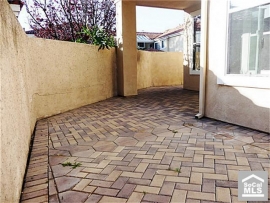
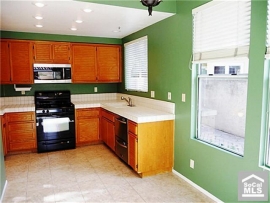
Irvine Home Address … 33 ERICSON AISLE Irvine, CA 92620
Resale Home Price …… $419,000

How do you think I'm going to get along
Without you when you're gone
You took me for everything that I had
And kicked me out on my own
Are you happy are you satisfied?
How long can you stand the heat?
Queen — Another one bites the dust
How are people going to get along without their own ATM machines? Chasing free money induced many to pay peak prices, and now the lender has taken everything that they had and kicked them out to the street. I doubt they find the forbidden fruit of HELOC riches very satisfying under an ocean of debt.
Shadow inventory of foreclosures drops 11% from one year ago: CoreLogic
Real estate data provider CoreLogic said 1.8 million properties make up the shadow inventory of foreclosures, down 11% from one year ago.

Analysts consider the shadow inventory as the major force against a recovery in the U.S. housing market. It is made up of mortgages in at least 90-days delinquency, in foreclosure or already repossessed by the lender as REO. These properties continue to drag down home prices, forcing more borrowers underwater and ultimately into default. Standard & Poor's recently put the principal balance remaining on the shadow inventory at $450 billion.
The 1.8 million homes represent a nine-month supply of inventory. Healthy real estate markets usually hold a six-month supply. Of the shadow inventory, nearly half are in some stage of serious delinquency. The rest is split almost evenly between properties in foreclosure or REO.
CoreLogic said while some portion of the shadow inventory can be carved away through modification or short sale, “only a small share can be effectively remediated from the shadow supply,” leaving the rest for liquidation through REO.
For the first time, CoreLogic studied net present value, or NPV, calculations, and expected severity and redefault rates for modifications and short sales. Analysts came to the conclusion that these loss-mitigation efforts could cut the shadow inventory in half. But communication difficulties between the borrower and the servicer could make that prediction too optimistic.
CoreLogic found in addition to the shadow inventory, there are nearly 2 million mortgages that are current but underwater.
The highest levels of the shadow inventory remain in New Jersey, Illinois and Maryland. While mostly lower-population states such as North Dakota, Alaska and Wyoming hold the least amount of the inventory, Texas had a notably small portion.

And Shevy's home state of North Dakota has no shadow inventory at all.
CoreLogic Chief Economist Mark Fleming said despite the decline over the last year, the shadow inventory will linger for some time.
“While the trend of the shadow inventory is improving somewhat, the current level and distressed months’ supply remain very high,” Fleming said. “The short-term weakness in prices and longer-term weakness in the drivers that affect the housing market imply that excess supply will remain high for an extended period of time.“
Write to Jon Prior. Follow him on Twitter @JonAPrior.
LPS' Mortgage Monitor Report Shows Enormous Backlog of Foreclosures; Option ARM Foreclosure Rate Higher Than Subprime Foreclosures Ever Reached
March 28, 2011
JACKSONVILLE, Fla. – March 28, 2011 -The February Mortgage Monitor report released by Lender Processing Services, Inc. (NYSE: LPS) shows that while delinquencies continue to decline, an enormous backlog of foreclosures still exists with overhang at every level. As of the end of February, foreclosure inventory levels stand at more than 30 times monthly foreclosure sales volume, indicating this backlog will continue for quite some time. Ultimately, these foreclosures will most likely reenter the market as REO properties, putting even more downward pressure on U.S. home values.
February’s data also showed a 23 percent increase in Option ARM foreclosures over the last six months, far more than any other product type. In terms of absolute numbers, Option ARM foreclosures stand at 18.8 percent, a higher level than Subprime foreclosures ever reached. In addition, deterioration continues in the Non-Agency Prime segment. Both Jumbo and Conforming Non-Agency Prime loans showed increases in foreclosures and were the only product areas with increases in delinquencies.
The data also showed that banks’ modification efforts have begun to pay off, as 22 percent of loans that were 90+ days delinquent 12 months ago are now current. Timelines continue to extend, with the average U.S. loan in foreclosure now having been delinquent for a record 537 days, and a full 30 percent of loans in foreclosure have not made a payment in over two years.
A 22% cure rate is abysmal. Only by comparing it to the even more abysmal 2008 numbers makes 22% sound good. Historically, cure rates are very high because borrowers used to have a rising market to sell into if they got into financial trouble. With the collapse of the Ponzi scheme, lenders were unwilling to extend credit, so borrowers couldn't Ponzi borrow to make payments. Since many borrowers were also underwater, they couldn't sell into a rising market, so they squat in comfort and wait for the bank to do something.
As reported in LPS' First Look release, other key results from LPS' latest Mortgage Monitor report include:
- Total U.S. loan delinquency rate: 8.8 percent
- Total U.S. foreclosure inventory rate: 4.15 percent
- Total U.S. non-current inventory: 6,856,000
- States with most non-current* loans: Florida, Nevada, Mississippi, New Jersey, Georgia
- States with fewest non-current* loans: Montana, Wyoming, Alaska, South Dakota, North Dakota
Investor Contact: Parag Bhansali, 904.854.8640, parag.bhansali@lpsvcs.com. Media Contact: Michelle Kersch, 904.854.5043, michelle.kersch@lpsvcs.com
Let's walk through a few graphs to figure out what it all means.
The number of 90+ days delinquent loans continues to grow. We need to stop the increase and reduce the number to near zero. Historically, the percentage more than 90 days in arrears is very low.

To look at the chart above, one could mistakenly believe we are over the worst and delinquency rates are near historic norms. The truth is delinquencies are double historic norms, and distressed inventories are nearly eight times historic norms. How are prices supposed to go up in the face of that?

.png)
Another one bites the dust
Another one bites the dust
And another one gone and another one gone
Another one bites the dust hey
Hey I'm gonna get you too
Another one bites the dust
Queen — Another one bites the dust
Further we are making very little progress on foreclosures. For every borrower entering foreclosure, three are delinquent. We are continuing to build shadow inventory.
Notice on the chart below that foreclosures kept pace with delinquencies until early 2008. The foreclosure statistics show a peak during that time when lenders realized they were crushing the housing market and embarked on amend-extend-pretend and created shadow inventory.

What are the prospects for curing these loans? Most bulls assume cure rates of 85% or better will mop up this mess. With less than a quarter of loans curing, foreclosure is the most likely outcome for shadow inventory even if cure rates continue to improve. Distressed inventory will be with us for a long time.

And, in case you needed any reminder from me, mortgage squatting is an national epidemic with nearly 30% of delinquent borrowers enjoying over two years of free living.


There are plenty of ways that you can hurt a man
And bring him to the ground
You can beat him
You can cheat him
You can treat him bad and leave him
When he's down yeah
But I'm ready yes I'm ready for you
I'm standing on my own two feet
Queen — Another one bites the dust
To make matters worse, the Option ARMs are beginning to reset and recast putting many borrowers into delinquency.

Foreclosures related to Option ARMs increased more than any other loan program over the last six months. We are only now entering the two-year period with the most resets. Look for the delinquency rates on these loans to continue to perform poorly.


We are going to see many more distressed sales over the next several years. I question whether lenders can maintain current pricing and liquidate inventories in a reasonable timeframe. Lenders will not want to hold this property forever, and as a society, we don't want them to. The only real question is how orderly will the liquidation be? How The Lending Cartel Disposes Their REO Will Determine the Market’s Fate.
Taking their lumps and moving on
Everyone who buys during a decline should know they may have to move and sell when the resale value is down. It is an avoidable financial loss. Renting is always an option. The owners of today's featured property paid $470,000 on 6/17/2008. They put 50% down. I have no idea why why they are selling. I do know that any losses come out of what was their down payment. Ouch.
Irvine House Address … 33 ERICSON AISLE Irvine, CA 92620 
Resale House Price …… $419,000
House Purchase Price … $470,000
House Purchase Date …. 6/17/2008
Net Gain (Loss) ………. ($76,140)
Percent Change ………. -16.2%
Annual Appreciation … -4.0%
Cost of House Ownership
————————————————-
$419,000 ………. Asking Price
$14,665 ………. 3.5% Down FHA Financing
4.79% …………… Mortgage Interest Rate
$404,335 ………. 30-Year Mortgage
$84,696 ………. Income Requirement
$2,119 ………. Monthly Mortgage Payment
$363 ………. Property Tax (@1.04%)
$0 ………. Special Taxes and Levies (Mello Roos)
$87 ………. Homeowners Insurance (@ 0.25%)
$140 ………. Homeowners Association Fees
============================================
$2,709 ………. Monthly Cash Outlays
-$346 ………. Tax Savings (% of Interest and Property Tax)
-$505 ………. Equity Hidden in Payment (Amortization)
$27 ………. Lost Income to Down Payment (net of taxes)
$52 ………. Maintenance and Replacement Reserves
============================================
$1,938 ………. Monthly Cost of Ownership
Cash Acquisition Demands
——————————————————————————
$4,190 ………. Furnishing and Move In @1%
$4,190 ………. Closing Costs @1%
$4,043 ………… Interest Points @1% of Loan
$14,665 ………. Down Payment
============================================
$27,088 ………. Total Cash Costs
$29,700 ………… Emergency Cash Reserves
============================================
$56,788 ………. Total Savings Needed
Property Details for 33 ERICSON AISLE Irvine, CA 92620
——————————————————————————
Beds: 3
Baths: 2
Sq. Ft.: 1424
$294/SF
Property Type: Residential, Condominium
Style: One Level, Contemporary
Year Built: 1989
County: Orange
MLS#: S651484
Source: SoCalMLS
——————————————————————————
Rare single-level three-bedroom, two-bath condominium located in the wonderful Northwood Villas tract. The large master bedroom features two closets, along with built-in custom storage, and the master bathroom offers dual-sinks and an oversize tub: perfect for unwinding after a hard day! Revel in the elegant hardwood flooring, plush carpeting, newer appliances and central cooling system. Relax in the very spacious living room by the cozy fireplace – and enjoy the great SoCal weather outside on the spacious and private wrap-around enclosed patio. One will also find a indoor laundry room. Northwood Villas is located centrally to many entertainment and shopping venues and restaurants, including the Irvine Spectrum – and the Irvine school district is rated one of the best in the U. S. Plus, it's a short drive to the huge Heritage Park, which features many tennis and basketball courts, tot lots, a large pond, county library and community center. Make this a home on your short list.
.png)

“A 22% cure rate is abysmal.”
And of that 22% that is supposedly cured, historically at least 65% of those will redefault and those that do not redefault will probably sell short. The figures showing homes saved through loan modifications is a farce.
Your assuming the goal is to keep people in their homes permanently. Most people don’t stay in a home permanently regardless of circumstance. The goal is simply to delay and extend the time in the home. All measures have been very successful. Rates resetting lower has been most successful and then of course fantasy equity values doesn’t hurt either.
Face facts, wall street won..
Exactly. If the stated goal is to modify to keep people in their homes permanently, the govt programs and mods are mostly a failure. However, if the goal were to “amend, pretend, extend” as Calculated Risk would say, then the programs are a success, allowing banks to pretend their loans are still good and pretend the bank is still solvent long enough for the govt to funnel money into the bank though all kinds of arcane means and long enough for money printing to cause enough secret inflation to make all the underwater borrowers above water again.
“secret inflation”, great term, you mean it’s not captured in the CPI LOL, that’s certainly the greater goal. Say that your goal is to limit inflation, make up a BS CPI calculation that doesn’t include food, oil, housing, or anything else people need to live; let the productive folk get salary increases while the poor eat sh!t, that pretty much summarizes the Feds MO
I was frankly amazed at the 22% cure rate, it seems very high. But then, I guess that’s more a case of modifications (taxpayer abuse) than the home-owers coming up with 3+ months of mortgage payments on their own.
I don’t have the cure rate of those who make up back payments, but you have to imagine that is very, very low. As awgee pointed out, most of these loans that “cure” only do so temporarily.
Just curious, in your cost of ownership analysis I don’t see any mention of PMI payment associated with <20% down. The PMI with FHA financing is going up 0.25% come early April. The last time I checked, PMI for FHA financing at 400k was around $300. Therefore, by early April that PMI associated with FHA financing will go higher.
I have not kept up with the changes in FHA financing costs. Over the next few weeks, I am working with a young MBA with a local lender to make our cost of ownership calculator more accurate. I will also update my spreadsheets for daily posts.
Right now, I have s simple toggle that flips between FHA and conventional financing at a certain price range. I did this to reflect the fact that most under-median purchases are FHA and most over-median are conventional. I will likely need to add a cost line for PMI that kicks in whenever FHA is used. I would make the change now, but I don’t know the formulas, so I would be exchanging one bad data point for another.
You mean the less than 1.6% of Irvine loans that are FHA financed? “Most” must be a small number to you.
I recently inquired about an FHA loan with Wells Fargo. They indeed confirmed two VERY large costs: a one-time 1% of the home price payment to secure the loan, and then at the moment 0.9% but very soon (sometime in April) going to 1.15% monthly mortgage insurance payment. So, for a $500,000 home, this means you have to pay $5,000 just to get the loan, and then almost $500 a month thereafter in insurance. That’s a HIGH cost!
So, I was a little surprised but also very glad to see banks strongly encouraging borrowers to put 20% down to avoid these high costs.
Also, the FHA MIP lasts for the first five years in a 30Y mortgage. i.e. If your loan principal were to decrease to below 78% of the home’s value in year three, you cannot get an appraisal and have FHA drop the MIP. FHA is trying to earn some money for the risk they’re taking.
Also, if you can swing a 15Y mortgage, the FHA MIP would be 25 bps if the LTV is > 90% and there’s no MIP if the LTV is <= 90%.
Mattman,
You are correct in regards to the costs associated with FHA financing. However, like all things in life there is a risk reward tradeoff and FHA does a decent job balancing the two. It’s important to remember that the core function of FHA financing is to allow qualified borrower to obtain financing needed to obtain homeownership when that individual would normally not qualify under conventional guidelines.
I would like to begin by agreeing with you in regards to putting down 20% or more to avoid costs but I hope this shows the true cost of FHA vs. conventional.
If not able to put down 20%, FHA is by far the best alternative available. Anyone who can afford to put 20% normally would not consider FHA financing unless the opportunity cost of the additional down payment would out weight the increase in monthly payment or the individual would like to use as much leverage possible.
FHA vs. Conventional (purchase transaction, SFR, $500,000 purchase price, 720 FICO, sufficient income)
Option 1: $500,000 purchase price at 80% loan to value (20% down) would give you a loan amount of $400,000. You could expect to receive a rate of 4.75% giving you a principle and interest payment of $2,086.58 (I am using par pricing and excluding any lender fees in order to simplify this comparison). If you took out the additional $82,500 from a 2.42% bond (www.bankrate.com/cd.aspx) you would have lost an additional 166.37 per month making your total payment $2,252.95
Option 2: Let assume we are going to do a conventional first for 80% at $400,000 and were able to find a lender to do a second mortgage up to 96.5% – I couldn’t find anyone anywhere to do this. I did find that Wells Fargo can do a HELOC second up to 80% loan to value at 7.865%. Let’s just use that number even though it would not be possible as out second loan rate. A first of $400,000 at 4.75% would give you a payment of $2,086.58 plus an interest only second of $82,500 at 7.865% would give you a payment of $540.71 giving you a total payment of $2,627.29 – however, you will find difficulty obtaining this type of financing.
Option 3: Doing a conventional first of $475,000 at 90% Loan to value. Your rate would be 5% which would give you a monthly payment of $2,415.69 and your monthly mortgage insurance premium would be $356.25 per month (720 fico minimum to qualify for private MI up to 90%ltv – http://www.mgic.com) Your total payment would be $2,771.94 plus the additional $65.54 you would have lost from your bond income by needing to put 10% down instead of only 3.5% brings your total to $2,837.48.
Option 4: Doing an FHA first of $482,500 at 4.625% with a payment of $2,481 plus your monthly mortgage insurance premium of $361.87 (.9% of loan amount – April 18th this will change to 1.15%) will give you a total payment of $2,842.87. You will have to pay an upfront mortgage insurance premium of 1% but that can be negotiated so that the seller can pay it as well as up to 6% of your closing costs.
Although FHA financing seems expensive there is really no better alternative which is why it has grown in popularity in the last few years. Other factors which have made FHA financing more attractive are that the credit qualifying criteria for a borrower is not as strict as conventional financing. Also, a borrower using FHA financing allows the 3.5% down payment to come from a qualified family member which if you can negotiate having the seller contribute towards your closing costs you can purchase a home with $0 down. The monthly mortgage insurance premium will expire either after 5 years or if you reach a loan to value of 78% or less.
FHA also allows borrowers with “credit problems” to still qualify since not only are the guidelines not as strict but the underwriters that review the loans use a common sense approach to underwriting each and every file. Other reasons why FHA financing is attractive is because current FHA borrowers may streamline their loan into a new lower rate loan with no additional closing costs added to the loans. Also qualifying for a streamline is considerably easier than refinancing, especially in the value of the property has come down and you would like to take advantage of the new lower rates. As long as you have had the current loan for 6 months and are current on the mortgage you can do the streamline refinance as many times you wish. Something that may really benefit current borrowers is the assume ability of FHA loans, if you purchase at today’s rates and in the future if rates increase, the buyer, subject to qualifying, can purchase your home according to the terms of your current loan.
Disclosure: Of all the purchase money transactions we did last year 47% were FHA, 51% were conventional and 2% were VA. Rates were based on the optima blue pricing engine on 4/1/11 and were quoted at par, meaning no origination fees needed to obtain that rate.
I am crazy to create blog same as you. Is it possible for me? Give me some tips.
I would start by participating in blogs rather than spamming them.
$100 million paid for private residence, a French Chateau in Silicon Valley
Link is http://online.wsj.com/article/SB10001424052748704530204576233170859101198.html?mod=WSJ_hps_RIGHTTopCarousel_1
Question about O-ARMs:
Since ’08 I’ve been hearing how all the OARM loans are going to destroy the real estate landscape once they recast/reset. Considering OARMs have been around since the last 90s and most of them recast/reset after 5 years, hasn’t the impact not been as bad as once thought because of the low interest rates, loan mods and refis?
I have a buddy who refi’ed into a OARM loan back in the mid 2000s for his house in LA. End of 08, when the stock market dropped and credit got tight, scared of rising rates, he tried to refi into a fixed but since he was close to upside down he couldn’t. He asked for a mod, but they said he had to be delinquent first before they would consider him and he couldn’t bring himself to miss mortgage payments so he just stuck with it. Today, his payments are lower than the first few years of his loan and he’s able to pay off some deferred interest. Had rates risen, this would probably have a different outcome but because rates are so low now, it seems OARMs aren’t the ELE people thought they would be.
This also goes for HELOCs, since most were based on prime rate plus or minus a margin, people who were paying 7%-8% interest during the bubble are now only paying about 3%.
If his payments are lower now than the first few years of the loan, he wasn’t paying the minimum like many oarm borrowers. The real reason for the lack of an option-arm wave of defaults isn’t people like your friend, it’s the fact that people have already defaulted on those loans. You can pick one loan that’s current, but in mid 2009, 40% of those loans were in default.
http://cr4re.com/charts/charts.html?Delinquency#category=Delinquency&chart=LPSDelinquencyProductFeb2011.jpg
Right now, about 22% are delinquent, excluding foreclosure. Add in the 20% in foreclosure and you’re back to the 40% number. I don’t know what they use for the denominator, original option-arms, or loans currently outstanding (not paid off or extinguished by foreclosure).
“If his payments are lower now than the first few years of the loan, he wasn’t paying the minimum like many oarm borrowers.”
Not necessarily. What some people don’t realize is the interest rate on an OARM isn’t directly tied to mortgage rates, it’s tied to different indexes like the LIBOR, CODI or COSI (COSI was very popular in Glendale/World’s/Wacho/Wells loans). Back in mid 2000s, that rate was 3 to 4.5 percent and usually teasers for the 1st year were 2-3 points below the prevailing fixed rate so that by the 3rd year you were on par (that usually coincided with your index). So if we assume that his teaser payments were 4%/5%/6% for the first 3 years (6-7% was the 30-year fixed at that time), that’s probably an index of 2 to 3 on top of his margin rate.
What is the COSI now? 2.22 percent. It’s been there since the start of 2010. So let’s say his index was 2.5%, he’s paying 4.72% which is lower than what his year 2 and 3 payments were.
Now again… I’m not saying that everyone’s case is like this and that OARMs are not a problem… I’m just theorizing that the record low indexes now (not just mortgage rates) are mitigating the payment shock that was supposed to happen so the damage predicted by the explosion of OARMs may not be as bad.
Golden West’s minimum op-arm rate, in 2006, from what 10 minutes of google tells me, was 1.5%.
http://www.businessweek.com/magazine/content/06_37/b4000001.htm
If he can afford a 5% rate now, than he wasn’t one of the problem op-arm borrowers to begin with. The problem was with people who needed the 1.5-3% teasers to make the payments, on homes with inflated prices, when the rates went to even 5%, and adding in principal, they’d be sunk. Often times these would be investors and the low rates were needed because there wasn’t cash-flow covering the payments. Those would bail well before recast because there’s no reason to even pay the 2% teaser in that case.
If you said oarms are not a problem, you’d be wrong. The 40-50% default + foreclosure rate is by definition a problem. Might more oarms default if their linked indices rose? Of course. The expected explosion, judging from the data, has really just been a pre-explosion.
You may want to Google some more.
I remember refi offers back then, and I don’t recall any loan with a prolonged 1.5% teaser… at most they were 2 or 3 points below the fixed rate. Anything with that low of a teaser jumped up within months not years (your linked article even states that one couple went from 1% to 7.68% in less than a year).
I think that ultra-low rate was the exception, not the rule. I’m surprised more people who read this blog don’t chime in on what their personal recollection of OARM teasers were.
I also found it interesting that in that article, circa 9/2006, that the people they profiled had fixed mortgages of 5.1% and 5.5% and switched to OARMs… that fixed rate is pretty low for that time period.
The Bernanke kept the interest low not only for the banks, but for the ARM people as well. or maybe it was just a bonus?…
I don’t see much of an out for these people unless they have big savings or financial help from family. Most of them will default, squat and then either foreclose or try to short sell. Otherwise they’ll be forced to wait it out and continue paying on their underwater homes or sell at a loss. The low rates won’t help them recoup if the demand’s overwhelmed by distressed inventory.
Good morning. We are somewhat puzzled by your ARM reset chart. While it does show that many have been converted by the Banksters over into fixed rate loans – green on your chart, it also suggests that there is currently a huge number of ARMs added to the re-set volume – red on your chart.
That does not correspond to other reports that suggest more than 85% of all the Bad ARMS & subprime RE loans made between 03-07 were in trouble – seriously delinquent, deeply underwater OR in foreclosure or already through foreclosure & bankruptcy.
There argument is that MOST, if not all, the sand state ARM reset loans no longer exist.
Where did your numbers and/or the chart come from? What evidence do they/you have that those reset ARMs still exist?
Since you are “a Californicator”, as opposed to we Arid-Zone-Ah-ians, that might be true, for you; but from what we see here, tis not, anymore.
Great article/post & charts, thanks.
Unfortunately, this all only stays bad or gets worse for as far as you can see….a decade or more. Rates are rising and inflation is brewing. Everything from cotton to coffee and of course gas is rising. The massive shadow inventory is one thing but, what about the huge fraction of home owners – I mean loan owners who are under water?? Sooner or later they will either stop paying or sell into any type of small rally in prices.
The housing ponzi scheme and resultant crises has done unbelievable damage to people. We have likely lost a generation’s worth of net wealth!
We will easily have 30 year fixed rates 3+ points higher in the next 5-10 years. Each point of increase reduces purchasing powere by 10%! And that is if we didn’t have shadow inventory and millions of people underwater.
Long ugly grind sideways at best and lower probably. Hope is not a strategy…
BD
BD: Rates are rising and inflation is brewing.
I don’t think you understand what inflation would do to home prices. Inflation would be VERY helpful to all the underwater homeowners, because it would inflate the nominal value of their property. (That doesn’t mean they could afford it, but at least they wouldn’t be underwater and might be able to do a standard equity sale and move on.) When prices for gas, clothes, and bread go up, so generally do RE prices.
Rising mortgage interest rates, otoh, are NOT the same as price inflation, and they will have a negative impact on RE prices, because they will make the cost of borrowing money more expensive.
-Darth
Thanks for the article and analysis. You write:
“We are going to see many more distressed sales over the next several years. I question whether lenders can maintain current pricing and liquidate inventories in a reasonable timeframe.”
“Lenders will not want to hold this property forever, and as a society, we don’t want them to. The only real question is how orderly will the liquidation be? ”
I reply, the Seigniorage, that is the moneyness of the US Federal Reserve failed February 22, 2011, when the value of distressed securities, traded by the mutual fund FAGIX, turned lower, which turned stocks, ACWI, lower.
The Milton Friedman and Alan Greenspan and Ben Bernanke Free To Choose Economic Regime, known as Neoliberalism failed. We as a society are transitioning from an age of Leverage into an Age of Deleveraging. And from an age of Freedom into State Capitalism.
Society will not be making the decisions on home pricing, rather stake holders from government and banking will be making the decisions and most likely they will be leasing to selected individuals.
Sorry Irvine Renter, but all past assumptions, and analyses are being taken off the table, as we are entering an age of Austerity and Control.
Thanks again for all your articles.