Chapman University's Esmael Adibi is predicting continued weakness in the Orange County housing market.
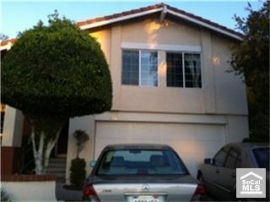
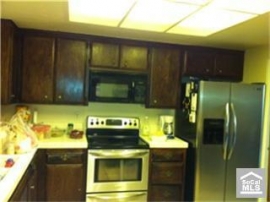
Irvine Home Address … 3981 CEDRON St Irvine, CA 92606
Resale Home Price …… $530,000

Slide away, and give it all you've got
My today, fell in from the top
Now that you're mine
We'll find a way
Of chasing the sun
Oasis — Slide Away
For the last couple of months, I have been commenting on the surprising collapse of local demand and the lack of a spring rally. Today, I am going to feature the comments of others noting the ominous signs for the Orange County and Irvine housing markets.
O.C. Home Prices to Continue Slide, Won't Recover Any Time Soon, Chapman Says
Large supply of distressed properties is blamed.
June 17, 2011
Home prices in Orange County will fall about 4 percent next year, Chapman University economists said Thursday, and will not recover any time soon.
The housing market is being buffeted by “countervailing forces'' of supply and demand, said Esmael Adibi, director of the Anderson Center for Economic Research at Chapman.
“We're not building many new homes, which is good news in terms of home prices, but we're still dealing with a large supply of distressed properties,'' Adibi said.
The fact that we are not building many new homes is one of the main drags on the economy. The unemployed and under-employed in homebuilding and real estate related industries are not buying homes, nor are they demanding other goods and services.
Adibi and Chapman President James Doti, who is also the Donald Bren Distinguished Chair of Business and Economics at the school, released their economic forecast to a gathering of business and community leaders in Costa Mesa.
Related: Sales Down Nearly 20% in O.C.
One “big drag'' on the local economy, the economists said, is the scaling down of government spending, which has led to layoffs.

You can't build a dynamic economy on government jobs. Government work does not add value. It is a cost to society paid by those who do add value.
Meanwhile, Orange County's 8.6 percent unemployment rate, which is already considerably better than the state's, will continue to improve, with job creation gaining momentum by year's end, Adibi said.
Job growth nationally could reach 1.4 percent, bringing the unemployment rate down to 7.5 by the end of 2012, Adibi said. Countywide job growth could reach 2.2 percent in 2012, he said.
Orange County should add 20,000 jobs this year and another 30,000 next year, Adibi said. Unemployment in Orange County fell from 9.1 percent in March to 8.6 percent in April, the latest figures available. California's unemployment rate is nearly 12 percent.
With such weak employment numbers, income growth won't be a driver of home prices. The only way prices can be sustained is super low interest rates — which may be around until the economy picks up — and continued withholding of supply by lenders who control most of it either directly as REO or indirectly as short sales requiring approval. 
Most of the added jobs expected in Orange County will be white collar positions—attorneys, accountants, and computer programmers, Adibi said. Private education organizations also will do strong hiring “because people are retooling and going back to school,'' he said, and the healthcare industry will also grow as the population ages and demand increases.
If Adibi is right, the addition of high-paying jobs will help local home prices — if enough of these jobs are created to absorb the inventory.
Adibi and Doti forecast better times for the leisure and hospitality industries.
“We believe tourism will improve, and partly because consumer spending will be relatively strong compared to last year,'' Adibi said.
Consumer spending will likely improve over last year's anemic levels, but without HELOC money, the consumer spending of the bubble is nowhere on the horizon.
Manufacturing will experience some recovery, particularly in high-tech as business invest more on equipment, Adibi said.
Among the wild cards will be oil and gas prices, he said. Political instability in the Middle East has driven up oil prices, but that should stabilize in the coming months, Adibi said, although “it's very hard to project gas prices.''
—City News Service
We have very low sales rates, high unemployment, weak job creation, and a huge overhang of housing supply. Prices should continue to slide, and they shouldn't recover any time soon.
Housing rescue still not on horizon
June 13, 2011 — By JEFF COLLINS and JONATHAN LANSNER
Like the castaways of television's “Lost,” the Orange County housing market continues to search for a rescue that has yet to materialize.
DataQuick Information Systems reported that 2,664 home sales closed last month, making it the second slowest May in records dating back to 1988. Sales fell 18.2 percent from May 2010, the 11th straight month in which home sales were down on an annual basis.
Prices fell, too.
That doesn't leave much to be bullish about, does it?
The median price of an Orange County home – or price at the midpoint of all sales – fell 5.6 percent last month to $425,000. In May of 2010, the median price was $450,000, a post-slump pinnacle not repeated for 10 months.
It's called a bear rally. It's what you get when you provide artificial stimulants to demand then remove those stimulants.
DataQuick attributed the lingering malaise to the same bugaboos that have gripped the market since a home-buying tax incentive expired a year ago: High unemployment, tight lending standards and the lack of buyer confidence that both inspire.
“From a non-scientific basis, we can feel that,” observed Westminster agent Dick Lobin of Century 21 Olympic Team. “Usually we get a seasonal pop in May, June, July and August. We don't feel it (this year). In fact, it's down.“
Thank you Mr. Lobin. A realtor told the truth about the housing market. I hope he doesn't get in trouble.
Looking at 2011 as a whole, we've seen 11,596 residences sold – down 7 percent from 2010.
Compared to past years, 2011 had the fourth-lowest start. The only years with fewer sales as of May were 1995, 2008 and 2009.
In fact, sales this year so far were down 31 percent from the five month average of 16,725 since 1988.
“Here we sit in the market doldrums,” said DataQuick President John Walsh. “The government stimulus is long gone, and some of the fundamental drivers of housing demand have yet to strengthen.”
Like many other market watchers, I predicted the bear rally would falter when the stimulants were removed; although, I didn't think the market would be quite this bad. In my observation, the economy usually displays unexpected strength rather than unexpected weakness.
By housing type, DataQuick figures show:
- Resale houses: 1,702 sold last month vs. 2,015 a year ago. That is a -15.5 percent change. The median price was $500,000 vs. $515,000 a year ago, or a 2.9 percent drop.
- Resale condo: 764 sold last month vs. 942 a year ago. That's a 19 percent drop. The median price was $265,000 vs. $305,000 a year ago or a 13.1 percent decline.
- New homes: 198 sold last month vs. 300 a year ago, a 34 percent plunge. The median price was $560,500 vs. $645,000 a year ago or a 13.1 percent decline.
O.C. home prices are down across the board.
Fifty-nine of Orange County's 83 ZIP codes had price drops, according to DataQuick. Sixty-one ZIP codes – 73 percent of the market — had year-over-year sales declines.
That is ugly data. It can be summarized as down, down, down, down, down, and down.
The two-story house at 938 W. Oceanfront was one example of what sold in May. Although the home sits on the sand and features a whirlpool spa and waterfall, it took a year to sell, and the owner ended up taking a haircut of nearly $2 million, or almost a third off what he paid for it four years ago.
If there's any good news in last month's Balboa Peninsula home sale, it's this: The high end of the Orange County housing market is starting to see price drops as big percentage-wise as those seen in years past by the lower sectors of the market, several local agents say.
I guess the high end is not immune after all. Amend-extend-pretend has failed.
It could be the final chapter of the slump that needs to be written before the market can recover.
“The declines are starting to hit the high end, which they didn't for awhile,” observed Brian Johnson, an agent with Hom Real Estate Group in Newport Beach.
Johnson noted that sales in some high-priced areas like the Balboa Peninsula are showing signs of bucking the county's sagging sales trend as wealthy buyers paying cash snatch up properties seen as undervalued.
“They realize that prime beachfront will run up in the long run,” Johnson said.
 In a select few neighborhoods this may be true. The rich have gotten much richer over the last decade or more. Unfortunately, this wealth is very concentrated in the hands of a few people. Certain neighborhoods may be spared the high-end crash, but properties that benefited from their proximity to wealth — properties typically purchased with extreme leverage by posers — these less desirable properties will be crushed just like the condos we see here in Irvine.
South Orange County agent Steve Thomas reported that a Google search of the term “housing double dip” turns up 782,000 hits since May 30. Although most indicators show that housing is down from a year ago, Thomas takes issue with the use of the term “double dip,” at least when it comes to home prices.
The 4.6 percent price drop reported nationally is tiny compared to the 18.9 percent drop in the first few months of 2009, he said.
That's some pretty weak realtor spin.

Lobin, the Westminster agent, noted that investors paying cash also are dominating the housing market in central Orange County. Lobin said that about 60 percent of the sales in Little Saigon involve all-cash deals.
But even there, the market is hampered by the same factors that are dragging down housing as a whole: The slow economy, the loss of jobs, difficulty getting loans and a lack of confidence in the market.
Well, which is it? Are foreign all-cash buyers going to save the market or not? Since market prices are set on the margins, it doesn't seem likely than any core group can dictate pricing. They won't save Westminster, and they won't save Irvine either.
“There's no definitive direction that's been determined. Nobody knows what the future is,” Lobin said. ” … It's a little disheartening. But let's see what June, July and August bring.”
Contact the writer: 714-796-7734 or jcollins@ocregister.com
Actually, there is a definitive direction that's been determined. The market is going down. While it's true that nobody knows what the future holds, do you think June, July and August will bring a surprise rally, or will it see more weakness? Weakness seems far more likely.
Has housing slump hit Irvine?
By JON LANSNER — June 13, 2011
Has the bloom come off Irvine's home market?
State for the full month of May from DataQuick — prime homebuying season — show Irvine shopper less active than a year ago …
- Citywide sales totaled 272 – that's down 40 purchases or 12.8% vs. a year ago. Countywide, sales were down 18.2% vs. a year earlier.
- Irvine home sales were 10.2% of the countywide market in the latest period vs. 9.6% in the year-ago period.
- Of Irvine's 8 ZIP codes, 3 had sales gains vs. a year ago while 2 had a gain in their median selling price vs. a year ago.
- Medians within the city's ZIPs ran from $355,000 to $1,120,000 – while the price gap was $408,000 to $1,010,000 a year ago.
- 3 of these 8 ZIP codes beat the -5.6% overall performance of the countywide median for the past year.
- Below is a look at how the latest DataQuick report breaks down Irvine real estate deals by ZIPs; change is vs. a year ago!
- Note: A year ago, there were significant tax breaks for shoppers and the Irvine Co.'s new-home push in North Irvine was just taking off.
Irvine ZIP Median price Yr. chg. Sales Yr. chg.
92602 $545,000 -13.4% 15 -59.5%
92603 $1,120,000 +10.9% 36 +16.1%
92604 $501,000 -5.5% 27 +8.0%
92606 $495,000 +21.3% 12 -42.9%
92612 $410,000 -10.4% 40 -4.8%
92614 $355,000 -36.3% 17 -29.2%
92618 $563,636 -10.6% 80 +2.6%
92620 $545,000 -31.0% 45 -16.7%
All OC $425,000 -5.6% 2,664 -18.2%
The belief in serial refinancing 
During the housing bubble, many loan owners convinced themselves they could always refinance into a larger mortgage with a lower payment. It was considered safe to use an Option ARM or other toxic form of mortgage refinancing with teaser rates and other terms guaranteed to have increasing future payments. Most people were told by their realtor and mortgage broker that when their payments were set to increase, they would be able to refinance into another mortgage with a teaser rate and low payment. This process was known as serial refinancing. It didn't work.
Serial refinancing didn't work because it is a Ponzi scheme. Every borrower who had a payment that didn't cover the interest on their mortgage was borrowing money to pay interest. Such a plan requires a lender to continually extend credit to make debt-service payments. When the time comes that no lender is willing to extend credit — which it inevitably does — the Ponzi scheme collapses in a painful credit crunch.
What was truly shocking during the housing bubble was how widespread Ponzi borrowing became. As I have shown with the hundreds of HELOC abuse cases in Irvine, ordinary citizens became caught up in the financial mania and borrowed themselves into foreclosure. The owners of today's featured property are an example of a prudent borrower going Ponzi in five short years.
- The property below was purchased on 12/30/1988 for $285,000. I don't have their original loan information, but they likely put 20% down.
- On 1/9/2002 they refinanced their first mortgage for $228,000 — an amount $57,000 below their original purchase price. These were prudent mortgage managers up to this point.
- On 6/4/2003 they refinanced again with a $228,000 first mortgage. They were undoubtedly given the opportunity to borrow more, and they chose not to.
- On 12/16/2003 they went Ponzi with a $472,000 first mortgage.
- On 2/25/2005 they refinanced again with a $544,000 first mortgage.
-
On 3/21/2007 they refinanced one last time with a $580,000 first mortgage.

- Total mortgage equity withdrawal was $352,000.
- They stopped paying the mortgage at least a year ago.
Foreclosure Record
Recording Date: 01/03/2011
Document Type: Notice of Sale
Foreclosure Record
Recording Date: 09/02/2010
Document Type: Notice of Default
Twenty-three years after purchasing their house, they are going to be a short sale. Their plan to serial refinance didn't work as planned.
Irvine House Address … 3981 CEDRON St Irvine, CA 92606 
Resale House Price …… $530,000
House Purchase Price … $285,000
House Purchase Date …. 12/30/1988
Net Gain (Loss) ………. $213,200
Percent Change ………. 74.8%
Annual Appreciation … 2.7%
Cost of House Ownership
————————————————-
$530,000 ………. Asking Price
$106,000 ………. 20% Down Conventional
4.49% …………… Mortgage Interest Rate
$424,000 ………. 30-Year Mortgage
$91,964 ………. Income Requirement
$2,146 ………. Monthly Mortgage Payment
$459 ………. Property Tax (@1.04%)
$0 ………. Special Taxes and Levies (Mello Roos)
$110 ………. Homeowners Insurance (@ 0.25%)
$0 ………. Private Mortgage Insurance
$43 ………. Homeowners Association Fees
============================================
$2,759 ………. Monthly Cash Outlays
-$358 ………. Tax Savings (% of Interest and Property Tax)
-$559 ………. Equity Hidden in Payment (Amortization)
$176 ………. Lost Income to Down Payment (net of taxes)
$86 ………. Maintenance and Replacement Reserves
============================================
$2,104 ………. Monthly Cost of Ownership
Cash Acquisition Demands
——————————————————————————
$5,300 ………. Furnishing and Move In @1%
$5,300 ………. Closing Costs @1%
$4,240 ………… Interest Points @1% of Loan
$106,000 ………. Down Payment
============================================
$120,840 ………. Total Cash Costs
$32,200 ………… Emergency Cash Reserves
============================================
$153,040 ………. Total Savings Needed
Property Details for 3981 CEDRON St Irvine, CA 92606
——————————————————————————
Beds: 4
Baths: 3
Sq. Ft.: 1897
$279/SF
Property Type: Residential, Single Family
Style: Two Level, Traditional
Year Built: 1972
Community: 0
County: Orange
MLS#: S662914
Source: SoCalMLS
Status: Active
——————————————————————————
Great starter home, boasts high vaulted ceilings, a spacious floor plan. The home sits on a large lot at the end of a Cul-de-sac, in a great quiet neighborhood. Recently upgraded windows and sliding back door. Walking distance to community parks. All of the best amenities Irvine has to offer, club house, community pools and spas, award winning schools and shopping. .. Beautifully landscaped front and back yards. This one won't last long.
Only in Orange County is a $530,000 house considered a “starter home.” This is how crazy things STILL are.
Just sayin’, but many (perhaps even most) Australians live in the suburbs of cities where $530K only buys a starter home.
This is because of the boom/bubble in commodity pricing…should the USD strengthen look out. Might not be a bad time to cash out the bubble gain.
Australia is at the top end of a huge housing bubble. I wouldn’t use them as a comparison at this point in their housing cycle.
Another good point that Woodbury Renter made is that the USD is at a three year low and, most likely, a cycle low. As the dollar strengthens over the next year or two expect fewer foreign buyers entering the U.S. market.
A 1,900 sf, 4-BR house is not a “starter home”. The description is mislabeled.
-Darth
Well, it’s detached, has an 8,820′ square foot lot, and only $43/month HoA (for the pool it looks like.)
Might need some updating as it was built in 1972, but overall sounds ok.
The main issue here is that the $530k “price” is actually some fictitious number for a pre-foreclosure or short sale. Who knows what the actual price will be at this point.
Backs to Culver, basically in El Camino Real and the kitchen definitely needs work.
I though that a lower price / higher rate combo was better. Guess I was wrong, CAR says so:
C.A.R.’s monthly Market Snapshot offers REALTORS® information about the current market and provides consumer-friendly charts and graphs.
This month’s Market Snapshot, “The Price/Rate Trade-Off,” features:
Which is better? A lower price or a higher rate?
If home prices decline by 3 percent, the monthly PITI payment of a median-priced home in California in May, would decline to $1,492 from $1,538, a savings of $46. However, if mortgages rise by 0.5 percent to 5.14 percent (the average rate for a 30-year fixed mortgage in May), the monthly payment would increase to $1,560, $68 more than the PITI for the lower-priced home.
In the long-run, current mortgage rates can save you money
The bottom line is that minor price fluctuations have only a minor impact on the monthly payment, while even small changes in mortgage rates can make a big difference when calculating the monthly payment.
when rates are higher, they’ll have a different reason for why it’s better to buy at the higher rate.
because it’s always a great time to buy!!!!
(for the realtor making commission on the sale)
The price is nice, compared to everything else in Irvine thus far. Cul-de-sac another big bonus. For a family all three schools (College Park Elem., Venado Middle and Irvine High) are very good one with 924, 938 and 872 API scores respectively. I know, not a surprise to Irvine residents that they have good (actually comparatively “great”) schools, but lower cost SFH areas like in SVUSD don’t have may schools, if any, in the 900s for API score. I won’t even mention Capistrano Unified, which is unfortunately a well-documented bonified disgrace in terms of performance.
Also, any home that butts up against a major 4 to 6 lane avenue like Culver is going to have some nice traffic noise and exhaust fumes to cope with, not to mention being pretty close to the 5 FWY and all that entails.
In 2004-2006, I was saying the crazy refinancing was going to crash sooner or later, and, unfortunately, it didn’t truly crash until summer of 2007 when all the banks suddenly started to require 4506-T forms and conditioned the hell out of their loans. Literally in August and September 07, the banks stopped giving liars loans, because of the Alt-A stock implosion in July.
Once that happened, everyone realized there would be a massive wave of foreclosures as all the people who had no business being “homeowners” were cleaned out of the system. However, the government tried one gimmick after another, with various regulations and subsidies, to stop the foreclosures. The banks, for their part, gamed the government programs, and their own investors, and part of these games resulted in long delays in actually foreclosing on people. Some undeserving and lucky people got to live for free in nice homes for years. This of course, benefited the lucky few, but hurt everyone else.
All these delays, some caused by the government, some caused by the banks, prevented the correction that should have taken place. The housing market decline was slowed, which only served to drag it out.
Then the recession hit and unemployment skyrocketed. Of course lost jobs means more foreclosures, and fewer people who can buy. Everywhere you look in the housing market, there are parasites who feed off other and dont add value. I’ve stopped a few of them, but it is like trying to empty out a lake with a bucket. The funny thing is, the predators are all so used to getting away with it, that when they actually get sued, they act indignant, as if they’ve done nothing wrong because “this is how everyone does it”! And people wonder why housing is in the gutter, and is going to stay there.
In 2007 I was saying that housing would probably crash and bottom within 3 years. In 2008 I was saying “another 3-5 years”, and now, I’d say at least 5 years and maybe longer. Everyone assumes the American economy is this unstoppable juggernaut that will grow no matter what happens, but isn’t that what everyone said about Japan in the 1980s? How’d Japan do the last 20 years?
The economy is in the gutter, we know we are in a double dip recession now, and the housing market cannot possibly recover until after the economy recovers. Until then, the housing market in Irvine will remain a black hole of wealth destruction, where suckers stupid enough to buy into it get robbed and either get stuck with bad assets, or sell for a loss. Sure, like IR says, eventually we might hit the cash flow breakeven point, but home prices are only getting dragged down kicking and screaming thanks to the constant efforts of realtors, the government, and banks, so I don’t think we will find the bottom too soon.
A few more things haven’t happened yet, that will happen, and will make things worse:
1. higher interest rates. IrvineRenter has already talked about this a lot. Odds are, interest rates will rise before the housing recovery, which will keep prices low while the cost of ownership keeps rising.
2. higher taxes. The Republicans will end up compromising with the Democrats, and the resulting budget will probably end up giving the Democrats 75% and the Republicans 25%, because as we’ve already seen, Republicans love fake, meaningless, gimmicky cuts, but lack the backbone to make deep, meaningful cuts. This means the difference has to come from tax hikes. Tax hikes will pull even more cash out of the private sector and stop or slow any recovery. This will, in turn, keep the housing market from recovering.
3. limiting the mortgage tax credit. I doubt they’ll eliminate it, but the Democrats would love to lower the cap or otherwise limit it to the “middle class”. That would, of course, warp the housing market around the new cap somewhat, and bring the pain to the higher priced homes, which would probably include most of the homes in Irvine.
I should use your comment as a post. You obviously see the situation very clearly.
More Gimmicks On The Way
Very cogent analysis but not quite sure all the cause-effect relationships are pointing in the right direction. ” the housing market cannot possibly recover until after the economy recovers”. I would say instead the housing market cannot recover until the foreclosure process is unleashed and homes are allowed to seek the qualified demand level in all bubble markets (not just Phoenix, Las Vegas and Miami). Once a 3 bedroom home in Irvine can be had for $350k – 400k it will allow a homebuyer to buy the home knowing that it is cash flow better than renting and as there is reasonable assurance of gradual appreciation.
…and then with this confidence restored the economy can recover.
You say interest rates will rise before the housing recovery. When will interest rates rise?
Wow, it is really not politically correct these days to admit that even one public school teacher or fireman creates wealth or efficiency.
I’m certain that our public sector contains no shortage of useless, clock-punching time servers, but the guys who built that bridge I drive across each day sure paid for themselves many times over. And my fourth-grade teacher, useless parasite that he must have been, taught me to love mathematics and boosted my lifetime earnings by 30% – probably this is not defined as “productivity”, even though I work exclusively for private-sector firms.
Do you include defense contractors in this sickening blanket thinking, or just middle-class government employees?
You’re right. There are some government functions that do add value. My retired school teacher parents would probably not agree with my statement either.
The guy who built the bridge you drive on was not a government worker. He was a private contractor who bid competitively to obtain a government contract. He had to be efficient and add value.
Many government services we obtain add value, but they could also be provided privately for less cost.
Governments are notoriously inefficient. Bureaucrats do add value, but it is often less than their cost. And the basic statement regarding the vibrancy of the economy is true. Someone outside of government needs to provide the value government operates on. If that weren’t true, government would just do everything and be the only employer and source of work. Communists tried that, and it didn’t work out very well.
IR:
From a regular lurker
I really like your work,and your observations, but it simply isn’t true that the private sector is always, or even usually, more efficient. The private contractor who built the bridge (with public money) may have political connections, and adding in the cost of “donations” that skew the bidding process may actually drive up the cost of construction.
For an example of private contractors costing far more than government workers, look no further than TSA.
Modern for-profit colleges have helped drive up the cost of education to unsustainable levels. Tax-supported colleges and universities long provided better bang for the buck.
Privatized health care makes the US 37th in overall health care, while costs are 1st. For the poor and the elderly, America is becoming unlivable.
Worst example of all: privatized prisons. What is behind the push to make spitting in the street a felony (note: intentional exaggeration)? The profit motive.
Don’t confuse me for a commie–what is really needed is a well-regulated economy with protections for individual liberty, not a state in which the kleptocrats are rewarded and petty offenders are locked up.
All three examples you listed were made inefficient because they receive unlimited government subsidies.
Private college tuition is ridiculously high because we subsidize student loans.
Private healthcare is subsidized by all manner of government programs including Medicare.
Private prisons are subsidized by more government largess.
If you provide any unlimited government subsidies, costs will inevitably balloon out of control, and those receiving the subsidies will develop powerful political lobbies to keep the money flowing.
I agree we need a well-regulated market economy. What we end up with is all manner of government subsidies intended to benefit one group over another at the expense of all taxpayers.
I suspect we’re not really on different sides of most issues–the problem is not so much the existence of government subsidies where they might do some good but the serious misallocation of funds as a result of the enormous amount of money funneled to politicians by powerful interest groups.
The most basic function of governments is the establishment of order. If you think no gov’t workers provide value, look at Somalia or Haiti, and tell me that the lack of a functioning gov’t is not their biggest problem.
The problem with privatizing everything (schools and Medicare & other medical care included) is that private parties can exclude those they don’t want. Those with pre-existing conditions, problem students, people who can’t pay. We want some services provided to everyone. When you put that requirement on a service, you really need to have the gov’t providing it.
I work in electronics, a true functioning market. You’ve gotten better goods at lower prices over the history of the industry. I understand how beautifully markets can work, but also understand that they do not always work.
@ Hydro
You have some valid points. Not all public sector folks are bad news. The problems begin with the union that ensures that the bridgebuilder pension is not self funded but guaranteed. And that the real piece of shi# employee cannot be fired until the moon turns blue and pigs fly while the the best employee in the union cannot get a raise in recognition of performance. It is communism pure and simple. Look at the knee jerk reaction after 9/11 with the creation of the TSA. Remember those “beauties” at airport security before 9/11 with the bad maroon blazers and poor grooming making $9.00 an hour. Now they are fully unionized employees of the gubermint with full benefits, pay greater than their skills and pensions to boot. The Chinese will never have to fire a shot.
Public workers have no incentives to work better than their coworkers. That’s the biggest problem.
Does a teacher from an award winning school earn more than a teacher working for a trash school? No!
33% of Greeks work for the government with huge benefits. Let’s see what will happen there.
IR is a terrific resource, and his analysis is always insightful. However, today’s snide aside about gov’t workers was off key.
Police officers add value by keeping law and order; teachers add value by creating an informed consumer (not to mention citizenry); so on and so on (think infrastructure, traffic lights, pollution, food inspection, animal control, etc).
None of this undercuts the power of fair, informed markets. Government workers often serve private markets by bolstering consumers’ confidence and, in turn, willingness to buy and sell.
The trick, then, is getting the right state-market balance. Turns out that’s a bit harder. Heh.
OK, I usually let this one go because like IR both my parents were lifelong public school teachers. However please stop with the “public workers are good because I had a good teacher” meme. It doesn’t hold water. Are you saying that without public union educators there would be no educators? of course not. any valid argument has to compare what is offered by the current public school system versus what a private school system of non-unionized administrators and teachers would provide. (and does provide in some cases today). You might just find that without the 1000’s of Administrators each with a fully loaded cost of $300k p.a. + the community’s resources would be able to be better focused on the ‘customer’ i.e. the student. Public education in the OC is ridiculous – the education system failing to deliver on the basic contract (euphemized as ‘furlough days’) while at the same time continuing to grow the absurdly bloated administrative level. If education were private and accountable would you accept it failing to teach on certain days because there were too many managers and not enough educators?
Your bit about public schools misses the essential point: many government workers, teachers or otherwise, provide a valuable service that helps private markets.
Okay, now tell me again about your parents. My bet: they didn’t teach civics or economics.
It is far from a “bit”. The idea that public education has run its course and is on the last declining segment of the S-curve is actually game changing. Too many people accept the waste and mediocrity of having so many Districts in one county – if this were privately run there would be one management structure at the county level, freeing up millions to greatly enhance the teacher/student interface where the work is of the education system is done. Parents/tax-payers should be outraged by the systemic failure that leads to furlough days, however they have become numb to the whole sloppy construct. There are many good people working in public education. I believe that changing the system would be good for them as well.
Everyone is jumping all over IR for his government comment. He is, generally speaking, correct, because government spending that displaces the private sector is wasteful, inefficient, and harms the economy. The economy is harmed because government workers are, on average, less productive and cost more money. They still get the job done, just not as well
Of course, there are some jobs the private sector can’t do: law enforcement, the judicial system, and national defense, all of which are vital to ensuring that the private sector can flourish.
Teachers are a good example. Public schools are far less efficient than private schools. Public school costs to the taxpayer have skyrocketed over the past few decades while the results they’ve delivered have remained flat. Private schools have done just as well for a fraction of the cost. Every time there is a push for voucher programs, the massive, parasitic teacher’s unions try to blow it out of the water by dumping large sums of money in opposition. The choice is not between public school teachers and no education, the choice is between an inefficient government education monopoly, against a dynamic, competitive private sector alternative. All those great public school teachers you loved growing up would be making more money with better working conditions right now if there was private sector competition. Good teachers would be hot commodities and schools would have to compete to attract them, just like sports teams compete to sign the best players.
The only people who benefit from the public education system are the countless bureaucrats who add no value and simply feed on the taxpayer, as they fiddle around far from the classroom, and the bad teachers who can’t be fired thanks to the union and govt regulations. The students, parents, good teachers, and taxpayers, all lose.
Just because the private sector is better, doesn’t mean contracting out to the private sector is always better, because the contracting is still MANAGED by the government, and poor management often causes poor results. That is the government’s fault.
The only time the private sector fails is when competition is prevented by a monopoly or something similar. As long as you have competition, bad companies go out of business and good companies grow.
Watching everything that has happened with the housing market makes it very difficult to rationalize being a fiscal liberal. Even though people blame Goldman Sachs, the truth is that the government had its fingerprints all over the housing boom and burst from start to finish, thanks in large part to the leading role played by the GSEs. Aren’t those GSEs still making bad loans and bleeding taxpayer dollars? (letting someone buy a home with 3% or less down in this economy and market is absolutely a “bad loan”)
The abject failure of the stimulus to actually accomplish anything beyond making the deficit more massive than it already was should have been the final nail in the coffin of “big government” economics, but you know what they say about people, you can’t reason them out of a position they weren’t reasoned into.
Private schools always better? As only one of the many news reports I’ve seen over the decade about private/charter school scandals, apparently Ohio doesn’t think so – “White Hat has achieved particularly poor results, with only 2 percent of its students making the progress expected under federal education law. The company declined comment on the performance of its schools.”
Hi darms,
No, “Private schools are always better” is a ridiculous statement, easily disproven. It is not what I said. This is called a “straw man” argument. All you need to do is show that the best public school is better than the worst private school. Easily done, but also meaningless. Everyone knows men are clearly taller than women on average, but the statement “men are always taller than women” is ridiculous, because of course you could just compare a WNBA player to a midget.
First, charter schools are not completely private, they are less-regulated public schools that have more autonomy. Second, because charters are not truly private, the government can easily set them up to fail, or mismanage them like any government contractor.
People are greedy, but competition keeps people honest. The biggest problem with the housing crisis is that the government did a lot of things it had no business doing (warping the market through the GSEs and creating the bubble), the government failed to do what it should have been doing: enforcing the rule of law.
I would estimate that less than 0.1% of loan officers, brokers, and others who committed bank fraud have ever been held accountable for it criminally or otherwise, perhaps not even 0.01%. Fraud against consumers was laughably rampant. I know a processor who worked at a big place in Orange County where literally every single loan she law was a bait-and-switch fraud. You know, where the LO promises a great loan, and then at the signing sticks the borrower with a terrible loan. It is the government’s job to prevent this by either making it a crime, or ensuring that victims can easily hold predators accountable in civil cases. Neither was true here. The utter lawlessness of the refinance boom is what caused the ridiculous excesses that allowed things to spiral out of control. Had the law simply been enforced, the bubble could not have formed. The bubble wasn’t created by NINA loans, it came from a combination of stated income loans and loans where false documentation was submitted. Fake VoDs, fake employment, fake tax forms. Of course the banks were complicit and turned a blind eye, but it’s the government’s job to take action.