Government officials and the federal reserve are working feverishly to reinflate the housing bubble. It's a fools errand doomed to fail.
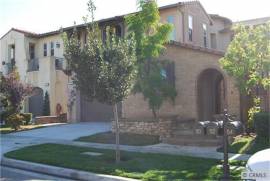

Irvine Home Address … 52 GRAY DOVE Irvine, CA 92618
Resale Home Price …… $1,075,000

The world's a nicer place in my beautiful balloon
It wears a nicer face in my beautiful balloon
We can sing a song and sail along the silver sky
For we can fly we can fly
Up, up and away
My beautiful, my beautiful balloon
The Fifth Dimension — Up, Up and Away
The housing bubble was a wonderful time. Inflated housing prices created illusory wealth for everyone, and lenders allowed people to quickly convert this newfound wealth to anything a homeowner desired. If it would have been sustainable, it would have been wonderful. The ultimate Ponzi fantasy of endless free money for doing absolutely nothing.
I can see why ordinary citizens and loan owners wouldn't want the situation to change. Free money is certainly more convenient than money you have to earn, particularly when the free money isn't a one-time lump sum. When the golden goose is laying a steady stream of eggs, life is grand.
The ideas and fallacies of the housing bubble seem laughable now, but many people embraced the too-good-to-be-true concepts of the housing bubble, and many became very upset when anyone suggested it was all a financial fantasy created in their own minds. Of course, we all know now the housing bubble was a massive Ponzi scheme, but that doesn't stop the powers-that-be from trying to reflate it.
Caroline Baum, ©2011 Bloomberg News
Friday, November 4, 2011
Nov. 4 (Bloomberg) — It's almost six years since the air started to leak, then gush, out of the U.S. housing market, and the best one can say is that residential real estate is bouncing along the bottom.
Almost every housing indicator, from starts to sales to prices, has been flat-lining for three years. Various government initiatives, including a first-time-homebuyer tax credit, gave home sales a temporary boost in 2009 and 2010. But just as water seeks its own level, home prices are still seeking theirs.
We are now into the liquidation phase of the housing bust. Lenders will spend the next three to five years cleaning up their mess. During this period, high priced areas will slowly deflate while low prices areas will bounce along right were they are. Areas will less distress will begin to recover first, but even these markets will be held back by the substitution effect in nearby lower cost markets. Prime areas will not see rapid or sustained appreciation while nearby subprime areas are still clearing out the REO and shadow inventory.
They've had lots of impediments along the way, well- intentioned though they may have been. (The counterargument, that things would have been worse without intervention, can't be proven.) From the Federal Reserve's purchase of $1.25 trillion of agency mortgage-backed securities in 2009-2010 as part of its first round of quantitative easing to renewed talk of additional MBS purchases to temporary tax credits to mortgage modification and forgiveness programs, housing has been the center of government attention and ministration — at least until President Barack Obama pivoted to jobs last summer.


Even now it's very much in the administration's cross hairs. Earlier attempts to facilitate mortgage modifications via programs with abbreviations like HAMP and HARP all fell short of expectations. Fewer than 900,000 homeowners have refinanced their mortgages through the Home Affordable Refinance Program compared with the 4 million to 5 million touted by Obama when he introduced the program in 2009.
HARP 2.0
So last month, the president said he was revamping HARP, waiving fees and the 125 percent loan-to-value ceiling so that borrowers with no equity in their homes will now qualify for a refinancing. (For every borrower who sees his mortgage payment reduced there's an offsetting saver who receives less interest income from his MBS. In some circles this would be considered a wash.)
Actually it isn't a saver who pays the price of the MBS refinancing, it's an investor and the US taxpayer. Some of these loans are bundled into MBS pools owned by private investors, and these investors are absorbing the cost of the government's actions (I smell lawsuits in the future). The remainder will be losses covered by the GSEs themselves as these MBS pools are held on their books. The US taxpayer will absorb that cost in a larger bailout.
Why is so much energy being directed, or misdirected, at housing? Wouldn't those efforts be better spent charting a sound course for the overall economy rather than targeting a specific sector?
For starters, housing's footprint is larger than its current 2.4 percent share of gross domestic product. Even at its recent peak in 2005, residential investment, as it's known in the GDP accounts, made up only 6 percent of GDP, the highest since the 1970s when inflation was driving demand for real assets.
For most Americans, their home is their major store of wealth. The value of household real estate peaked in the fourth quarter of 2006 at $25 trillion, falling to $16.2 trillion in the second three months of this year, according to the Fed's latest Flow of Funds report. A reverse wealth effect is depressing consumer sentiment and spending.
The real drain on the US economy is in the lack of mortgage equity withdrawal. The housing ATM is shut off, and with our HELOC economy, that spells bad news.
It's also limiting mobility. Unemployed homeowners who owe more on their mortgages than their homes are worth can't pick up and move to areas of the country where labor is in demand.
Finally, home purchases beget spending on big-ticket items, such as refrigerators, washing machines and furniture.
Between 1997 — when home-price appreciation started to outpace the consumer-price index — and the peak in 2006, the average price of an existing home rose about 125 percent, according to the S&P/Case-Shiller U.S. Home Price Index. It was arguably the biggest real-estate bubble in history. I know of no law of nature, or finance, that allows for the reflating of a burst bubble. (Another asset class, yes; the same one, no.)
 This is a key point. Attempts to reflate a housing bubble will invariably go to another asset class. The problem with bubbles is that prices get detached from their underlying values. The inevitable crash refocuses investors on value, so even when cheap money is made available, that money will not flow into the previously inflated asset class. Instead, the cheap money will flow into some other asset class and form a bubble there. Anyone noticed how well commodities have done since housing and stocks crashed?
Not that politicians aren't trying. Complaints about lending standards being too tight — from the same folks who pressured lenders to lower their standards — would be funny if they weren't so sad.
“Underwriting standards are too tight?” asks Michael Carliner, an economic consultant specializing in housing. “Relative to six years ago, they are. And they should be.”
 Everyone who wants higher prices and lower lending standards harkens back to the prices and standards of the bubble which by definition were not stable. Lending standards are not too tight today. In fact, they are still loose by pre-bubble standards. Many in the real estate industry viewed looser lending standards as a sign of innovation in finance. In reality, it was merely folly, and we are all paying the price for this epic failure.
Fourth Rail
Housing is still the most tax-advantaged asset, which contributes to its appeal. Mortgage interest and real-estate taxes are tax-deductible. In 1997, the tax laws on capital gains were relaxed. Instead of a one-time exclusion of $125,000, the first $250,000 of capital gains ($500,000 for a married couple) is exempt from taxation provided the owner lived there for two years. What a coincidence that home prices took off just about that time.
All the discussion about closing tax loopholes to raise revenue tiptoes around the mortgage deduction. Why? Because it's a bad time to remove an incentive for home purchases.
It's always a bad time, but good times won't return to the real-estate market until prices are allowed to fall so they can perform their traditional role of allocating supply.
 She is right. realtors will always argue against removing any housing subsidy no matter the circumstances. The arguments they will make will differ, but their clamoring for subsidies will always be the same.
There are still plenty of reasons to own a home, but the deductibility of mortgage interest isn't one of them. For the last two decades, the nation's housing policy was designed to convert as many Americans as possible into homeowners. It was aided and abetted by Fannie Mae and Freddie Mac, which lowered the standards on mortgages they guaranteed; lax lenders; fraudulent loans, with borrowers and lenders often in cahoots; bankers that securitized and sold the mortgages; credit-rating companies that thought enough collateralized junk was worthy of a AAA; and, yes, a public eager for a free lunch.
What a wonderful synopsis of the housing bubble.
The 11 million homeowners currently upside down on their mortgages probably wonder about the wisdom of such a policy, which succeeded beyond anyone's wildest imagination. The homeownership rate rose to 69.2 percent in 2004 from 63.8 percent a decade earlier before slipping back to 66.3 percent now.
The rest of us can only imagine what other calamities (think ethanol) lie in store, courtesy of a tax code that encourages what the government deems to be “good” behavior at the time. Good can turn bad without warning.

Short sale and REO workshop
Last month was our first short sale and REO workshop. I was very impressed with the outcome. I knew Shevy was very good at what he does, or he wouldn't be the #1 agent in sales volume at his 900+ agent brokerage, but listening to him go through the details of his strategies gave me a deeper understanding of how he adds value to a typical transaction. But don't take my word for it, come out and listen for yourself. You too will come to recognize the value he adds to the process.
Shevy Akason and Larry Roberts will host a short sale and REO workshop at 6:30 PM Wednesday, November 16, 2011, at the offices of Intercap Lending (9401 Jeronimo, Suite 200, Irvine, CA 92618).

Register by clicking here or email us a sales@idealhomebrokers.com.
Down payment and HELOC money lost
For the first several years of the bust, many were of the opinion that Irvine's high end was going to be spared the bust. Of course, this belief only requires one to change their definition of high end to suit market reality.
At first, it was Columbus Grove that collapsed because the builder was still actively selling there as prices were falling. This lead many to decry the lack of quality or some other supposed features of this community.
As the high-end communities fall one-by-one, the definition of what is immune keeps getting narrower. Some small enclaves in Irvine may survive, and if any do, the bulls will point to that block or neighborhood as evidence of Irvine's supreme market immunity. People see what they want to see.
Today's featured property was a high end property in Portola Springs. Now it's asking price represents a 25%+ decline from the peak. I profiled this property when it was a short sale back in January:
The owner of today's featured property paid $1,410,500. He used a $1,000,000 first mortgage, a $269,404 HELOC and a $141,096 down payment. For this he obtained his unique tract home that surely was going to hold its value in the bad times and appreciate like crazy when times are good. We all know how that is turning out. This is another 25%+ loss on a high-end property.
Foreclosure Record
Recording Date: 11/30/2010
Document Type: Notice of Sale
Foreclosure Record
Recording Date: 08/19/2010
Document Type: Notice of Default
Apparently, he did not complete the short sale as this is now an REO. The bank paid $1,148,909 at auction which was the full amount due on the note. It isn't clear how long the former owner was not making payments, but the bank racked up nearly $150,000 in fees on the first mortgage during that time.
——————————————————————————————————————————————-
This property is available for sale via the MLS.
Please contact Shevy Akason, #01836707
949.769.1599
sales@idealhomebrokers.com
Irvine House Address … 52 GRAY DOVE Irvine, CA 92618
Resale House Price …… $1,075,000

Beds: 4
Baths: 4
Sq. Ft.: 3383
$318/SF
Property Type: Residential, Single Family
Style: Two Level, Tuscan
Year Built: 2006
Community: Portola Springs
County: Orange
MLS#: S678715
Source: CRMLS
Status: Active
On Redfin: 2 days
——————————————————————————
 Beautiful Executive home in Portola Springs. This home boasts lavish upgrades. Refinished hardwood floors throughout. 3 Bedrooms suites each with its own private bath. Separate casita located off courtyard and has its own separate entrance. Sizeable bonus room upstairs. Gracious Master suite. Formal living room and dining room combo. Gpourmet kitchen w/ granite counter tops, vegetable sink in center island, glass front cabinets, breakfast bar and nook. Adjacent to the kitchen is a spacious family room w/ fireplace. Good size rear yard w/ upgraded hardscape. Eentertainers home. Additional features include 3 car garage, mud room, upstairs laundry room, plantation shutters, recessed lighting, and crown molding throughout. Must See!
——————————————————————————————————————————————-
Proprietary IHB commentary and analysis 
Resale Home Price …… $1,075,000
House Purchase Price … $1,410,500
House Purchase Date …. 12/26/2006
Net Gain (Loss) ………. ($400,000)
Percent Change ………. -28.4%
Annual Appreciation … -5.5%
Cost of Home Ownership
————————————————-
$1,075,000 ………. Asking Price
$215,000 ………. 20% Down Conventional
4.08% …………… Mortgage Interest Rate
$860,000 ………. 30-Year Mortgage
$228,535 ………. Income Requirement
$4,146 ………. Monthly Mortgage Payment
$932 ………. Property Tax (@1.04%)
$467 ………. Special Taxes and Levies (Mello Roos)
$224 ………. Homeowners Insurance (@ 0.25%)
$0 ………. Private Mortgage Insurance
$136 ………. Homeowners Association Fees
============================================
$5,904 ………. Monthly Cash Outlays
-$1080 ………. Tax Savings (% of Interest and Property Tax)
-$1222 ………. Equity Hidden in Payment (Amortization)
$308 ………. Lost Income to Down Payment (net of taxes)
$154 ………. Maintenance and Replacement Reserves
============================================
$4,065 ………. Monthly Cost of Ownership
Cash Acquisition Demands
——————————————————————————
$10,750 ………. Furnishing and Move In @1%
$10,750 ………. Closing Costs @1%
$8,600 ………… Interest Points @1% of Loan
$215,000 ………. Down Payment
============================================
$245,100 ………. Total Cash Costs
$62,300 ………… Emergency Cash Reserves
============================================
$307,400 ………. Total Savings Needed
——————————————————————————————————————————————————-
Key lesson from Iceland crisis is ‘let banks fail’
By Haukur Holm | AFP – Sat, Nov 5, 2011
Three years after Iceland’s banks collapsed and the country teetered on the brink, its economy is recovering, proof that governments should let failing lenders go bust and protect taxpayers, analysts say.
The North Atlantic island saw its three biggest banks go belly-up in the October 2008 as its overstretched financial sector collapsed under the weight of the global crisis sparked by the crash of US investment giant Lehman Brothers.
The banks became insolvent within a matter of weeks and Reykjavik was forced to let them fail and seek a $2.25 billion bailout from the International Monetary Fund.
After three years of harsh austerity measures, the country’s economy is now showing signs of health despite the current global financial and economic crisis that has Greece verging on default and other eurozone states under pressure.
“The lesson that could be learned from Iceland’s way of handling its crisis is that it is important to shield taxpayers and government finances from bearing the cost of a financial crisis to the extent possible,” Islandsbanki analyst Jon Bjarki Bentsson told AFP.
“Even if our way of dealing with the crisis was not by choice but due to the inability of the government to support the banks back in 2008 due to their size relative to the economy, this has turned out relatively well for us,” Bentsson said.
Iceland’s banking sector had assets worth 11 times the country’s total gross domestic product (GDP) at their peak.
Nobel Prize-winning US economist Paul Krugman echoed Bentsson.
“Where everyone else bailed out the bankers and made the public pay the price, Iceland let the banks go bust and actually expanded its social safety net,” he wrote in a recent commentary in the New York Times.
“Where everyone else was fixated on trying to placate international investors, Iceland imposed temporary controls on the movement of capital to give itself room to maneuver,” he said.
During a visit to Reykjavik last week, Krugman also said Iceland has the krona to thank for its recovery, warning against the notion that adopting the euro can protect against economic imbalances.
“Iceland’s economic rebound shows the advantages of being outside the euro. This notion that by joining the euro you would be safe would come as news to the Spaniards,” he said, referring to one of the key eurozone states struggling to put its public finances in order.
Iceland’s example cannot be directly compared to the dramatic problems currently seen in Greece or Italy, however.
“The big difference between Greece, Italy, etc at the moment and Iceland back in 2008 is that the latter was a banking crisis caused by the collapse of an oversized banking sector while the former is the result of a sovereign debt crisis that has spilled over into the European banking sector,” Bentsson said.
“In Iceland, the government was actually in a sound position debt-wise before the crisis.”
Iceland’s former prime minister Geir Haarde, in power during the 2008 meltdown and currently facing trial over his handling of the crisis, has insisted his government did the right thing early on by letting the banks fail and making creditors carry the losses.
“We saved the country from going bankrupt,” Haarde, 68, told AFP in an interview in July.
“That is evident if you look at our situation now and you compare it to Ireland or not to mention Greece,” he said, adding that the two debt-wracked EU countries “made mistakes that we did not make … We did not guarantee the external debts of the banking system.”
Like Ireland and Latvia, also rescued by international bailout packages and now in recovery, Iceland implemented strict austerity measures and is now reaping the fruits of its efforts.
So much so that its central bank on Wednesday raised its key interest rate by a quarter point to 4.75 percent, in sharp contrast to most other developed countries which have slashed their borrowing costs amid the current crises.
It said economic growth in the first half of 2011 was 2.5 percent and was forecast to be just over 3.0 percent for the year as a whole.
David Stefansson, a research analyst at Arion Bank, told AFP Iceland hiked its rates because it “is in a different place in the economic (cycle) than other countries.
“The central bank thinks that other central banks in similar circumstances can afford to keep interest rates low, and even lower them, because expected inflation abroad is in general quite (a bit) lower,” he said.
Read the Michael Lewis book “Boomerang” for even more background. Not only on Iceland, but the rest of Europe.
Britons, the majority of depositors, deserve to get a haircut from investing in Icelandic banks. Greed motivated them to invest in Iceland, without any due diligence.
It’s laughable that Europe is saber-rattling to force the Icelandic people to make greedy Europeans whole.
There’s a reason why interest rates are higher with higher risk opportunities. It’s called a risk premium. Ask MF Global about that concept.
Sorry, but I hated every minute of the housing bubble as prices began to escalate out of my range and then ratcheted up far into the ether and away from any reasonable relationship with incomes…which didn’t begin to keep pace, and I’m still furious that prices were artificially inflated beyond the 1997 level.
I watched helplessly as condos that were substantially inferior to my rental rose so far out of parity that I would have had to pay twice as much a month to “own” a miserable studio in a 4+1 as I do to rent my beautiful rental. I had planned on buying a 2 bed 2 bath, but by 2003, at which point I expected the insane bubble to burst, 1-beds inferior to my rental were far out of my range, especially since I was seeking to lower my housing cost, not raise it.
You see, I didn’t “get it”. I could not understand what was happening. I did not get that you weren’t supposed to put, say, a 10% down payment on a reasonable place and take a 20 year or 30 year mortgage. Nah, what you were supposed to do was buy the most expensive place you could get using a pay option ARM and making the minimum payment, with the idea that you could refi as the prices continued to escalate, and then “trade up” to something more expensive and pretentious on the same terms, while extracting the equity as the prices rose to furnish the place grandly.
I just don’t think that way, never did. I was too afraid that the upward move would reverse the minute I bought, and I’d be unable to make the payments. It all felt wrong.
As for those, like my mother, who owned outright before the runup and who would seem to have gotten the most out of the bubble, what, exactly, did they really gain? I can see that my mother and other owners like her would have been better off if prices and salaries had remained in line with each other and at the prices they paid 40 yearas ago. For,really, all they’ve gained is higher house taxes- MUCH higher- and low interest rates that pay them nothing on their savings while they are inflated out of those savings. If my mother were to sell now, she’d have to pay a capital gains tax, even after figuring in the one-time senior citizen’s tax credit. Had prices stayed level, she wouldn’t have to pay that. And the place she would downsize to would have the same relationship with her place price-wise it did after the bubble runup. So what have she and other long-term owners really gained?
Now, thanks to the debt debacle of the naughties, I’m looking at steeply reduced employment opportunities and the prospect of no growth for our economy for the next two decades at least, and a poverty-stricken old age for myself. Equity investments have lost ground in the past decade while trillions of dollars in investment capital was diverted from truly productive enterprises that could give this country a diverse, productive economy with many job niches for the full array of human talent, and a future as a first world, technologically advanced nation. While we have been concentrating on building “wealth” through asset inflation and driving “economic activity” through debt creation, we have lost our scientific and technological lead and become a stagnant, backward country.
Not only was I deprived of the opportunity to buy at a reasonable price with an honest mortgage within my means to pay, but our younger generations have been deprived of a hopeful future.
The debt bubble of the past 20 years is the WORST thing that ever happened to this country, and I don’t believe we will recover from it in my lifetime, or even those of my niece and nephews.
Memo
Should have bought apple stock…..
I’m in the same boat as you, Laura — and like you, I didn’t lean over the edge and start slurping up seawater like the rest of of them. I was the one who was saving up for a place, sitting at home and deferring gratification and all that good stuff — just as things started to go ape in the market. Now I’m sitting on cash and refuse to chuck it into a pit of chainsaws. To this day, I see morons lunging after half-million dollar ramblers and ranchers with 20 years of grandma’s DNA on every surface, all thanks to that 3.5 down zero risk heroin. Makes me wanna light shit on fire. Not really. Well, kinda…
And, hey, Alan: Fuck Apple.
LL
The RE agents and lenders explained it to me but I didn’t want to join in and be left holding the bag.
I didn’t join in but am still left holding the bag.
My 401 when plop and cash savings are leaking by inflation. Food, medical cost, replacement parts, labor to repair item, insurance,and credit card interest are all inflating. Salary steady.
Prices that are down: borrowing cost on houses, interest on savings and borrowing for the Fed. I can’t do the latter.
Excellent post Laura, excellent.
Very well written post…
…and I feel the same pain. I started to become interested in owning a house in the early-to-mid 2000’s – just as prices were going insane.
At the peak, in my neighborhood, 800sqft 2bed/1bath ranches built in 1950 and sitting on <5000sqft lots were going for...
...wait for iiiiit...
...more than $750K.
Of course now, after years of an obvious "crash", these houses are down to...
...wait for iiiiit...
...a mere $600K+.
But the WORST part is, as someone commented above, I'm actually helping many of these clowns keep their overpriced houses with my tax dollars. I'M paying for THEIR financial foolishness.
I'm literally being kept out of the housing market WITH MY OWN MONEY.
Maybe Lowe's should stock up on pitchforks and torches...
“Part of the tight money problem in California was the nationwide housing situation. The overbuilt situation in Atlanta, Denver, Phoenix and Florida were literally thousands of homes were sitting unsold, plus the massive increases in housing costs and interest rates had put homes out of the reach of homebuyers.” Sound familiar?
The year is 1974, the excerpt from “Boom Builder”, a novel about the housing industry from it’s beginning at the end of WWII and centered in Orange County, by C. Robert Perryman, retired advertising and marketing executive.
That does sound familiar. And lenders solved the problem with financial innovation… well, perhaps not.
Nothing is new under the sun. It will be interesting to read the IHB in 20 years during the next massive housing bubble.
Oh, and did I forget to mention that 75% or more of new homes sales were FHA/VA and the interest rate was 9 1/2%? Conventional loans were higher and required at least 20% down payments, except for Home Savings, World Savings, Lincoln Savings. And for a bit of political upheaval we had Watergate which followed gasoline rationing….you could only fill your tank on odd or even days (depending on the numbers on your license plate….lines into gas stations stretched for blocks)
Top story on OC Register on-line
http://lansner.ocregister.com/2011/11/11/realtors-blame-banks-for-slow-recovery/146883/
Thanks, I may use that article next week.
I’ve made counter-points repeatedly here that LTV is just one of many risk factors to consider when trying to create reasonable underwriting guidelines. I just read this paper that suggests LTV is probably the biggest risk factor (as IR has suggested repeatedly):
http://www.law.unc.edu/journals/ncbank/volumes/volume15/citation-15-nc-banking-inst-2011/ability-to-repay-mortgage-lending-standards-after-doddfrank/
Santa Cruz County Treasurer-Tax Collector Fred Keeley announced Thursday … he is removing New York-based JP Morgan Chase and North Carolina-based Bank of America from an approved list of banks handling bond investments for Santa Cruz County.
The decision was based on nationwide, multimillion-dollar settlements involving fraud allegations that the two companies negotiated agreements giving them a look at competitors’ bids for handling the investments.
“There seems to be no limit to the greed of some of our nation’s largest banks,” Keeley said in making the announcement.
“Whether it has been unjustifiable fees, collateralized debt obligations, betting against their own investment products through the purchase of credit default swaps, or now bid rigging.
Santa Cruz County severs ties with JP Morgan, Bank of America over municipal bonds bid-rigging
“An average Beijing apartment costs 32 times the annual salary of an average middle-class employee.”
msnbc: ‘Naked marriages’ on rise in China’s prosperous cities
China is rigged to blow, and when it does, it will quash any hopes of recovery here in the West for the next decade.
For China has been fueling it’s spectacular “growth” by accumulating debt to finance the construction of dozens of empty cities that the bulk of its still-poor population can’t hope to afford.
It’s even worse than it looks. Even at the top of the bubble here, when you bought an overpriced $200K 1 bed 1 bath, you at least got a livable place with wiring, plumbing, a fully equipped kitchen, a full bath with all the trimmings, paint on the walls, a finished floor.
In China, the #200K apt is a totally unfinished gray concrete box with the plumbing and wiring “roughed in” but needing to be filled out, no kitchen, no bathroom, no interior walls, no wood on the floors, nothing but raw concrete space.
The buildings are so badly built that one concrete bunker high rise literally fell over on its side.
When THAT bubble finally blows, it is going to rock the world in ways we can’t foresee. And maybe we might as well not. We have enough to do maintaining our sanity just dealing with the situation here.
Perhaps that will take care of our deficit problem.
Animal McMansion: Students Trade Dorm for Suburban Luxury
http://www.nytimes.com/2011/11/13/us/homework-and-jacuzzis-as-dorms-move-to-mcmansions-in-california.html?pagewanted=1&_r=1
If you haven’t been to a university campus recently, you’re in for a shock.
I was at Stanford recently and everything was hotel-quality, from the dorms to the student lounges.
Every single room and study nook has a flat-screen TV, no matter how small.