The cartel of banks holding prices up are openly stating their contempt for the families of today's buyers and forcing them to pay inflated prices to obtain their American Dream.

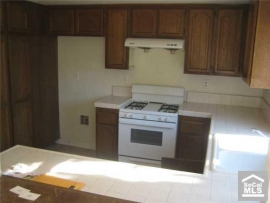
Irvine Home Address … 26 LEWIS Irvine, CA 92620
Resale Home Price …… $584,900

Time for the final bow,
Rows of deserted houses,
All our stable mates highway bound.
Give us our measly sum,
Getting the air inside my lungs is heavenly,
Starting out, with nothing but crippling debt.
We'll rest easy justified.
Death Cab for Cutie — Stable Song
When you read trade publications you get a point of view on issues that is often unbiased by the political correctness of the mainstream media. I found the article today in www.bigbuilderonline.com written to interested parties in the homebuilding industry. The article in bold in its statements that the banking cartel is colluding to hold up prices. There is a matter-of-factness about the articles tone that says this activity is just and desirable. I think the bank's behavior sucks.
Banks holding onto foreclosed homes to keep market stable
Source: San Bernardino County Sun
Publication date: December 2, 2010
By Toni Momberger, San Bernardino County Sun, Calif.
Dec. 02–Inventory is low all over the area, and there are frustrated buyers among us.
They have saved a 3.5-percent down payment. They have an income and good credit. They want to take advantage of today's low prices and low interest rates. They tried to get the $8,000 tax credit.
They've made dozens of offers in the past year.
How can there be so little available when so many have lost their homes to foreclosure?
The properties are not all being released.
Banks are intent on screwing buyers. They are knowingly and intentionally withholding inventory in a futile attempt to sustain bubble prices — prices that were never supported by incomes.
Ultimately, the banks will fail to keep prices high. Competition among cartel members to liquidate their shadow inventory will put pressure on prices, and if the process drags on long enough affordable housing advocates may finally apply some political pressure to force government action.
"My understanding is there's between 1.2 (million) and 1.6 million in California alone," said Robert Laguna, an agent with ReMax Masters in Covina.
"Inventory has been diminished considerably, so they have to release some of these properties."
Shadow inventory, also called ghost inventory, is the population of houses that banks already own through foreclosure, but have not released to the market.
No, shadow inventory is both bank-owned properties not on the market and future foreclosures from currently delinquent borrowers. It is the latter group that is by far the largest segment of shadow inventory.
A small portion of the shadow inventory is a result of banks' being overwhelmed. The homes may just not have gotten processed yet.
But everyone seems to concur that most properties are being held to prevent another market crash.
And only a few vocal opponents are pointing out the problems with this approach. Lenders and loan owners fall on one side of this issue, and renters and buyers stand on the other.
"Fannie Mae and Freddie Mac own most," said Laguna. "The government said it doesn't want to flood the market with properties, because if it did, the properties will depreciate. Values will go down."
Adam Quinones of Mortgage News Daily added on MND site's NewsWire, "To reduce the cost of maintaining the condition of foreclosed properties, banks have delayed the liquidation process
and allowed delinquent borrowers to remain in their homes."
People who are not paying their mortgage or rent are living in property they don't own without paying for it. That is squatting by another name.
"In addition to that, by delaying the liquidation of foreclosed properties, banks have avoided large asset value write-downs."
Failing to recognize losses by avoiding the write down is amend-extend-pretend. This farce will ultimately shake confidence in our accounting and financial reporting systems here in the US. If not for the implied protection of our major banks as too-big-to-fail, investors would be avoiding our banks for lack of transparency and likelihood of bankruptcy.
Laguna said the key is to release some, then let the market stabilize, and repeat the cycle until all of the shadow inventory is bought.
"They have to release them in waves, not in tsunamis. They have to be very careful how they release them. They can't release them too slowly, because they'll drag it on for years and years."
How The Lending Cartel Disposes Their REO Will Determine the Market’s Fate.

Part of the frustration is that 3.5 percent means the buyers are planning on a Federal Housing Administration loan.
Because of the high default rate, the FHA has become pickier about the condition of homes it'll take as collateral.
"What banks are releasing in the marketplace are REOs that need work. FHA offers will be rejected in favor of conventional loans, so banks don't have to fix the house."
Banks are required to get three job bids per improvement.
They don't have the resources to deal with it. As a result, "very rarely does an FHA offer get chosen," Laguna said.
FHA loans always end up on the bottom of the list of seller's preference. There are so many costs and fees, and the hurdles to overcome that can kill escrows. FHA buyers are riskier candidates to fall out of escrow after wasting months of time in the process.
It can be argued that the cumbersome FHA process should be cumbersome so competitors can provide money under better terms and make a profit. The FHA is the lender of last resort, and right now it is three times the market share (25%) than normal (8%-10%).
If they're not immediately liveable — for instance, if the wiring has been yanked, or the toilet's gone — no bank will fund the purchase. Those houses must be bought with cash, and are often going to investors.
With foreclosures composing most of the transactions today, obviously, not all of the shadow inventory is being held.
Laguna said most of the houses not owned by Fannie Mae and Freddie Mac are getting released, and some government- owned properties are going on the market.
"How (Fannie and Freddie) decide what to release, I don't know," he said.
If you watched a family moving out of your dream home, and have been waiting for the sign to go up, you may just have to wait. Shadow inventory is not easy to buy.
Shadow inventory is impossible to buy. That is part of the problem.
.jpg) .
.
Shadow inventory is composed of many delinquent borrowers many of whom are attempting short sales. When the short sale gets held up for months as owners and lien holders negotiate, the property is not effectively for sale. It is that rare gem under glass you can look at but can't touch. You know it's there, and it's ostensibly for sale, but it can't transact without approvals from lien holders that are not forthcoming.
None of the delinquent borrowers in this part of shadow inventory have gone through foreclosure. The bank does own them. The delinquent and most often underwater borrower has nothing and is paying nothing while this drama plays out.
Shadow inventory also consists of properties banks have foreclosed on and they now own. These properties may be renovated to sell, some are rented out, but many simply sit empty gaining no rental income and serving no family as a home. This inventory is considered shadow because it is not for sale on the MLS, but it will be someday soon because it isn't generating banking revenues sitting empty.
When I think of shadow inventory, I am not concerned about the stuff the banks already own. The inventory banks own but are not actively selling is not that large. It is the upcoming inventory from the delinquent borrowers that is the big, scary number. Millions of borrowers are not making their payments, and loan modification programs are not succeeding in resolving the the problem. Short sales are not working either. Foreclosure is the option everyone is trying to avoid, but it is exactly what is needed to get past this problem.
Laguna suggests starting by contacting a Realtor. Realtors have access to profiles and who owns the notes to houses.
"Sometimes the bank doesn't even know who would make the decision. You have to research that," he said.
"It's difficult to make an offer. The bank may say its Realtor has to be in charge. Then the Realtor says he hasn't got the listing yet."
After a foreclosure, there's a trustee sale, so all of the shadow inventory was for sale for at least a moment during the process. One of the consequences of shadow inventory is a high number of vacancies, which are targets for squatters and vandals.
"I don't know if vacancies are depreciating the market, because comparables use sold properties, but vandalized homes may make a neighboring conventional homes harder to sell," Laguna said. "Cities are being tougher and tougher on those properties, but there's just so many of them."
Whether property has been released for sale, the title holder of any property is responsible for basic maintenance. For example, pool water may not be green; lawns may not be brown.
Laguna said the city will impose a deadline for signs of neglect to be remedied.
After the deadline, there may be $1,000-a-day fine until the home is in compliance. If that fine is unpaid, the city may put a lien on the title. That property then cannot be sold until the lien is cleared.
"Every city is different.
Some (lien blemishes) follow the house; some follow the previous owners."
.jpg)
Laguna says buyers should not let the possibility of shadow inventory's release cause reluctance.
"Is it a good time to buy, with all this property about to come on the market? I think so. If I could afford it, I would buy. Who's to say how they're going to release it? The deals you can get on some of those properties now is incredible, and the interest rate!"
 It's a good time to buy if you believe a cartel of lending interests that control the sale of millions of properties can hold price levels above what people can realistically afford and divest themselves of all their inventory. If you believe the banking cartel can do this, then we are near enough to the bottom that buying now doesn't hurt. On a nominal basis, it may not, but on an inflation-adjusted basis, it is not great planning to tie up money in an asset that treads water for 10 years while inflation ravages the buying power of the currency.
For the banking cartel to maintain the balance they are looking for between liquidation rates and asset prices, price volatility will be very low during the purging process. The inventory will prevent prices from going up. The real challenge for the asset managers is to dispose of their properties without pushing prices lower. This may be possible in some markets where inventory problems are smaller, but in over-debted California, the inventory and associated debt purge may take much longer.
If bank asset managers are successful, prices will probably drift slightly lower over a multi-year period while the debt winds down. Long periods of low volatility takes many appreciation traders out of the game. Why buy when prices are expensive and when prices are not going up? it takes a lot of faith.
A subprime casualty in Irvine
Many people who took out subprime loans did so because it was an easier process with less paperwork and less need for accuracy on the paperwork you had to fill out. We had less subprime in Irvine, mostly because the borrowers had higher FICO scores and became classified alt-a.
- This property was purchased on 12/22/2004 for $610,000. The owner used a $488,000 first mortgage, a $122,000 second mortgage, and a $0 down payment courtesy of New Century Mortgage Corporation.
- On 8/2/2005, only eight months after putting zero down on the property, the owners were given a $125,000 HELOC. There is a chance this simply replaced the second mortgage, and they didn't spend the extra $125,000 they were given for nothing. However…
- On 2/13/2007 they refinanced with a $588,000 first mortgage and obtained a $73,500 HELOC.
- Total property debt was $661,500.
- Total mortgage equity withdrawal was $51,500. Not a huge take, but considering they put nothing into the property, $51,500 in free money is not too bad.
She quit paying the mortgage in 2009.
Foreclosure Record
Recording Date: 02/03/2010
Document Type: Notice of Sale
The sale notice was in February, but the house did not sell until 11/12/2010 when the bank took the property back for $642,500.
Irvine Home Address … 26 LEWIS Irvine, CA 92620 
Resale Home Price … $584,900
Home Purchase Price … $610,000
Home Purchase Date …. 12/22/2004
Net Gain (Loss) ………. $(60,194)
Percent Change ………. -9.9%
Annual Appreciation … -0.7%
Cost of Ownership
————————————————-
$584,900 ………. Asking Price
$116,980 ………. 20% Down Conventional
4.87% …………… Mortgage Interest Rate
$467,920 ………. 30-Year Mortgage
$119,323 ………. Income Requirement
$2,475 ………. Monthly Mortgage Payment
$507 ………. Property Tax
$0 ………. Special Taxes and Levies (Mello Roos)
$97 ………. Homeowners Insurance
$0 ………. Homeowners Association Fees
============================================
$3,079 ………. Monthly Cash Outlays
-$421 ………. Tax Savings (% of Interest and Property Tax)
-$576 ………. Equity Hidden in Payment
$219 ………. Lost Income to Down Payment (net of taxes)
$73 ………. Maintenance and Replacement Reserves
============================================
$2,374 ………. Monthly Cost of Ownership
Cash Acquisition Demands
——————————————————————————
$5,849 ………. Furnishing and Move In @1%
$5,849 ………. Closing Costs @1%
$4,679 ………… Interest Points @1% of Loan
$116,980 ………. Down Payment
============================================
$133,357 ………. Total Cash Costs
$36,300 ………… Emergency Cash Reserves
============================================
$169,657 ………. Total Savings Needed
Property Details for 26 LEWIS Irvine, CA 92620
——————————————————————————
Beds : 3
Baths : 3 baths
Home size : 1,856 sq ft
$0,000
Lot Size : 5,642 sq ft
Year Built : 1979
Days on Market : 15
Listing Updated : 40515
MLS Number : P761430
Property Type : Single Family, Residential
Community : Northwood
Tract : Cust
——————————————————————————
According to the listing agent, this listing is a bank owned (foreclosed) property.
And that's all we know about this property because the realtor didn't bother with a description.
.
Could it really be true that the yet-to-be-foreclosed “shadow” inventory is bigger than the current inventory of REOs not yet available on the market? That sounds implausible and if it is really true, than we can anticipate another 30% drop in values.
Here in Chicago & Cook county suburbs,together now one of the two most troubled housing markets in the country (the other being Las Vegas), we have only 1,200 foreclosed houses and condos on the market, but there are over 28,0000 REOs – houses and condos already bank-owned, that are withheld from the market. These are not merely “impaired”- delinquent or underwater- these are current REOs.
So if current REOs are only a “fraction” of the “shadow” inventory of seriously impaired loans, then we are looking at another drop off a cliff, which is why, no doubt, there is a long list of Chicago condo developments for which lenders will not make loans at all, for any kind of downpayment.
Additionally, other U.S. markets that previously seemed to be escaping the bubble unwinding are now deteriorating rapidly, like Dallas and Minneapolis.
And California and Florida are still very troubled. So far, only NYC seems to have escaped, but we’ll see for how long.
It looks like it will take till 2014 to clear it all out and find a bottom, thanks mostly to government props to lenders in holding onto this inventory and maintaining artificially inflated prices.
And by the time it’s really over, will there be a single qualified buyer with a stable job left in the country?
What is your sources for those figures? I’ll bet they are incorrect.
For the most part, once the bank actually forecloses, they usually list the house within a few months. It just frequently takes them forever to actually take back the property.
Chicago Mortgage broker Michael David White at HousingStory.Net is my source for these figures. White is extremely bearish on housing.
A couple of months back he published a chart showing actual foreclosed inventory vs. that which is listed on the market. Only 3% to 10% of the foreclosed properties are liste.
Re Dallas.
Texas as a state is usually last or close to last into recession and fairly late climbing out, part of what is happening in RE there is due to this. Jobs are pretty good in the Dallas region, property markets are not homogeneous and property taxes are playing a part (I suspect). Some of the older closer in neighborhoods are nice houses, high property tax. Just outside are 80s and early 90s stock, property taxes may be significantly lower depending on area (perhaps half of equivalent home in older neighborhood). Further out of the metroplex are the newer mid 2000s and later (heck they’re still building like crazy in some places) – higher percentage of subprime and defaults amongst those properties (which were at much higher speculative prices and last gasp buyers), much lower in the older neighborhoods.
Competition among cartel members to liquidate their shadow inventory will put pressure on prices
This inventory is considered shadow because it is not for sale on the MLS, but it will be someday soon because it isn’t generating banking revenues sitting empty.
The argument behind these claims strikes me as weak. Why will any bank suddenly be in a rush to lose more money? Are some Wells Fargo Di{kheads sitting around a boardroom stroking themselves in the middle of a PowerPoint slideshow going to suddenly call for a massive liquidation of shadow inventory because BOA has made its move and is now sprinting to win the race to lose money?
The winner of the race to liquidate shadow inventory seems to be a loser as far as I can tell. The banks are taking losses on each of these sales. What could possibly motivate them to liquidate?
How are banks going to generate banking revenues on these sales ever? They are losing big money on each sale.
I want to believe that the banks are inclined to sell so as to not pay taxes, HOA, and maintenance fees on their house collections but that is peanuts compared to what they lose on each sale.
These TBTF banks know that they are not going to run out of money as they have friends in Government and the Fed looking out for them. So who cares? Why rush to liquidate and lose more money when you can continue to have a nice cushy job? It would seem to me that if I were your typical POS dirtbag CEO, I would prefer to continue getting paid to sit in my big office in my big tall building slapping together corporate bullsh1t emails, shmoozing with the other boys in the club, boinking the best hookers, and snorting the best Coke. Why would you want to give up that kind of a lifestyle just so that some member of the proletariat can buy a house?
Could it be that the era of private ownership
of real property is coming to an end?
If real property is not allowed to fall to
free market prices could the next move by the
TBTF banks be to transfer all non performing R/E assets to a government entity who would then
parcel out the properties?
Call it “Super Section 8”.
Could the day come when a “deserving family”
obtains a home in Turtle Rock courtesy of
your socialist government?
The answer to your questions are, in order: No, no, and what socialist government?
There are countless banks that have liquidated thier inventory by FDIC takeover. Those banks no longer exist, but their “assets” do on “healthy” balance sheets.
Any “healthy” banks who wants to remain “healthy” will never be in a rush to lose money liquidating inventory. When in doubt use common sense.
I suspect the only thing that will force the banks hands is another push for mark to market rules when pricing assets.
Then, banks won’t be able to pretend that a house that will sell for $200K today is really worth $350K. Once they are forced to realize this loss, there is no reason left to keep the house off the market.
But there are no large “healthy” banks.
Most of the large banks are only in existence because the govt changed the mark-to-market rules as this ponzi scheme started unwinding. BofA list 1.55T in long-term investments on their most recent balance sheet. Who are they kidding?
JMO ~ Eventually the big banks will become even more overwhelmed with the flood of more squatters (aka non-performing assets). This problem is clearly compounding. They will have to start realizing these capital losses. That’s when we’re gonna have a moment of truth in this country.
Really? You actually believe that the “healthy” banks will simply sit on NPLs indefinitely. Did you see what happened to Wilmington Trust? NPLs on a “healthy” bank B/S just destroyed a 100 year old bank. Combined this type of threat with Basel III capital requirements increasing Tier I capital requirements on a risk adjusted basis, NPLs are likely to become a bigger concern.
As for countless banks having liquidating their inventory is a bit of hyberbole. In fact the largest orginators of mortgage loans JP, BoA (Countrywide), Citi, and Wells are all still in existence. These firms accounted for that VAST majority of all underwriting and through acquiisiton through the crisis picked up a lot of paper from defunct lenders (think Wachovia/Freemont going go Wells, etc). Now BoA was one example where legacy loan portfolios were jettisoned in relation to the ML deal, however this is the exception, not the rule.
Does “indefinitely” mean a really freaking log time, say a decade?
If so then YES.
The expense is an extremely small yearly expense on total “asset” value. Bankers love to stay in business.
The main thing you need to remember is the banks own these homes out of thin air and the “assets” are worth more than the home, paying 1-2% a year is nothing to avoid a huge loss. The banks control their losses and profits. It’s good to be king.
So you think one bank liquidating to hand over the keys to the FDIC is going to make the rest jump off a cliff ?
Nope. And because you obviously missed the point, the legacy NPLs are highly concentrated in the 4 largest banks. FDIC liquidation has not bearing (that is a community bank issue).
Banks are indeed itching to get rid of these loans. Again, please look up the Wilmington Trust failure as evidence of the impact of NPLs. The remaining players want these loans gone.
The biggest reason for the slow pace of foreclosures is that lack of infrastructure to deal with NPLs and government sponsored delay tactics. Likely the first issue does not get resolved, though further Federally sponsored delays/moratoriums seems highly unlikely. That leaves banks with the option to sit on pool of NPLs, THAT ARE PRODUCING NO CASH FLOW, or sell them and realize some value.
Now your argument is that the banks are in such a weak B/S state that they cannot afford the hit. That may be so. Or, maybe with Bank profits soaring that to a steep yield curve and decreasing loan loss reserves (i.e. the worst is over) they can afford to take the hit.
Basically, if a bank has the balance sheet, it makes no sense to hold onto NPLs.
One of us is right, the banks are going on a few years pissing around. Maybe they should staff up to go out of business, since it takes so much resources to sell houses. Again when in doubt use common sense.
Let me try to angle this in another way.
People are paying banks 4 – 6 % to own houses plus capital, plus expenses.
Banks own a house completely out of thin air and only pay 1 – 2%, plus get to claim bubble market value as an asset, plus take no loss, plus leverage it
You answers your own question with your rationale, unless you believe it’s difficult to sell houses.
What are NPLs?
NPLs = Non-Performing Loans
Have you read the Wilmington articles yet?
Banks are in the business of writing a servicing performing loans. Maintaining a big pile of crap on their balance sheet has a real cost in terms equequity multiples, which has a direct bearing on capital ratios. Just because banks can hold theloans at cost, does not mean their balance sheets are unencumbered.
Additionally, we are talking about loans not houses. The banks don’t hold title, they hold a LIEN. I am guessing you understand the difference, but perhaps not. The difference is that the bank must address the NPL through one of multiple options before they are even in a position to dispose of a property. These processes require staffing that the banks do not have.
I am genuinely hoping that someone can put forth a good reason as to why one bank is suddenly going to make a dash to unload a bunch of houses at huge losses – and why all the other banks are going to immediately follow suit.
This argument has been made on the blog for welll over a year now. We have seen foreclosure rates surge, but clearly the banks feel no urgency to unload their inventory. I don’t sense any type of cartel whatsoever – it is just common sense to everyone involved that you stay in business by pretending all your houses are performing wonderfully. Anyone who sudenly makes a mad dash to sell it all off is just going to be the first to closed down. It simply does not make any sense that a bunch of bankers are standing back to back waiting for the other to draw.
The simple fact is that banks are losing money whether they are selling properties or not — HOA dues, property taxes, fines, maintenance costs, property insurance, and investment cost of holding non-performing capital assets.
For an explanation why a bank cartel member would defect, I suggest reading up on Prisoner’s Dilemma:
http://en.wikipedia.org/wiki/Prisoner's_dilemma
“…It simply does not make any sense that a bunch of bankers are standing back to back waiting for the other to draw…”
The American Banker magazine cover sometime in 2007 was an illustration of many well-suited bankers, standing in a circle, pointing guns at one another.
Wasn’t that probably related to the bailouts? I am talking about shadow inventory liquidation.
I think it was related to their balance sheets, and that if one bank marked-to-market their assets, then all of the rest would have to follow. Therefore, they were all in danger of killing each other if/when one pulled the first trigger.
Banks will be forced only when they will need to raise cash for liability payments. Right now there may not be urgency but this wont be the case forever. Banks no longer have the luxury of making billions from toxic loans, most banks that leveraged in last years are still underwater in terms of net assets. All it will take is one Bear Sterns or Lehman Bros. scanerio to play out and you will see banks come out of ratholes. Until some major event forces these banks into liquidity crisis, I dont see any reason for banks to panic and sell.
On another note, each day interest rate rises, banks are going to feel the pressure of losing asset value further and furter for obvios reason
Ultimately, the banks will fail to keep prices high. Competition among cartel members to liquidate their shadow inventory will put pressure on prices, and if the process drags on long enough affordable housing advocates may finally apply some political pressure to force government action.
I hope so but I’m afraid not. The banks hold more weight and influence in out govt then any other special interest. There is also no law I’m aware of to keep them from just holding and sitting on vacant property. Investors do it all the time. Just look at all the vacant building downtown LA. They will sit on it until inflation makes up for the loss.
I think Jeffersons prediction has come true.
My partner on my blog just ran some numbers for me, and it turns out that a 1% rise in interest rates results in a 9% decrease in purchasing power of the pool of potential home buyers. And it seems that mortgage rates have risen 1% in the last couple months.
Will there be a 9% decrease in prices as fast as the rise in interest rates?
Never!
My wife and I checked out an open house that was listed for $579,900 during the summer (not sure whether it was June, July or August).
The house was vacant then, and still is now.
Despite that fact, there hasn’t been much price change — it’s now listed for $569,900 and the last price change was October.
In today’s profile, the bank put it on the market for $57K less than what they took it back.
Seems like they’re making an effort to move it.
Indeed, credit must given where it is due. Some of these high end sellers are in no rush to sell. In the neighborhood that I am watching, there is a house that has been rotting on the market for well over a year. The price is about 70K to 100K over what is actually selling in the neighborhood. The market is speaking, but the seller is not accepting reality. Clearly, the sellers like these do not have to sell and are just putting it out there to wish upon a star similar to Zillow’s “Make Me Move” feature where house dwellers like to get together and unnofficially list their houses for sale at hilarious WTF prices.
Never say Never! Prices *will* drop!
In economic terms, the phenomenon we all are observing is called Hysteresis — the tendency of a system to resist change, until it ‘breaks loose’.
Much like the Wildebeest migration to the Maya
river, a few brave souls [aka knife catchers] enter the river only to be eaten by African Crocodiles. But the majority do make it to safety.
As far as I can tell the banks are all playing a gigantic game of Wildebeest chicken.
When and how the dam is going to burst? Who
knows — but it *will* happen. 100% guarantee.
And, I’ll be ready when the dam bursts.
I’ve been working hard to create the best credit profile for my wife and I, save huge chunks of money every month, pay off one of my wife’s student loans, and staying educated on where the market is headed.
Despite hefty rents in the area, they are still lower than any mortgage we’d have to carry. So, we’re waiting until either the prices fall or we have *a lot more* cash for a down payment.
You’ll need all that and more.
FCBs, multiple all cash offers and high price per square foot, buying in the premium areas of Irvine is not for the faint of heart.
I don’t know, but if the pool of potential buyers can afford a total of let’s say $1 billion worth of homes in one month, that same pool of buyers can afford 9% less the next month. And if interest rates keep rising? I don’t know the exact effect, but as other interest rates rise, the cost of other items increases also, and if wages do not keep up, then there will be even less money to spend on housing. Will sellers lower their price? Only if they want to sell their homes.
So the new NAR psychological weapon should be:
“Buy now or be interest rated out?”
“There’ll never be a better time than now to buy.”
That’s what it comes down to. Sellers who are serious about moving on with their lives will accept reality, price to sell, and find a buyer very quickly even in the current market.
The ones who are doing alll the whining and not accepting reality subconsciously do not want to sell. You often hear them say things like “I will not give it away”. They simply do not want to sell and this is their little way of making themselves hold on. I am sure that any good realtor can identify these sellers in less than 30 seconds and quickly move on as to not waste their time.
I agree with that argument. I have been in the market for about 12 months looking for home.
1. 1st that $8000 credit rush pushed me out and folks paid over $20K to get that $8K, idiots.
2. Next came the foreclosure freeze that wiped out listings and made less inventory available.
3. In last 6-9 weeks while rates were dropping folks who have been looking for over six months all of a sudden found lower 4.2% rate that allowed them to qualify for bigger home purchase price for same monthly payments.
4. Now that rates have gone up by a full 1%, monthly payment shock is around 8.45%, I can guarantee you that majority of folks who were under contract and were stretching themselves and dont have loan rate locked are going to face hard reality of disqualification on their closing of loan.
5. I am also noticing that compared to Jan-June when listings were at lower price and sale was at higher price (Entice bidding), folks are now listing at higher price and then lowering prices. $50K drop on $600K home listing is a norm from my observation. Whether that home deserved $600K or not is subject to investigation on case by case basis.
One thing for sure, folks who did not accept offers earlier are going to chase markets down yet again. Add the fact that FHA raised min. score requirements as well. We may get that big push on prices to the downside what we should have gotten prior to Govt.’s $8K bullshit
This isn’t accurate.
The % change in present value of a stream of cash flows (ie fixed payments on a 30 year fixed mortgage) is different because the 100 basis point change in rates represents a different rate of change depending on what the starting rate was.
In the case of rates going from 4% to 5%, the purchasing power change is actually 12% lower.
But more importantly, did prices for homes change during the last 6 months along with the rates? Or did rates just move up and down and home prices are largely unchanged either way.
If you are suggesting that home prices went up during the last 6 months while rates came down because RE prices react that quickly to rates, then they will of course go down. But if RE prices are sticky by nature and people have incomplete information to price correctly, then rates moved down and up and RE prices haven’t done anything to reflect its movement either way.
if this move is a sustained and continued move higher of rates, and ALL else is equal including economic outlook, inflation picture, household creation rates and payments, then prices will come down.
Why would a bank sell a foreclosed house to another sucker?
During a couple years, the value of the sold house may lose 10-15%, and the sucker will stop payments.
The only good decision is to require huge downpayments that will cover bank losses. But the article says that 25% of the current loans are financed by FHA (only 3% down).
To be fair, the article doesn’t say what percentage of the FHA buyers are only putting 3.5% down.
I assume it’s a very high percentage, but that’s not what the source said.
If people think the wave of bank failures are behind us in the US, I think they’re sadly mistaken. Loan losses are the number one reason for bank failures, followed by insider lending (you know, the seedy stuff set aside for brothers of the bank mgr and members of Congress), lack of liquidity, and interest rate sensitivity. Loan losses are by far the No. 1 pre-death symptom though. And holy crap are there losses to realize or what?
I’d be very interested to see some of the CAMEL and EWS ratings of national and regional banks that have major mortgage loans on their books from California.
Also, wouldn’t customary bank inspections start to reveal serious problems followed by reams of corrective action notifications to these banks in order to right their ship or face fines or worse (management swap outs, branch closings, etc.)?
Is this happening? If it is, we sure aren’t reading much about it in the MSM.
I don’t understand how the US banks create profits nowadays.
Typically, a bank borrows money from a saver and lends it at a margin. The current saving rate in the USA is close to 0, which shouldn’t attract savers at all.
It’s not the banks holding back inventory. Banks don’t hold these mortgages. That was the point of securitization (let someone else worry about it). They may be an investor in various mortgage pools, and have indirect control, but they aren’t the ones behind the shadow inventory.
The servicers control this.
Servicers have a duty to maximize recovery on behalf of the investors. The servicers are holding back inventory to maximize recovery. Servicers would be on the wrong end of a bunch of lawsuits from the investors if the servicers disregarded this duty and just dumped a bunch of properties on the market. Servicer fears of being sued by investors is the main problem here. IMO.
Servicer incentives are discussed in
http://papers.ssrn.com/sol3/papers.cfm?abstract_id=1324023
(new paper from Adam Levitin and collaborator, of Credit Slips)
They’re set out in summary form starting around p75
Paper worth a read